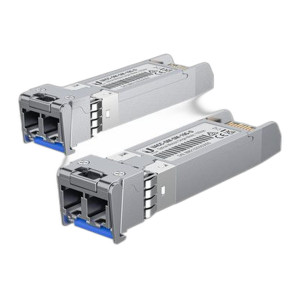
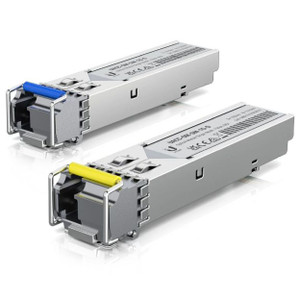
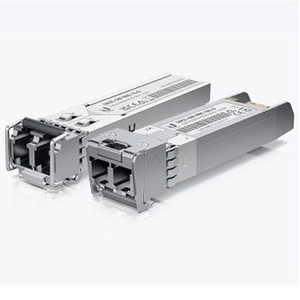
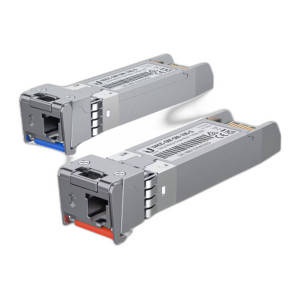
Ubiquiti UACC-OM-SM-1G-S-20 1 Gbps Single-Mode Optical Module
The Ubiquiti UACC-OM-SM-1G-S-20 is a single-mode fiber optic transceiver designed to integrate directly into compatible UniFi infrastructure equipment. This module enables 1 Gbps bidirectional data transmission over single-mode fiber, solving a specific problem: when copper Ethernet runs are either too long, electromagnetically noisy, or physically impossible to route, fiber provides the backbone connectivity that keeps your network isolated and resilient. If you're deploying surveillance, access control, or data-center-grade networking across a campus or metropolitan footprint, this transceiver eliminates the need for external fiber converters and enclosures.
Key Features
- 1 Gbps bidirectional throughput: Delivers full gigabit-speed data in both directions simultaneously over a single fiber strand. Unlike multimode fiber, single-mode performance does not degrade significantly with distance—critical when linking buildings hundreds of meters apart without intermediate regeneration equipment.
- Single-mode fiber support: Single-mode fiber has a much smaller core diameter than multimode and carries light down a narrower path, resulting in superior attenuation characteristics. At distance, this means less signal loss per kilometer, so you avoid costly repeaters or regenerators on longer backbone segments typical in warehouse or industrial campuses.
- Form-factor integration: The UACC-OM-SM-1G-S-20 is a pluggable module designed to seat directly into UniFi switches and routers with compatible optical ports. This compact design eliminates external converter boxes, reduces rack space, and simplifies cabling—a real labor cost reduction during commissioning.
- Electromagnetic isolation: Fiber is immune to RF interference, EMI, and lightning-induced transients. In environments with heavy industrial machinery, VFD drives, or outdoor cable runs near power lines, single-mode fiber transceivers protect your data integrity without shielded Ethernet armor or ferrite clamps.
- Reliable UniFi ecosystem compatibility: This module is engineered specifically for Ubiquiti's switching and routing platform. Verify compatibility with your exact UniFi model before procurement—this is not a universal transceiver and will not work in non-Ubiquiti equipment.
- Compact physical footprint: Weighing 1.150 lb, the module is designed for minimal space consumption in network closets or equipment racks, important when you're already dense on switch ports and cable trays.
Integration & Compatibility
The UACC-OM-SM-1G-S-20 is a direct-fit accessory for specified UniFi network infrastructure. Before ordering, confirm your target switch or router has an available SFP (small form-factor pluggable) port that accepts this single-mode transceiver. Multimode or CWDM variants will not be compatible; the -SM- designation in the part number specifies single-mode fiber exclusively. Coordinate your fiber runs and patch panel terminations with your network integrator to ensure proper LC or SC connector alignment and correct wavelength tuning if using CWDM or DWDM backhauls.
When to Choose a Different Model
If your link distance is under 500 meters and you do not have electromagnetic isolation requirements, consider a multimode optical module variant in the UniFi portfolio—multimode transceivers are typically lower in cost and simpler to terminate in short campus runs. If you need 10 Gbps or higher throughput, explore the higher-speed Ubiquiti optical transceiver families, though integration requirements will differ.
Frequently Asked Questions
Q: What fiber types does the UACC-OM-SM-1G-S-20 accept?
A: This module is designed for single-mode fiber only. It will not operate reliably with multimode fiber (OM1, OM2, OM3, OM4). Ensure your cabling infrastructure uses ITU G.652 single-mode fiber or equivalent.
Q: What is the maximum distance this module supports?
A: Single-mode fiber can reliably carry 1 Gbps signals for 20+ kilometers without regeneration, depending on fiber quality, connector cleanliness, and wavelength. For typical campus backbones (under 5 km), attenuation is negligible. Consult fiber specifications and your integrator for your exact run length.
Q: Is the UACC-OM-SM-1G-S-20 hot-swappable?
A: Yes, like most SFP modules, it can be removed and inserted without powering down the switch, provided the port is not actively carrying traffic at the moment of change. Always coordinate maintenance windows with your operations team.
Q: What connectors does it use?
A: Verify the exact connector type (LC, SC, or ST) in your equipment's documentation. The UACC-OM-SM-1G-S-20 datasheet specifies the connector pinout; ensure your fiber patch panels and wall-mounted termination blocks match.
Q: Can I use this transceiver with non-Ubiquiti equipment?
A: This module is purpose-built for UniFi infrastructure. While the underlying optical signaling follows standard SFP conventions, compatibility with third-party switches is not guaranteed and is not supported by Ubiquiti. Test in a lab environment first if cross-brand deployment is required.
Q: What is the typical lifespan of an optical module?
A: Under normal operating conditions (clean connectors, stable temperature, no physical stress), SFP transceivers typically last 5–10 years. Dust, humidity, and connector misalignment accelerate wear. Follow Ubiquiti maintenance guidelines and keep connector ends capped when not in use.
Ted PerryPerspective based on aggregated and affiliated engineering team experience.
I specify the UACC-OM-SM-1G-S-20 when copper runs are either impossible or unreliable. Single-mode fiber at 1 Gbps gives you distance reach and noise immunity that Category 6A shielded Ethernet simply cannot match, especially outdoors or in RF-heavy industrial settings. The key insight: this transceiver plugs directly into your UniFi switch without external converters, which cuts both procurement complexity and integration labor.
Technical Highlights:
- Single-mode fiber design: Smaller core diameter and narrow modal path deliver superior attenuation performance—expect usable signal quality at 10+ km without regeneration, versus ~550 m max for multimode. Real-world benefit: if your warehouse spans multiple buildings across a large property, single-mode eliminates the need for mid-span repeater boxes.
- 1 Gbps bidirectional throughput: Full gigabit speed in both directions simultaneously over a single fiber strand. For backbone links carrying traffic from multiple UniFi access points or cameras back to a central NVR, this throughput is adequate for most mid-scale deployments (50–100 endpoints). If you're consolidating multiple 1 Gbps camera streams, monitor your actual bandwidth utilization—10 Gbps may be warranted if you exceed 500 Mbps sustained traffic.
- Compact SFP form factor: Direct seat into your UniFi switch port, no external chassis or power supply. Saves rack U, simplifies wiring diagrams, reduces points of failure. Eliminates the separate fiber-to-Ethernet converter box and its own power budget strain.
Deployment Considerations:
- Fiber termination is not trivial: Ensure your integrator is experienced in single-mode fiber splicing or patch panel termination. Poor connector cleanliness or misalignment can introduce insertion loss that degrades your signal. Budget for a visual fault locator during commissioning to verify end-to-end fiber continuity.
- Compatibility verification is non-negotiable: Not all UniFi switches have SFP ports; some have only RJ45. Confirm your target equipment revision explicitly supports this UACC-OM-SM-1G-S-20 module before procurement. Mixing multimode and single-mode transceivers in the same switch is a common mistake—each port is dedicated to one fiber type.
- Watch connector type: LC and SC are standard; verify which your infrastructure uses. LC is denser (more ports per rack unit), but SC is more robust in field terminations. Patch panels and wall outlets must match the transceiver's LC/SC interface exactly, or you'll need an adapter (which introduces another point of signal loss).
Deploy the UACC-OM-SM-1G-S-20 in UniFi network infrastructure where campus backbone runs exceed 300 meters, RF noise is a concern, or building-to-building isolation is a requirement. For a 3-building warehouse with fiber already in place, this module turns that dark fiber into an active, redundant 1 Gbps backbone in hours, not weeks. Not a choice for short copper runs or single-building deployments—keep PoE-powered copper for access points and cameras, and use fiber only for the backbone.