Ubiquiti UACC-KEYSTONE-JACK-C6 Cat6 Keystone Jack
Overview
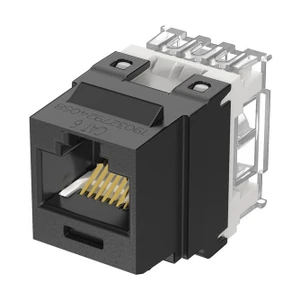
The UACC-KEYSTONE-JACK-C6 is a toolless Category 6 keystone jack engineered for field installations where speed and reliability matter. Unlike punch-down jacks, this design eliminates the need for specialized termination tools—a meaningful time-saver when deploying multiple camera runs or network drops across a facility. The compact polycarbonate housing (1.4 x 0.6 x 0.6 inches) fits standard keystone wall plates and patch panels without modification. Support for both TIA-568A and 568B wiring standards means you can follow whatever convention your site uses without re-terminating. Cable gauge acceptance spans 23–26 AWG, accommodating both standard and thinner runs common in surveillance backbone wiring.
Key Features
- Toolless Termination: No punch-down tool, crimper, or wire stripper required. Inject and clip—cuts labor time in the field and reduces handling damage to exposed conductors.
- Dual Wiring Standard Support (568A / 568B): Flexibility to match your existing cabling infrastructure without forcing a rewire. Both standards deliver identical electrical performance over Cat6 distances.
- Wide Gauge Acceptance (23–26 AWG): Handles solid 23 AWG backbone cables and stranded 26 AWG drops. Reduces the need to stock multiple jack types for mixed-gauge deployments.
- Standard Keystone Form Factor: Drop into any standard wall plate or patch panel slot. Interchangeable with Ethernet keystone jacks from other vendors—no proprietary mounting or alignment headaches.
- Compact Polycarbonate Housing: Durable construction rated for repeated insertion cycles in data centers and field enclosures. Withstands thermal stress in untempered network closets.
- Package Quantity (12 units): Bulk pack reduces per-unit cost and minimizes reordering for medium-to-large infrastructure jobs (camera systems, warehouse network refreshes, multi-building campuses).
Integration & Compatibility
The UACC-KEYSTONE-JACK-C6 works with any standard keystone wall plate, patch panel, or modular outlet frame. Common deployment scenarios include IP camera runs in retail or warehouse environments, where rapid termination at the wall plate reduces downtime. It integrates cleanly into structured cabling architectures, especially retrofit jobs where site teams lack specialized termination tools. For permanent installations in climate-controlled data centers or temporary field POC (proof-of-concept) builds, the toolless approach minimizes setup friction.
What's in the Box
Frequently Asked Questions
Q: Can I use the UACC-KEYSTONE-JACK-C6 with solid and stranded Cat6 cable in the same patch panel?
A: Yes. The jack accepts both 23 AWG solid and 26 AWG stranded cable. Solid wire is standard in backbone runs; stranded is typical in flexible patch cords. The toolless design accommodates both without adjustment.
Q: What's the real difference between 568A and 568B termination, and does it matter which I choose?
A: Both standards deliver identical electrical performance over Cat6 distances. The choice matters only for consistency: pick one standard and stick to it across your site to reduce troubleshooting confusion. The UACC-KEYSTONE-JACK-C6 supports both, so you follow your existing convention—no re-termination required.
Q: Is toolless termination as reliable as a punch-down jack?
A: Yes, when installed correctly. Toolless jacks use spring-loaded contacts that seat the wire when you press it into the slot. The advantage is reduced risk of wire damage (no tool compression) and faster installation. The tradeoff is that you must fully seat each conductor—rushing can leave a wire partially inserted.
Q: How many times can I reuse or re-terminate a keystone jack?
A: The polycarbonate housing and spring contacts tolerate multiple insertion cycles typical in lab and field environments. However, each re-termination slightly wears the contact, so expect degradation after 10+ insertions. For permanent installations, treat it as a one-time termination.
Q: Will the UACC-KEYSTONE-JACK-C6 work with Cat5e cable?
A: Mechanically, yes—Cat5e is thinner and will fit. Electrically, you lose Cat6 benefits (higher bandwidth margin, better noise rejection). If you're running Cat5e, a Cat5e keystone jack is the correct choice. Don't downgrade your cable rating by using a Cat6 jack.
Q: Can I use these jacks in outdoor or harsh-environment wall plates?
A: The polycarbonate housing is not weatherproof. The UACC-KEYSTONE-JACK-C6 is designed for indoor network closets, data centers, and temporary field deployments. Outdoor installations require weatherproof keystones with gaskets or a sealed enclosure.
Ted PerryPerspective based on aggregated IPSD and affiliated engineering team experience.
The UACC-KEYSTONE-JACK-C6 solves a real friction point in field camera deployments: most integrators still carry punch-down tools and spend time wire-stripping and tool-seating each conductor. This keystone eliminates that step. The toolless design matters most when you're terminating 20+ runs in a retrofit or new warehouse build—the labor savings compounds quickly. The dual 568A/568B support is pragmatic; it means you're not forcing a wiring standard on the customer to match your jack inventory.
Technical Highlights:
- 23–26 AWG Acceptance: Covers both solid backbone cable and stranded patch-cord gauges without adapter jacks. Simplifies parts inventory on mixed-gauge jobs.
- Spring-Contact Toolless Termination: No compression tool = reduced wire damage and faster installation. The tradeoff is operator discipline—each conductor must be fully seated, or you'll have a loose contact masquerading as a working run.
- Standard Keystone Form Factor (1.4 x 0.6 x 0.6 inches): Fits any keystone wall plate or patch panel. No surprises on site, and interchangeable with competitors' keystones if you need to hot-swap units.
Deployment Considerations:
- Toolless jacks are faster for initial termination but less forgiving of careless re-work. If your team is going to pull and re-terminate cables repeatedly in a lab environment, the contact spring will fatigue. Plan for eventual replacement.
- The polycarbonate housing is not rated for outdoor or harsh enclosures. If the wall plate sits in an unheated closet or damp environment, the plastic may degrade over time. Use sealed, gasket-equipped keystones for those sites.
- Always verify wire seating visually. A partially inserted conductor will pass a continuity test but fail under load. This is less of a risk than punch-down over-compression, but it's still a gotcha if you're rushing.
Use the UACC-KEYSTONE-JACK-C6 for permanent installations in climate-controlled network closets and camera backbone runs where speed and tool-free setup are assets—especially in multi-building campuses or retrofit jobs where the field team doesn't want to lug punch-down equipment. Skip it if you expect frequent re-termination or harsh thermal swings.