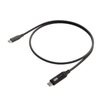
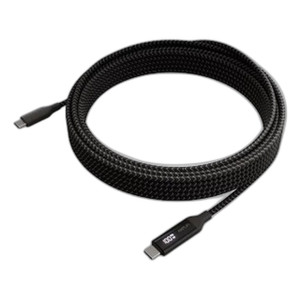
Ubiquiti UACC-CABLE-USB-100W-2M-BK USB-C Power and Data Cable
Overview
The Ubiquiti UACC-CABLE-USB-100W-2M-BK is a braided USB-C to USB-C cable built for network infrastructure deployments where simultaneous power delivery and data connectivity are non-negotiable. The 100W power capacity means you can supply modern access points, controllers, switches, and related enterprise networking gear without needing a separate power adapter on many devices — a real operational simplification in cabinet and rack installations. The 2-meter length covers standard spacing between patch panels, wall-mounted equipment, and equipment racks without excessive slack. This cable integrates directly with Ubiquiti UniFi systems and any device sporting a standard 24-pin USB-C port.
Key Features
- 100W Power Delivery: Sufficient for high-draw USB-C devices without external power supplies, reducing clutter and power outlet demand in dense installations. Most PoE-adjacent and UniFi infrastructure pulls well under this ceiling.
- 24-Pin USB-C Connectors (Male-to-Male): Full-featured USB-C topology ensures compatibility with standard ports on UniFi access points, controllers, and enterprise networking hardware. No proprietary connectors or adapters required.
- 2-Meter Length: Bridges typical spacing in wall-mount, cabinet, and rack configurations without excess coiling. Longer than standard 1-meter patch cords; shorter than unwieldy 5-meter runs.
- Braided Construction: Nylon braiding increases mechanical durability and reduces kinking compared to plain PVC. Matters in high-traffic installation areas and repeated reconfiguration scenarios.
- Dual-Sided Charge Display: Visual indicator on both sides of the connector helps technicians confirm power flow without unplugging — useful for troubleshooting and validation during commissioning.
- Black Finish: Neutral cosmetics blend into most equipment racks and cabinet installations without drawing visual attention.
Integration & Compatibility
The UACC-CABLE-USB-100W-2M-BK is engineered for Ubiquiti UniFi infrastructure deployments and any third-party device with a standard USB-C port. The male-to-male topology means this cable connects two devices directly — it does not adapt from USB-C to a different connector type. Suitable for both field installation and permanent rack deployments. When planning infrastructure power budgets, confirm that your power source (wall supply, PoE injector, or USB-C power delivery unit) can supply the full 100W draw if all connected devices operate simultaneously; in most UniFi environments this is not a constraint, but audit your specific configuration before assuming headroom.
Frequently Asked Questions
Q: Will the UACC-CABLE-USB-100W-2M-BK work with non-Ubiquiti USB-C devices?
A: Yes. The cable uses standard 24-pin USB-C connectors, so it works with any device equipped with a USB-C port — UniFi or otherwise. The 100W power delivery follows USB Power Delivery standard specifications.
Q: Does this cable support data transfer as well as power?
A: Yes. The male-to-male USB-C topology carries both power delivery and high-speed data simultaneously, supporting scenarios where devices need both connectivity and power from a single cable run.
Q: Is the 2-meter length suitable for my rack installation?
A: 2 meters (approximately 6.5 feet) is adequate for most cabinet and rack spacing. If your patch panel sits significantly further from powered equipment, you may need a longer cable; if spacing is tight, a shorter variant could reduce slack.
Q: What is the warranty on the UACC-CABLE-USB-100W-2M-BK?
A: Warranty information is not specified in available documentation. Contact the manufacturer or specialty distributor for coverage details.
Q: Can I use this cable in outdoor or high-temperature environments?
A: The cable has no published environmental rating (IP or temperature range). For outdoor or extreme-temperature deployments, confirm operating conditions with the manufacturer before installation.
Q: What devices in the UniFi lineup use USB-C power and data connectivity?
A: Modern UniFi access points, controllers, and switches increasingly feature USB-C. Check the specific device datasheet to confirm USB-C port availability and power requirements before ordering this cable.
Ted PerryPerspective based on aggregated and affiliated engineering team experience.
The UACC-CABLE-USB-100W-2M-BK is a straightforward infrastructure accessory — no surprises, no gotchas. If you are wiring up UniFi equipment or any modern network device with USB-C ports, this cable delivers both power and data over a single run. The 100W capacity is well above what most network gear pulls, so power starvation is not a concern in typical configurations. The braided construction and dual-sided charge display are genuine quality-of-life improvements over cheap unshielded USB-C cables you might source from a generic vendor.
Technical Highlights:
- 100W Power Delivery: Eliminates the need for external USB power supplies on most modern infrastructure devices. Reduces cable clutter and outlet demand in dense cabinet installations where every amp counts.
- 24-Pin USB-C (Male-to-Male): Full USB 3.1 Data and Power Delivery spec support. Works with any standard USB-C port; no proprietary adapters or dongles required. Direct device-to-device connection.
- 2-Meter Braided Construction: Nylon braiding outperforms bare PVC under repeated flexing and in high-traffic installation zones. Length suits standard rack and wall-mount spacing without excess coiling or strain.
Deployment Considerations:
- Confirm your target devices feature USB-C ports. Older UniFi equipment and third-party gear may use micro-USB or proprietary connectors — check device datasheets first.
- No environmental rating published (no IP/IK specification, no temperature range). This cable is indoor-only. Do not deploy outdoors or in extreme-temperature environments without manufacturer confirmation.
This cable is the right choice when you need a single cable run carrying both power and data into USB-C infrastructure devices in cabinet and rack environments. Straightforward part, straightforward job — order it, install it, move on. Not a point of architectural complexity or failure risk if the devices you are connecting actually have USB-C ports.