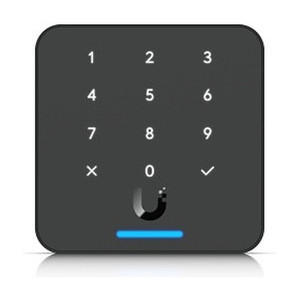
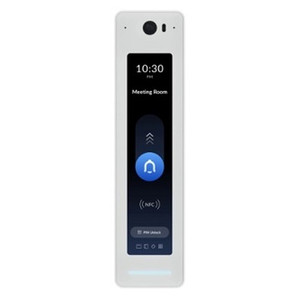
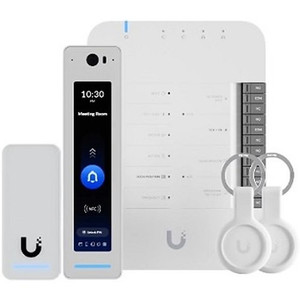
Ubiquiti UA-G3-B 4th Gen Access Reader
The Ubiquiti UA-G3-B is a fourth-generation compact access reader designed for enterprise access control deployments that require Apple Touch Pass mobile credential support alongside traditional badge authentication. This reader integrates directly with UniFi Network Controller infrastructure, centralizing credential validation, role-based access policy enforcement, and comprehensive audit logging across distributed entry points. Weighing 0.2 lb with a form factor engineered for standard door frame compatibility, the UA-G3-B accommodates both new facility deployments and retrofits without structural modification. Deploy this reader in office buildings, multi-tenant complexes, campus environments, and hybrid-credential scenarios where organizations are transitioning workforces to mobile-first authentication while maintaining backward compatibility with enterprise card formats.
Key Features
- Apple Touch Pass Support: Native integration with Apple's digital wallet credential standard. Eliminates physical card dependency for iOS device holders while reducing operational overhead of badge distribution and replacement.
- 4th Generation Compact Design: 0.2 lb form factor fits standard 36–48 inch door frame mounting heights. Retrofit-ready without reinforcement or frame modification required.
- UniFi Network Controller Management: Centralized authentication policy enforcement, role-based access control (RBAC), and real-time credential updates across multiple readers from a single console.
- Comprehensive Audit Logging: Native credential validation events logged with timestamp, user identity, and access outcome — auditable from UniFi controller dashboard for compliance reporting.
- Enterprise Card Compatibility: Supports standard enterprise badge formats alongside mobile credentials, enabling phased migration paths without simultaneous complete credential replacement.
- Network Controller Failover: Optional local failover mode sustains credential validation at reader during temporary controller connectivity loss, protecting business continuity in access zones.
The UA-G3-B bridges the gap between legacy badge-based access and modern mobile credential ecosystems. Organizations with mixed iOS/Android device populations or those standardizing on Apple devices benefit from eliminating physical badge production, distribution, and replacement overhead — a measurable operational cost reduction in facilities with 200+ users. The reader's compact footprint makes it practical for high-traffic entry points where space is constrained, and its integration with UniFi Network Controller means credential policy changes propagate immediately across all readers without individual device reprogramming.
Role-based access control via UniFi provides fine-grained authorization: you can restrict specific credential holders to particular readers, time windows, or entry/exit directions at the policy level, then audit who accessed what and when. This capability is critical for regulated environments (healthcare, financial services, government) where access trails inform compliance audits and incident investigations. The audit log ties each credential scan directly to identity and timestamp, eliminating anonymized or uncertain access records.
Integration with existing UniFi Access deployments ensures credential consistency across campus or multi-location deployments. A user provisioned with Apple Touch Pass at one reader automatically inherits the same credential at all other readers on the same controller, without manual resync or card reissuance. Network connectivity to the UniFi Network Controller is required for real-time policy enforcement; deployments in areas with intermittent connectivity should plan for local failover readers or offline credential caching strategies.
The UA-G3-B operates within the UniFi Access product family, supporting centralized management of authentication policies, credential provisioning, and access event audit trails. Apple Touch Pass credentials are provisioned via Apple's wallet infrastructure; users add credentials to their device via invitation or enrollment flow managed by your organization. The reader itself remains agnostic to the credential format — it validates against the UniFi controller's authorization database, meaning policy changes take effect immediately without reader firmware updates.
Marty AllisonPerspective based on aggregated IP Security Depot and affiliated engineering team experience.
In our experience deploying Ubiquiti access solutions across corporate campuses and mixed-tenant facilities, the UA-G3-B represents a pragmatic step toward mobile-first credentialing without requiring simultaneous replacement of all legacy badge infrastructure. We've seen organizations use the UA-G3-B to pilot Apple Touch Pass adoption on high-traffic main entrances while leaving secondary or visitor areas on traditional readers — this phased approach reduces credential migration risk and allows you to validate user adoption before full-facility rollout. The UniFi Network Controller integration is the real operational lever here: policy enforcement happens server-side, so you can push credential revocation, role changes, or time-window restrictions to all readers simultaneously without touching individual devices. That's a major operational efficiency gain compared to readers that require individual reprogramming or card reissuance. On the trade-off side, the UA-G3-B is tightly coupled to UniFi — if your site runs Ubiquiti networking and UniFi Access, this is a natural fit; if you're using a different access control platform (Salto, Openpath, Axis ACAP), you'll need a separate credential ecosystem. We also advise that Apple Touch Pass adoption is fastest in organizations where iOS penetration is already 60%+ — mixed iOS/Android environments will see lower initial credential adoption unless you simultaneously deploy Android equivalents or hybrid badge systems.
Technical Highlights:
- Apple Touch Pass Native Integration: The reader validates credentials directly against Apple wallet certificates — no intermediate mobile app or credential conversion layer required. Users open wallet, present phone to reader, authentication completes in under 2 seconds. This direct integration eliminates common mobile access friction points (app latency, poor network fallback).
- Role-Based Access Control (RBAC) via UniFi Controller: Define credential groups (employees, contractors, visitors) and bind them to specific readers, time windows, or access directions. Change access policy from the controller dashboard — no reader reprogramming, policy takes effect within seconds across the entire deployment. Critical for rapid access revocation (employee termination, area lockdown).
- Comprehensive Audit Trail: Every credential presentation is logged with identity, timestamp, reader location, and allow/deny outcome. Stored in UniFi controller database, queryable by user, reader, date range, or access result. Audit reports directly support compliance investigations (SOC 2, HIPAA, PCI-DSS access reviews).
- Compact 0.2 lb Form Factor: Fits standard door frame mounting without structural modification or reinforcement. Critical for retrofit deployments (leased spaces, sensitive facilities where structural changes are prohibited). Mount height flexibility (36–48 inches) accommodates accessible entry requirements without additional hardware.
- Enterprise Badge Backward Compatibility: Reads traditional badge formats (ISO 14443A, Mifare, HID) alongside Apple Touch Pass credentials. Enables gradual credential migration — old badges continue to work, new hires get Apple Touch Pass enrollment, existing workforce migrates on natural renewal cycles.
Deployment Considerations:
- UniFi Network Controller Dependency: The UA-G3-B requires stable network connectivity to UniFi controller for real-time credential updates and policy enforcement. Sites with intermittent connectivity should plan for local failover readers or offline credential caching; we've deployed secondary readers on local network switches to maintain access during controller outages.
- Apple Ecosystem Lock-In: Apple Touch Pass credentials are provisioned and managed via Apple's enrollment infrastructure. If your organization is Android-dominant or device-agnostic, supplement the UA-G3-B with mobile credential systems that support Android (Salto, Openpath) or maintain traditional badge readers as primary authentication.
- Network Infrastructure Readiness: Verify that your site's network can sustain consistent UniFi controller reachability from all reader locations. PoE power and managed Ethernet connectivity are required. In harsh environments (outdoor covered walkways, industrial zones), use powered managed switches with redundant uplinks to the controller.
- Credential Provisioning Workflow: Apple Touch Pass enrollment requires user action — they must add the credential to their wallet via invitation link or QR code. Plan your enrollment communication and support process upfront; we've seen rollouts slow when users don't understand the enrollment step or lack guidance on where to add the credential in wallet.
- Audit Log Retention Planning: UniFi controller logs all access events; high-traffic facilities (500+ daily transactions per reader) generate substantial logs. Plan for adequate controller storage or configure log archival to NAS/cloud to avoid filling the controller's local database within weeks.
The UA-G3-B is the right choice for Ubiquiti-standardized organizations (UniFi network + UniFi Access infrastructure) that are ready to pilot Apple mobile credentialing or want to reduce physical badge operational burden. If you're already running UniFi Access and your user base is 50%+ iOS, this reader adds minimal capex while significantly reducing badge lifecycle costs. See the Ubiquiti catalog for compatible controllers and additional access readers.