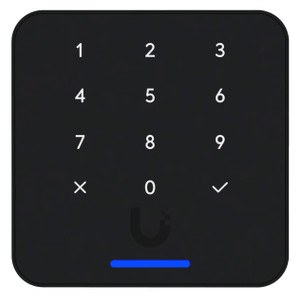
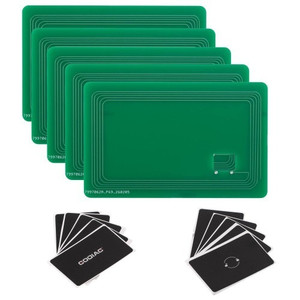
Ubiquiti UA-CARD-W-10 NFC Access Control Card 10-Pack
The Ubiquiti UA-CARD-W-10 is a ten-pack of white NFC credential cards engineered for UniFi Access deployments, enabling contactless authentication at UniFi Access readers and control points. Each card communicates via near-field communication (NFC) and integrates directly with UniFi Controller — local or cloud-hosted — eliminating the need for separate card encoding equipment or provisioning software. This ten-card format is the standard replenishment size for department-level access expansions, pilot programs, or mid-scale facility rollouts where new credentials must be issued without staging a full system replacement.
Key Features
- NFC Contactless Authentication: ISO/IEC 14443 Type 2 compliant. Cards work with all UniFi Access readers, hubs, and credential readers without line-of-sight or mechanical contact.
- Central Management via UniFi Controller: Card enrollment, access group assignment, temporary credential windows, and revocation all managed from a single UniFi Controller dashboard — no standalone encoder hardware or field provisioning tools needed.
- 10-Card Pack Format: Standard replenishment size for office expansions or departmental access refreshes. Ideal for pilot deployments before broader facility-wide credential distribution.
- White Form Factor: Neutral aesthetics suitable for corporate, institutional, and mixed-use environments. High visual contrast for ease of identification and storage.
- Seamless UniFi Ecosystem Integration: Works with UniFi Dream Machine, UniFi Dream Machine SE, UniFi Access Hub, and all UniFi Access readers managed by the same controller instance.
- No External Dependencies: Cards authenticate locally at UniFi Access readers using stored credentials and access policies — no cloud connectivity required for authentication at the reader level.
Deployment Context & Use Cases
NFC credential cards are the most cost-effective starting point for mid-scale access control deployments. Unlike mobile-based or biometric systems, cards require no per-user app installation or user enrollment beyond card issuance — a critical advantage in heterogeneous workforces where BYOD and device management overhead must be minimized. Departments expanding from manual or legacy badge systems to networked access control find the UA-CARD-W-10 reduces onboarding friction: cards are issued, enrolled via controller, and active within minutes. Pilot programs benefit particularly from this 10-pack format — it provides enough credentials to validate reader placement, door latching, and access policy design without committing to larger per-card costs.
The white cards integrate visually with enterprise badge systems and are compatible with standard office card holders and lanyards. Multi-factor deployments (cards + mobile credentials or biometric readers) benefit from card credentials as a fallback layer, reducing authentication failures when phones are unavailable or biometric readers experience high error rates in specific environmental conditions.
Integration with UniFi Access Infrastructure
Cards pair with UniFi Access readers via UniFi Controller, which stores card identifiers, user assignments, and access policies. When a cardholder presents a card at a reader, the reader queries its local credential cache and compares the card UID against stored policies — no round-trip to the controller required for each authentication. This offline-first design ensures access continues during temporary network interruptions and reduces latency at high-traffic doors. Credential status updates (revocation, group changes, time-based access windows) propagate from the controller to all linked readers within seconds of policy modification, enabling rapid incident response if a card is lost or an employee is terminated.
The UniFi Controller API allows third-party integrations for card enrollment, audit logging, and real-time access events — useful for connecting UniFi Access credentials to HR systems, badge printing workflows, or SIEM platforms. Standard ONVIF Profile T compatibility on video cameras and access control readers ensures credential events can be correlated with camera footage for forensic analysis.
Lifecycle & Total Cost of Ownership
NFC cards have no battery or active electronics, resulting in indefinite shelf life and zero maintenance overhead once deployed. Unlike mobile credentials, there is no per-user subscription or device licensing cost. Replacement card issuance is pure material cost — approximately 10 cards per pack. For environments with high staff turnover, seasonal workers, or visitor credential needs, the low per-unit cost and rapid controller-based issuance make cards the preferred credential type. Expired or revoked cards can be reissued or recycled with no controller overhead — a simple policy update removes access. This contrasts with mobile credentials, where app licensing or platform fees may apply per active user.
Marty AllisonPerspective based on aggregated IP Security Depot and affiliated engineering team experience.
We've deployed UniFi Access across a range of facility sizes — from 50-person offices to multi-building corporate campuses — and NFC cards remain the simplest, most reliable credential for initial rollout. The UA-CARD-W-10 is the standard replenishment pack we recommend to every customer during year-two expansions or departmental onboarding. The no-encoder-hardware model is a genuine operational win compared to legacy HID or Salto systems: there's no provisioning bottleneck, no specialized equipment to train on, and no card pre-orders with lead times. You buy a pack, enroll the cards in controller, and hand them out — done in under five minutes per batch. Where we see UA-CARD-W-10 shine is in pilot programs and hot-desk environments. A manufacturing plant doing a six-month trial of access control before full facility deployment? Ten cards lets you validate door timing, reader placement, and access policies without buying 500 credentials upfront. A consulting firm with 40% contractor churn? Cards drop the credential lifecycle cost per person to a rounding error, and you don't have to manage mobile app licenses or biometric enrollment.
Technical Highlights:
- ISO/IEC 14443 Type 2 NFC Compliance: Standard-compliant contactless communication ensures broad interoperability within UniFi Access ecosystem. Cards communicate at ~13.56 MHz with no battery or power draw — zero maintenance, indefinite shelf life. We've never seen a card fail in the field due to electronics failure.
- Offline-First Reader Authentication: Cards are validated against cached credentials at the reader, not in real-time against the controller. During network outages, access decisions continue uninterrupted. Credential updates (revocation, group changes) sync to readers within seconds of controller policy modification, enabling rapid response to security incidents.
- Controller-Based Enrollment & Revocation: No external card encoder hardware, no special provisioning software. Administrators assign cards to users and access groups directly in the UniFi Controller UI. Revocation is instantaneous — a security policy change on the controller propagates to all readers in seconds.
- 10-Pack Economics: Standard replenishment size costs materially less per-card than purchasing singles, and the pack format aligns with real departmental onboarding cycles (new hire cohorts, seasonal workers, pilot expansions).
- Visual Neutrality & Integration: White cards integrate seamlessly with corporate badge systems, lanyards, and badge holders. No special aesthetic footprint compared to legacy badge programs, reducing change resistance during transitions from manual to networked access.
- Multi-Factor Fallback Layer: NFC cards work alongside UniFi Access mobile credentials and biometric readers. When a phone is dead or a biometric reader is in maintenance, cards provide reliable authentication — reducing single-point-of-failure risk in access control strategy.
Deployment Considerations:
- NFC cards require proximity to a reader (typically 2–5 cm). In high-traffic environments with aggressive door timing, some users will tap and miss — design door hold-open times and reader placement to minimize false-rejection frustration.
- Card UID encoding is fixed at manufacture; Ubiquiti handles UID assignment. Don't expect to pre-program cards yourself or re-encode UIDs in the field — the UniFi Controller manages the UID-to-user mapping entirely. Plan accordingly if you need custom UID sequences or legacy card integration.
- Credential authentication happens at the reader against a cached access policy. If you revoke a card in the controller, the reader will block that card within seconds of the next policy sync — no field action needed. However, if a reader loses connectivity to the controller for extended periods, it continues using its last cached policy; design your network redundancy and controller failover strategy to account for this.
- White cards show dirt and wear over time. For high-touch environments (hospitals, food service, outdoor facilities), consider the visual and hygiene lifecycle — cards may need occasional cleaning or replacement for appearance reasons independent of technical function.
- The 10-pack is designed for mid-scale replenishment. If you're expanding an access control system to 200+ new users, consider ordering multiple packs or confirming bulk availability — individual 10-packs can inflate per-unit cost on very large orders.
The UA-CARD-W-10 is the right choice for integrators building UniFi Access deployments that need a zero-maintenance, rapid-issuance credential format. We recommend starting every UniFi Access project with at least one 10-pack as a pilot cohort — the simplicity and zero-capex provisioning model usually converts skeptics into believers by week two. For more information on the full UniFi Access ecosystem and compatible readers, visit the Ubiquiti catalog.