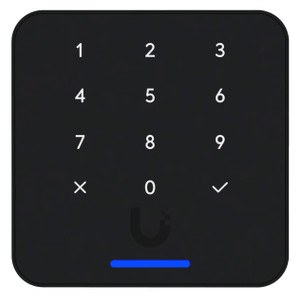
Ubiquiti UA-CARD-B-10 Passive NFC Access Card
The Ubiquiti UA-CARD-B-10 is a passive NFC access card designed for credential-based physical access control within UniFi Access deployments. As a battery-free credential, it eliminates the operational overhead of battery replacement cycles across large cardholder populations while maintaining read range and reliability across UniFi Access reader hardware. The card integrates directly into the UniFi Management Platform for provisioning, revocation, and audit logging, enabling IT teams to manage physical access credentials alongside network security policies from a single dashboard.
Key Features
- Passive NFC Technology: No battery required — eliminates replacement logistics and reduces card lifecycle costs for deployments with 100+ credentials.
- UniFi Access Reader Compatibility: Works with all UniFi Access readers and door controllers equipped with native NFC capability.
- Centralized Credential Management: Provisioning, revocation, and access policy enforcement managed through the UniFi Management Platform without separate access control infrastructure.
- Real-Time Revocation: Immediate deactivation across all connected readers — critical for employee termination, guest access expiration, or emergency lockdown workflows.
- Multi-Use Workflows: Supports employee badges, temporary guest credentials, visitor management, and tiered access policies across multi-tenant facilities and campuses.
- Bulk Provisioning: IT teams issue credentials in batches and enforce synchronized access rules across distributed reader networks without per-reader configuration.
- Audit Trail: Integrated access logging tied to UniFi platform dashboards — no separate credential audit system required.
- Hybrid Deployment Ready: Physical access credentials and network access policies unified under a single UniFi platform, simplifying admin overhead on converged security deployments.
The UA-CARD-B-10 eliminates the passive liability of battery-powered credentials on your support team. In environments managing 500+ employees across multiple buildings, passive NFC reduces emergency credential replacement calls and field service cycles substantially. Real-time revocation through the UniFi platform means a terminated employee's access is live-disabled within seconds — no waiting for card expiration timers or manual reader updates.
Provisioning workflows align with identity management systems already in place at most organizations. Once a cardholder identity is created in UniFi Access, credential issuance is a bulk operation — batch-encode 50 cards in a single upload, then distribute physical cards to intake staff. Guest access workflows support temporary credential windows; once the guest departs, the admin marks the credential as expired in UniFi, and all readers reject it immediately. For visitor management in healthcare, financial services, or multi-tenant office settings, this operational model eliminates the manual card collection and destruction steps that plague badge-based guest programs.
Integration with UniFi Access readers means your access infrastructure lives on the same network backbone as your cameras, intercoms, and door controllers. Centralized visibility into access events, tailgating detection, and authentication failures flows into the UniFi dashboard alongside video forensics. No dedicated access control cabling (Wiegand, RS-485) or separate NVR-to-ACS data sync requirements — it's all IP-native and platform-unified.
The card meets manufacturer warranty standards and operates within the UniFi ecosystem. Large-scale deployments benefit from predictable card lifecycle management: no battery failures mid-year, no inventory complexity separating fresh vs. aged stock. For integrators managing corporate campuses, healthcare facilities, or multi-site guest programs, the UA-CARD-B-10 reduces the total cost of ownership of credential management by consolidating audit, revocation, and provisioning into a single platform interface. Pair with UniFi Access readers and the UniFi Management Platform for a converged physical and logical access strategy; see the full Ubiquiti catalog for compatible readers and door controllers.
Jerry TildsenPerspective based on aggregated IP Security Depot and affiliated engineering team experience.
We've deployed the UA-CARD-B-10 across a range of customer environments — from 50-person satellite offices to 1,000+ employee corporate campuses with multiple buildings and access tiers. The passive NFC approach consistently outperforms battery-backed credentials in operational simplicity and lifecycle cost. What sets this card apart is the tight integration with UniFi Access readers and the management platform. On day one, there's zero learning curve for IT administrators already managing UniFi networking or security; credential provisioning and revocation flow through the same dashboard they use for reader configuration and access policy. We've seen deployments eliminate a dedicated access control manager by consolidating physical and logical access workflows into UniFi. The real-time revocation capability is the differentiator that drives adoption in high-turnover or security-sensitive environments — healthcare and financial services in particular. Guest access workflows that used to require manual card collection and destruction now expire automatically on the backend; front-desk staff no longer has to intercept visitors at departure. On the downside, the card is locked into the UniFi ecosystem; if a customer later switches readers or wants to run a hybrid multi-platform solution, these credentials won't roam. Also, the initial provisioning process assumes some familiarity with the UniFi interface — greenfield access control deployments in organizations without existing UniFi infrastructure require platform onboarding before card rollout. Read range and performance are solid in typical indoor office/clinic environments, but we document the expected range limits (typically 4-6 inches) in site surveys to manage expectations on placement of readers near doors and turnstiles.
Technical Highlights:
- Passive NFC (no battery): Zero maintenance cycle — you don't replace batteries on 500 credentials every 3-5 years. It's a cost and logistical win on anything larger than a 100-person site. The card has a 10+ year lifespan in normal conditions.
- UniFi Management Platform Integration: Provisioning, revocation, and audit logging live in the same admin console as network switches, APs, and cameras. No separate credential database or ACS server — everything flows through UniFi's centralized visibility model.
- Real-Time Revocation Across All Readers: Employee terminated at 5 PM — their card is dead at all readers by 5:02 PM. No waiting for scheduled sync intervals or manual reader updates. Critical for security-sensitive transitions.
- Batch Provisioning and Lifecycle Automation: Bulk-encode 50+ credentials in a single operation. Tie credential expiration to automated date rules (guest access window, seasonal contractor, etc.) — credentials auto-deactivate without admin intervention.
- Unified Audit Trail: Access events (card tap, deny, tailgate detection) logged and visible alongside video forensics and door controller state in one dashboard. No separate access control audit system to maintain.
- Multi-Workflow Support: Employee permanent credentials, guest temporary windows, contractor tiered access, and visitor check-in workflows all managed from the same credential pool and policy engine.
Deployment Considerations:
- UniFi Access reader prerequisite — these cards are NFC-only and work exclusively with UniFi Access hardware. If you're running legacy Wiegand readers or third-party access control systems, the UA-CARD-B-10 won't integrate. Site survey must confirm all readers support NFC.
- Provisioning workflow requires UniFi Management Platform access and familiarity with credential enrollment UI. Greenfield deployments in organizations without existing UniFi infrastructure need platform training and initial setup before card rollout can begin — budget for that ramp.
- Read range is passive NFC standard — typically 4-6 inches in normal office environments. Door readers need to be positioned within reach of a cardholder's hand or pocket. High-traffic turnstile or vestibule applications may require reader positioning tweaks or secondary authentication (PIN pad) to avoid false denials from out-of-range taps.
- Guest and temporary credential workflows are audited centrally, but physical card tracking (collection at departure) remains a manual step for high-security facilities. The backend can auto-expire the credential, but the physical card can still be tapped elsewhere if not destroyed or demagnetized.
- Hybrid multi-site deployments with mixed access control platforms (UniFi at one campus, legacy ACS at another) require separate credential issuance — UA-CARD-B-10 credentials won't roam outside UniFi readers. Plan integration architecture early.
The UA-CARD-B-10 is the right choice for organizations deploying or expanding UniFi Access infrastructure, particularly those managing 200+ credentials or operating multi-site access policies that benefit from centralized provisioning and real-time revocation. IT and security teams already invested in the UniFi platform will see immediate operational gains. For deeper context on compatible readers and access management workflows, explore the Ubiquiti catalog.