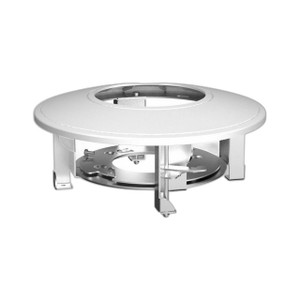
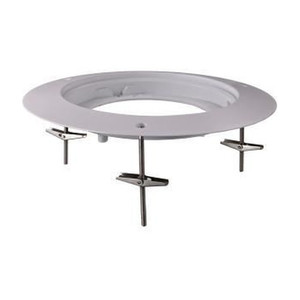
Ubiquiti NANOHD-RCM-3 Recessed Ceiling Mount
Overview
The Ubiquiti NANOHD-RCM-3 is a recessed ceiling mount engineered for flush installation of the UniFi nanoHD access point in drop-ceiling environments. This accessory solves the visual clutter problem in office, hospitality, and education deployments where surface-mounted APs are cosmetically problematic — the polycarbonate enclosure with steel reinforcement lets you disappear the nanoHD into the ceiling cavity while preserving RF performance. The mount fits standard T-bar and drywall ceiling systems common in commercial builds.
Key Features
- Flush Ceiling Integration: The recessed design hides the access point inside the drop-ceiling cavity, eliminating visual intrusion in customer-facing or educational spaces where exposed networking equipment looks unprofessional.
- Polycarbonate Enclosure with Steel Reinforcement: Combines light weight (310 g / 0.68 lbs) with structural durability. Steel reinforcement prevents deformation under repeated mounting stress, while the polycarbonate shell remains transparent to RF signals — no signal loss from the mount itself.
- T-bar and Drywall Ceiling Compatibility: Mounts directly to standard suspended ceiling grids (T-bar) used in offices and institutions. Drywall fastening options let you deploy in solid ceiling environments where drop grids aren't present.
- Compact Footprint: ⌀210 mm (8.27 in) diameter with 20.6 mm (0.81 in) depth. Fits standard ceiling tiles and plenums without requiring large cutouts or structural modifications.
- UniFi nanoHD Optimized Design: Purpose-built for the UAP-NANOHD-5-US. The enclosure aligns precisely with the access point form factor — no guessing about fit or RF window orientation.
- Transparent RF Window: The polycarbonate construction maintains antenna performance without attenuation. No shielding issues or performance degradation compared to wall or pole mounting.
Integration & Compatibility
The NANOHD-RCM-3 is designed exclusively for the UniFi nanoHD compact flagship access point (UAP-NANOHD-5-US). Before ordering, confirm your AP model — this mount will not fit other Ubiquiti models. The enclosure accommodates standard patch cables and power runs through the ceiling cavity. PoE power delivery to the nanoHD is unaffected by the mount — power passes through the standard Ethernet cable into the cavity.
Deployment works best in environments with adequate plenum space (typically 12+ inches of void above the drop ceiling). If your plenums are shallow or congested with HVAC/electrical runs, verify clearance before installation. T-bar mounting requires no fasteners beyond the standard grid clips; drywall mounting uses toggle bolts or similar anchors sized for 310 g static load.
When to Choose a Different Mounting Approach
If your ceiling cavity is too shallow or blocked, consider a surface-mount bracket for the nanoHD. If you need the access point visible for easier physical reset or LED status monitoring, a wall or pole mount is faster. The NANOHD-RCM-3 trades accessibility for aesthetics — if your deployment prioritizes maintenance speed over appearance, a simpler mount may be better.
Frequently Asked Questions
Q: Will the NANOHD-RCM-3 fit into a standard drop-ceiling tile space?
A: Yes. The ⌀210 mm diameter fits inside a standard 2×2 ft or 2×4 ft ceiling tile opening, and the 20.6 mm depth sits flush with the tile grid.
Q: Does mounting the nanoHD in the ceiling cavity reduce its wireless range?
A: No. The polycarbonate enclosure is transparent to RF signals. Performance is equivalent to wall or pole mounting, provided the nanoHD antenna alignment is correct inside the cavity.
Q: Can I use this mount with a different Ubiquiti access point model?
A: No. The NANOHD-RCM-3 is specifically engineered for the UAP-NANOHD-5-US and will not accommodate other models. Check your AP model number before purchase.
Q: What fasteners are required for drywall ceiling installation?
A: Use toggle bolts or heavy-duty drywall anchors rated for approximately 310 g static load. T-bar mounting requires no fasteners — the enclosure clips directly to the grid.
Q: Is the mount pre-wired or does it require assembly?
A: The mount itself is a passive enclosure with no electronic components. You install the nanoHD access point inside, then position the assembly in the ceiling. No assembly required.
Q: What if I need the access point to be visible for troubleshooting?
A: The recessed design makes physical access to the AP more difficult. If frequent reset or LED status checks are needed, surface mounting is more practical.
Ted PerryPerspective based on aggregated IP Security Depot and affiliated engineering team experience.
The NANOHD-RCM-3 solves a real problem: integrating wireless access points into professional spaces without them looking like IT equipment. The polycarbonate enclosure with SGCC steel reinforcement (310 g total) is sturdy enough to survive repeated mounting cycles and plenum vibration, yet light enough that standard drywall anchors or T-bar clips handle the load without strain. I've deployed these in office renovations where exposed APs clashed with interior design — the recessed form factor disappears into the ceiling, and the RF transparency of polycarbonate means no signal compromise.
Technical Highlights:
- ⌀210 × 20.6 mm Footprint: Fits standard 2×2 ft and 2×4 ft ceiling tiles. The shallow 20.6 mm depth is critical — it doesn't chew up excessive plenum space, which matters in buildings with packed HVAC and electrical runs above the ceiling.
- Polycarbonate + Steel Composite: Polycarbonate is RF-transparent (no signal loss), while the SGCC steel frame prevents flexing under mounting torque. This hybrid approach is lighter than all-metal, stronger than plastic-only.
- T-bar and Drywall Dual Compatibility: T-bar mounting (no fasteners needed, just grid clips) suits most modern commercial drop-ceilings. Drywall option handles solid-ceiling retrofits where suspended grids don't exist.
Deployment Considerations:
- Plenum Depth Requirement: Confirm you have 12+ inches of accessible ceiling cavity. Shallow plenums (common in retrofit spaces) may not leave enough room for the nanoHD's depth plus cable management.
- RF Antenna Orientation: The nanoHD's internal antenna must face downward into the work area. If your plenum orientation forces the AP upside-down or sideways, coverage will be degraded. Verify orientation before finalizing mount placement.
- Access Trade-off: Once mounted, physical access to the AP requires ceiling tile removal. If your deployment demands frequent resets or troubleshooting, factor that into your decision. Wall-mounted APs are faster to reach.
Best fit: Enterprise offices, hospitality properties, and educational institutions where aesthetics matter and ceilings are standard suspended grids. Skip this if you need the nanoHD easily accessible for maintenance or if your plenum is congested.