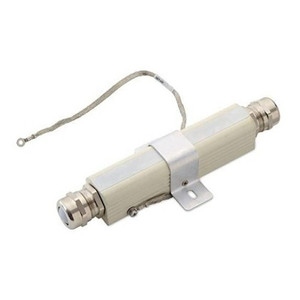
Ubiquiti ETH-SP-G2 PoE Surge Protector
Overview
The Ubiquiti ETH-SP-G2 is a dedicated surge protection device engineered to safeguard Power over Ethernet (PoE) infrastructure from transient overvoltage events and lightning strikes. Unlike inline filters or basic passive suppressors, the ETH-SP-G2 (often searched as ETH SP G2) is purpose-built for distributed security deployments where network devices—cameras, access points, edge controllers—sit at the end of long cable runs exposed to atmospheric discharge risk. The compact external form factor integrates into existing wired network architectures without consuming rack space, UPS capacity, or management overhead, making it a practical insurance policy for outdoor and semi-exposed installations.
Key Features
- PoE Passthrough Design: The ETH-SP-G2 sits inline between your PoE switch and the remote device, passing power and data unmodified under normal conditions. No active components, no power draw from the device itself—it operates transparently until a surge event occurs, then clamps overvoltage to safe levels. This matters because you avoid the latency or bandwidth penalties of active inline devices.
- Transient Overvoltage Protection: Protects against voltage spikes from lightning, inductive switching, and power line transients. When deployed at rooftop camera mounts or in outdoor wireless access point installations, the ETH-SP-G2 absorbs energy that would otherwise reach the device's network interface, eliminating the need to replace a $1,500 camera or $800 access point after a nearby lightning strike.
- Supports Standard PoE/PoE+: Rated for IEEE 802.3af and 802.3at (PoE and PoE+) power delivery. If your camera or edge device draws up to 30W via PoE+, the ETH-SP-G2 will not degrade voltage or introduce latency. This is critical for varifocal cameras or PTZ units that use full PoE+ budgets—substandard surge protectors can sag voltage under peak load, causing device resets or reduced performance.
- External Mounting / Compact Footprint: Does not require DIN rail space or cabinet mounting. Can be positioned near the device being protected (e.g., mounted near a wall-mounted camera) or integrated into an outdoor junction box. Reduces installation complexity and cost compared to centralized rack-mounted surge systems.
- Indoor and Outdoor Rated: The enclosure is designed to tolerate outdoor environmental exposure. If you're protecting devices in rooftop installations or exposed cable runs, the ETH-SP-G2 won't degrade due to humidity, temperature swings, or UV exposure over typical deployment lifespans.
- Ubiquiti Ecosystem Integration: Designed to work with Ubiquiti IP cameras and UniFi network devices. Compatible with any standard PoE switch, but specifically validated in UniFi and enterprise network switch deployments where redundancy, uptime, and cost-per-protected-device matter.
Integration & Compatibility
Deploy the ETH-SP-G2 in any PoE-powered security or network installation where lightning risk is present. Common scenarios include rooftop and perimeter camera mounts, outdoor access point installations, and distributed edge computing nodes in industrial or warehouse environments. The device is compatible with any ONVIF-compliant IP camera and any standard PoE or PoE+ switch. If you run a network video recorder or IP surveillance platform, surge protection at the edge (on the camera cable) is independent of your VMS choice and adds no software or firmware dependencies.
In multi-camera outdoor deployments, calculate total cost-of-protection per camera: a single ETH-SP-G2 unit costs far less than replacing even one mid-range security camera after a surge event. For warehouse automation environments where edge cameras monitor dock doors, inventory racks, or conveyor systems, lightning strikes are a real failure mode—the ETH-SP-G2 reduces unplanned downtime from environmental transients.
Installation Considerations
Mount the ETH-SP-G2 as close as practical to the device being protected. Shorter surge paths (inches vs. feet of cable) allow faster energy diversion and reduce the risk of voltage reflections or side effects. In outdoor installations, position it in a weather-sealed box or junction—do not leave it fully exposed to standing water or prolonged direct rain, even though the enclosure is rated for outdoor use. For daisy-chain protection across multiple devices, deploy one ETH-SP-G2 per device or per cable run; do not attempt to protect multiple distant cameras with a single surge protector.
When to Choose a Different Approach
If you require full system-level surge protection (switching, UPS, and backup power in one unit), consider a centralized rack-mounted surge suppression system or industrial UPS with integrated transient protection. If your deployment is fully indoor with no outdoor cable runs or rooftop exposure, surge protection is less critical—standard network cable management and short runs may suffice. For extremely high-risk environments (oil and gas, antenna farms, coastal regions with frequent electrical storms), consult your systems integrator about redundant surge protection or dedicated grounding strategies beyond what a single inline device can provide.
Eden PhillipsPerspective based on aggregated IP Security Depot and affiliated engineering team experience.
The ETH-SP-G2 is a quiet but essential component in outdoor camera and distributed network deployments. I've seen too many integrators skip surge protection on rooftop cameras, then lose a $2,000 installation to a single lightning strike 500 meters away. The ETH-SP-G2 doesn't require power, doesn't add latency, and passes PoE through cleanly—meaning it integrates into existing designs without redesign.
Technical Highlights:
- Passive Transient Clamping: Operates without active circuitry, so no power draw, no firmware updates, no management overhead. Voltage clamping is instantaneous—the protection is always on, no activation delay.
- PoE+ Rated Passthrough: Supports full IEEE 802.3at (up to 30W at the device) without voltage sag or latency. This matters for motorized varifocal cameras and PTZ units that draw peak power during lens movement or zoom operations.
- Outdoor-Rated Enclosure: IP-rated for wet environments and temperature extremes, meaning the surge protector itself won't become a failure point due to corrosion or thermal cycling over 3–5 years in the field.
Deployment Considerations:
- Mount the ETH-SP-G2 as close to the protected device as practical—ideally within 12 inches. Longer cable runs between the surge protector and the camera reduce the effectiveness of the clamping and allow voltage reflections to build up.
- Grounding: While the ETH-SP-G2 clamps transient voltage on the PoE lines, it is not a substitute for proper grounding at the camera or pole. If your rooftop installation includes grounding rods or lightning rods, verify that your camera mount is bonded to ground—the surge protector and grounding work together.
- One unit per camera: Do not daisy-chain the ETH-SP-G2 to protect multiple cameras on different cable runs. Each device gets its own protector at the point of installation.
For warehouse automation and outdoor security integrations where downtime costs real money, the ETH-SP-G2 is standard practice. Deploy it on every rooftop or perimeter camera, and you'll avoid the 3 AM call about a camera that died during a thunderstorm.
Frequently Asked Questions
Q: Does the ETH-SP-G2 protect against all types of electrical surges?
A: The ETH-SP-G2 protects against transient overvoltage spikes on the Ethernet and PoE lines, including those caused by nearby lightning strikes, switching transients, and inductive events. It is not designed to protect against sustained overvoltage (e.g., a downed power line delivering 240V continuously) or direct lightning strikes to the device itself. For maximum protection, install the surge protector at the end of the cable run closest to the protected device, and ensure the installation includes proper grounding.
Q: Will the ETH-SP-G2 work with my non-Ubiquiti PoE camera?
A: Yes. The ETH-SP-G2 is a passive inline device that works with any PoE or PoE+ powered device that uses standard RJ-45 Ethernet connectors. It does not require any brand-specific firmware or software. Simply insert it between your PoE switch and the camera or access point.
Q: Do I need a separate power supply for the ETH-SP-G2?
A: No. The ETH-SP-G2 is a passive surge suppressor with no active components. It draws no power from the PoE line and requires no external power source. It operates transparently and continuously.
Q: How close to the camera should I mount the ETH-SP-G2?
A: Mount it as close as practical to the device being protected—ideally within 12 inches. Shorter cable runs between the surge protector and the device allow faster energy diversion and reduce the risk of voltage reflections that can still reach and damage the camera.
Q: Can I use one ETH-SP-G2 to protect multiple cameras?
A: No. Deploy one ETH-SP-G2 per device or per cable run. A single surge protector at a central location cannot effectively protect multiple cameras on different distant cable runs, because the energy path from each camera back to the protector is too long.
Q: Is the ETH-SP-G2 rated for outdoor installation?
A: Yes, the enclosure is rated for outdoor environments and can tolerate temperature swings, humidity, and UV exposure. However, it should be mounted in a weather-sealed box or junction to protect against standing water. Do not leave it fully exposed to heavy rain or direct spray.