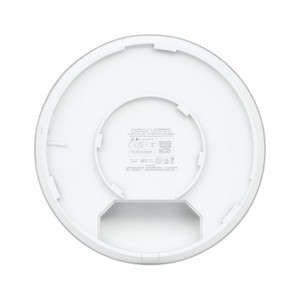
Ubiquiti BULLETAC-IP67 Dual-Band AC Outdoor Radio
Overview
The BULLETAC-IP67 is a compact, weatherproof airMAX dual-band access point designed for point-to-point and point-to-multipoint wireless links in outdoor and harsh-environment deployments. This model delivers 160+ Mbps throughput at 2.4 GHz and 300+ Mbps at 5 GHz — practical performance for remote monitoring networks, warehouse perimeter coverage, and campus connectivity where wired infrastructure is impractical. The IP67-rated aluminum and rubber enclosure means no water ingress from rain, dust, or cleaning spray — a critical requirement for tower, pole, and exposed-bracket mounting across temperature extremes of -40° to 70°C. Single GbE port operates on passive PoE using standard 24V DC adapters, drawing only 7W maximum power, so it won't strain your power infrastructure. Integrated N-type antenna connector allows field-swappable antennas to tune coverage pattern and gain for your specific link distance and topology. NDAA compliant and FCC/CE certified for global deployment.
Key Features
- Dual-Band AC Throughput (160Mbps + 300Mbps): 160+ Mbps on 2.4 GHz handles longer-range, lower-bandwidth feeds; 300+ Mbps on 5 GHz supports high-definition video streams and data traffic on shorter hops. Choose your band based on distance and interference profile — 2.4 GHz penetrates obstacles better, 5 GHz offers wider channels and less congestion in dense RF environments.
- IP67 Weatherproof Enclosure: Full dust and water sealing means the BULLETAC-IP67 survives direct rain, washdown, and extreme temperature swings without degradation. Mount it on exposed tower or pole without protective radome — critical for field deployments where additional enclosures are impractical.
- Passive PoE 24V DC, 7W Max: Single-cable power and data delivery via standard 2-pair PoE simplifies outdoor wiring and eliminates the need for local AC power or separate power supplies on poles or towers. 7W draw is negligible on most power budgets.
- Field-Swappable N-Type Antenna: Integrated connector lets you pair the radio with high-gain or directional antennas to extend range or focus coverage, adapt to changing link geometry, or upgrade antenna performance without replacing the radio.
- -40° to 70°C Operating Range: Handles arctic to desert deployments without thermal derating — essential for mining, pipeline monitoring, and remote sites where temperature control is unavailable.
- 802.11ac airMAX and UniFi Support: Operates across US/CA and worldwide frequency bands (2.4 GHz 2400–2483.5 MHz, U-NII-1 through U-NII-3, extended 5150–5875 MHz). Integrates with both Ubiquiti airMAX and UniFi architectures, so you can mix legacy and modern deployments on the same network backbone.
Integration & Compatibility
The BULLETAC-IP67 supports standard 802.11ac deployment in airMAX and UniFi environments. It mounts via standard weatherproof connectors onto tower, pole, and bracket configurations used across outdoor surveillance and backhaul networks. Certification across FCC, CE, and IC jurisdictions confirms global regulatory compliance. NDAA Section 889 certification removes sourcing and supply-chain risk for federal, state, and institutional buyers. Passive PoE 2-pair operation (pins 4, 5+ return on 7, 8) uses commodity 24V adapters — no specialized midspan equipment required.
Frequently Asked Questions
Q: Is the BULLETAC-IP67 NDAA Section 889 compliant?
A: Yes. The BULLETAC-IP67 is NDAA compliant, confirming it meets U.S. federal supply-chain requirements for direct government contracts and institutional procurements.
Q: What antenna options work with the BULLETAC-IP67?
A: The integrated N-type connector accepts any standard N-type outdoor antenna. Common pairings include 13dBi directional patches for long-distance point-to-point, omnidirectional 5dBi for point-to-multipoint coverage, or sector antennas for cell-based deployments. Consult your Ubiquiti airMAX site survey tool for antenna selection based on distance and pattern.
Q: Can I use the BULLETAC-IP67 indoors?
A: Yes, but the rugged IP67 enclosure and antenna connector are optimized for outdoor mounting. For indoor access points, consider purpose-built indoor airMAX or UniFi models in the Ubiquiti portfolio.
Q: What's the maximum cable run from PoE source to the BULLETAC-IP67?
A: Standard passive PoE runs up to 100 meters (328 feet) of Cat5e or Cat6 at 7W draw; voltage drop is minimal at this power level. Longer runs may require PoE injectors closer to the radio or heavier gauge wire.
Q: Does the BULLETAC-IP67 support 802.11a/b/g backwards compatibility?
A: The BULLETAC-IP67 is an 802.11ac dual-band radio. For legacy 802.11a/b/g clients, deploy a dedicated airMAX access point from the broader Ubiquiti catalog that explicitly supports those standards.
Q: What certifications does the BULLETAC-IP67 hold?
A: FCC (USA), CE (Europe), and IC (Canada). NDAA Section 889 certified. Confirm local frequency band approvals (2.4 GHz, U-NII-1/2/3 5 GHz) before deployment outside North America.
James EverettPerspective based on aggregated IP Security Depot and affiliated engineering team experience.
The BULLETAC-IP67 is a no-frills outdoor dual-band radio built for backhaul and edge-site connectivity where power and maintenance access are limited. If you're bridging gaps across warehouses, remote camera substations, or tower-mounted monitoring gear over sub-kilometer distances, the 300Mbps 5 GHz capacity and IP67 sealing make it a practical choice — as long as you size antenna and site geometry realistically.
Technical Highlights:
- Dual-Band Throughput Split (160Mbps 2.4 GHz vs 300Mbps 5 GHz): The 140Mbps gap reflects real-world channel width and modulation differences. 2.4 GHz is slower but penetrates better and handles longer distances; 5 GHz demands cleaner line-of-sight and narrower range but delivers sustained video throughput. For HD video backhaul (10–25 Mbps per stream), 5 GHz is your default; use 2.4 GHz only when terrain or distance forces it.
- IP67 in Aluminum/Rubber Enclosure: This is the radio's core differentiator. IP67 means full dust protection and temporary submersion up to 1 meter — adequate for outdoor pole mounting, not for underwater installations. The aluminum shell with rubber gaskets handles UV, salt spray, and thermal cycling without corrosion or seal degradation over multiple seasons.
- Passive PoE 24V 7W Max: Low power draw eliminates cable gauge concerns and makes solar + battery backup feasible on remote towers. 7W is roughly half the budget of a high-power access point, freeing power margin for other equipment.
Deployment Considerations:
- Antenna selection is non-optional. The integrated N-type connector is a strength, but the radio itself is unpolarized — your antenna choice determines gain, pattern, and effective range. A 5dBi omnidirectional is baseline; 13dBi directional can double effective distance on point-to-point links, but alignment tolerance tightens dramatically.
- RF survey before deployment is mandatory in crowded 2.4 GHz bands. Channel overlap and interference from Wi-Fi, Bluetooth, and legacy cordless phones will eat into your 160Mbps ceiling. 5 GHz is less congested in most industrial environments but requires tighter line-of-sight.
- Passive PoE cable routing matters on 100m+ runs. Verify DC voltage at the radio — Cat5e drops 0.5–1V over distance. If you read <23V at the connector, upgrade to Cat6A or run a dedicated power wire alongside data.
Use the BULLETAC-IP67 for point-to-point camera backhaul from remote pole-mount cameras to a central receiver, or as a lightweight repeater in a multi-hop mesh. It's not a high-capacity backbone radio — 300Mbps is shared among all clients — but for single-digit camera streams and SCADA telemetry, it's cost-effective and reliable in outdoor thermal and moisture extremes.