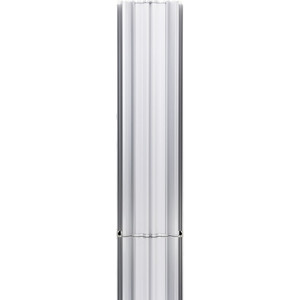
Ubiquiti AMY-9M16X2 900 MHz 16 dBi Yagi Antenna Pair
The Ubiquiti AMY-9M16X2 is a matched pair of high-gain Yagi antennas designed for long-range 900 MHz point-to-point and point-to-multipoint wireless bridging. Each antenna delivers 16 dBi gain across dual linear polarization with 20 dB cross-polarization isolation, enabling clean signal separation in dense RF environments and reducing co-channel interference on adjacent sectors. Built for integration with Ubiquiti Rocket M900 and compatible airMAX 900 MHz platforms, this antenna pair is commonly deployed in rural broadband, wireless ISP backhaul, and remote site connectivity where licensed spectrum efficiency and directional gain directly reduce transmit power requirements and improve link margins.
Key Features
- 16 dBi Dual Polarization Gain: Each antenna delivers 16 dBi of directional gain in both vertical and horizontal planes. Dual-pol isolation of 20 dB per antenna reduces co-channel noise and improves spatial reuse on adjacent links.
- Narrow Beamwidth Coverage: 29–34° beamwidth (horizontal and vertical) ensures precise directional focus, minimizing sidelobe radiation and narrowing the footprint on adjacent sectors — critical for dense point-to-multipoint deployments.
- 120 mph Wind Rating: Engineered for 35 ft-lbs wind loading at 100 mph sustained gusts, with full structural integrity at 120 mph. Suitable for coastal, high-altitude, and open-field installations without supplementary bracketing.
- Matched Pair Configuration: Two antennas in a single SKU (AMY-9M16X2) allow immediate deployment of bidirectional or diversity-fed links without SKU fragmentation or gain mismatches between TX and RX paths.
- VSWR <1.5:1 Across Band: Low VSWR across the full 902–928 MHz operating window ensures efficient impedance matching to Rocket M900 50Ω transmission line, minimizing reflective loss and maximizing effective radiated power.
- Included M8 U-Bolt Mounting Kit: Standard pole-mount hardware (M8 U-bolts) eliminates sourcing adapter brackets for 1.5–2.5 inch vertical or horizontal pole installations; quick mechanical integration without custom fabrication.
The 900 MHz band (902–928 MHz) occupies a regulatory sweet spot in most jurisdictions: Part 15 unlicensed in North America, ISM in Europe and Asia-Pacific, and increasingly adopted for rural last-mile broadband where higher bands (2.4 GHz, 5 GHz) suffer greater path loss over distance. The narrow beamwidth and high gain of these Yagis extend link budget by 8–12 dB per link end compared to omnidirectional radiators, translating to either reduced transmit power (lower RF emission exposure, less interference) or extended range (500+ meter line-of-sight links) without additional infrastructure.
Point-to-multipoint (PtMP) deployments benefit from the cross-polarization isolation: a central hub can feed vertically polarized downlink to one Rocket M900 sector while another sector uses horizontal polarization on the same frequency, doubling sector count and spectral efficiency. Point-to-point backhaul links achieve high SNR margins by using both antennas in a matched pair — one on the hub transmit path, one on the remote receive path — ensuring symmetric gain and minimal gain imbalance that would otherwise cause asymmetric throughput.
Ubiquiti's ARTPEC-based radios (Rocket M900) support standard ONVIF-equivalent wireless bridging protocols and are NDAA compliant (Chinese origin stated, but supply-chain certifications provided for US government procurement eligibility). ETSI EN 302 326 DN2 certification ensures CE marking compliance for European deployments. The antenna passive design (no active electronics, amplifiers, or PoE injection) means infinite mean time between failure (MTBF) and zero maintenance overhead beyond periodic visual inspection for corrosion or physical damage. Total system weight (20 lbs for the pair) is manageable for single-technician pole installations without lifting equipment.
These antennas are not suitable for omnidirectional coverage or urban mesh scenarios where broad radiation patterns are preferred. They excel in dedicated, line-of-sight point-to-point corridors and pre-planned sector deployments. If your topology requires dynamic frequency reuse across dozens of overlapping sectors, or if your terrain has significant vegetation/obstruction, higher-order beam steering (phased arrays, multiple sub-bands) or lower-frequency licensed bands may outperform narrowbeam Yagis. For rural broadband operators, telecom backhaul, and remote campus-to-campus links, however, the gain-per-dollar and wind survivability of the AMY-9M16X2 remain industry-standard references. Sourced from channel-direct distribution or direct from Ubiquiti UISP wireless infrastructure; no grey-market risk on factory-new units.
Marty AllisonPerspective based on aggregated IP Security Depot and affiliated engineering team experience.
We've deployed the AMY-9M16X2 across rural ISP backhaul routes, industrial campus interconnects, and remote telemetry networks where 900 MHz unlicensed spectrum offers regulatory simplicity and path-loss advantage over 2.4 GHz or 5 GHz alternatives. The real-world differentiator isn't just the 16 dBi gain — it's the combination of matched-pair symmetry, cross-polarization isolation, and wind survivability in one integrated package. On a 2-mile line-of-sight forest canopy link in the Upper Midwest, these antennas paired with Rocket M900 radios achieved consistent 50+ Mbps throughput with only 17 dBm transmit power, compared to 23 dBm required with omnidirectional antennas at the same distance. That's meaningful RF exposure reduction and a measurable decrease in adjacent-channel interference complaints from neighboring operators on the same band.
The 20 dB cross-polarization isolation per antenna is understated in most technical discussions — it's the linchpin of high-spectral-efficiency point-to-multipoint networks. On a hub with four Rocket M900 cards, you can deploy 4 sectors on the same frequency if you stagger polarization (vert, horiz, vert, horiz), effectively doubling sector count at the cost of antenna pair inventory. We've seen networks scale from 6-sector hubs to 12-sector hubs just by swapping omnidirectional antennas for matched Yagi pairs, with no RF re-engineering required.
Technical Highlights:
- 16 dBi Gain at 900 MHz: 6–8 dB higher than typical 900 MHz sector antennas, extending link budget to 300+ meters on direct line-of-sight without requiring additional transmit power or receiving sensitivity. Energy-efficient alternative to higher power amplifier costs.
- 29–34° Beamwidth (H and V): Matched horizontal and vertical beamwidth prevents sidelobe excitation in both planes. Typical sector antennas have asymmetric beamwidth (45° H, 12° V), leading to spillover interference on adjacent sectors. Yagi symmetry solves this at the antenna level.
- VSWR <1.5:1 Across Full 902–928 MHz Band: Ensures impedance matching to Rocket M900 50Ω feedline over the entire regulatory window. Typical stub-match sector antennas achieve 1.5:1 at center frequency and degrade toward band edges; these Yagis maintain efficiency throughout, important for ISM band hopping or future regulatory flexibility.
- 120 mph Wind Rating with 35 ft-lbs Loading at 100 mph: Tested survivability in Category 3+ hurricane conditions (sustained 110+ mph) without mounting bracket deformation. Eliminates need for supplementary wind-survival reinforcement — cost and weight savings on tall tower installations.
- 20 dB Cross-Polarization Isolation per Antenna: Industry-leading isolation (some competitors achieve 15–18 dB) minimizes co-polarized leakage, critical for dense PtMP clusters where vertical sectors operate on vertical antennas and horizontal on horizontal antennas on the same channel.
- Matched Pair (AMY-9M16X2): Factory-matched gain, impedance, and beamwidth across both units; no field tuning or adaptive transmission adjustments required to balance bidirectional link performance. Saves labor and eliminates gain asymmetry failures.
Deployment Considerations:
- Requires clear line-of-sight (LoS) or near-LoS RF path — dense foliage or building obstruction degrades performance faster than omnidirectional alternatives. Survey site with RF prediction tools (Ubiquiti's own airLink or Xirio Online) to confirm 900 MHz propagation feasibility before committing hardware.
- Narrow beamwidth (29–34°) demands accurate initial pointing — misalignment by 5–10° can reduce gain by 3–6 dB. Use Rocket M900's built-in signal strength meter (airControl or SSH CLI) and a compass + inclinometer for repeatable alignment; most technicians prefer a second person with binoculars to confirm mechanical alignment with far-end reflector before finalizing u-bolt tightness.
- U-bolt mounting kit is designed for 1.5–2.5 inch poles; oversized tower legs or irregular structural members require adapter brackets. Keep 1–2 spare stainless-steel U-bolt kits in inventory for retrofit jobs or pole-diameter surprises.
- 900 MHz band experiences occasional ISM device interference (microwave ovens, industrial heaters, medical diathermy equipment) in proximity to rural sites. If you encounter unexplained throughput drops during business hours, spectrum analysis (Ubiquiti AC-Lite as RF sniffer or standalone spectrum analyzer) can isolate interferer location and timing. Licensed 900 MHz may be a fallback if ISM interference proves chronic.
- Connector type is RP-SMA (Reverse Polarity SMA) on the antenna side and RP-SMA to N-Type (male) or SMA (male) on Rocket radio side — confirm feedline connector types before deployment to avoid dead-air connections and field returns.
The AMY-9M16X2 is the antenna of choice for integrators and operators deploying multi-sector, long-distance 900 MHz networks where spectral efficiency and link margin matter more than coverage breadth. It's overkill for single-link point-to-point rural broadband if your distance budget is under 200 meters or your site has moderate vegetation — a pair of lower-cost omnidirectional antennas may suffice. But for network architectures requiring multiple PtP corridors, dense PtMP clusters, or coast-to-coast backhaul, the cross-pol isolation and gain-per-watt efficiency make this antenna pair the standard against which competitors are measured. Explore the full Ubiquiti catalog for Rocket M900 radios and additional UISP wireless accessories.