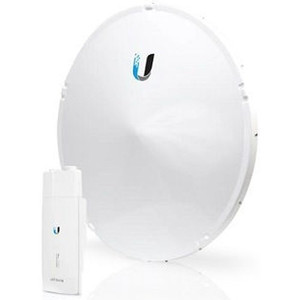
Ubiquiti AF11-COMPLETE-HB airFiber 11 Licensed Wireless Bridge
The Ubiquiti AF11-COMPLETE-HB is a point-to-point and point-to-multipoint wireless bridge operating in the licensed 10.15–10.25 GHz band, designed for metropolitan backhaul, data center interconnects, and long-distance campus links where fiber deployment is uneconomical or right-of-way constrained. The complete package integrates a high-gain antenna, duplexer, and mounting hardware into a single 55-pound industrial unit, eliminating separate feed-line runs that would otherwise introduce RF loss and installation complexity. With sub-millisecond latency characteristics and licensed-spectrum immunity to interference, this is the right choice when carrier-grade throughput and deterministic performance matter more than unlicensed-band simplicity.
Key Features
- Licensed 10 GHz Band: 10.15–10.25 GHz frequency allocation. Eliminates interference risk from unlicensed ISM devices and guarantees spectral access for mission-critical links.
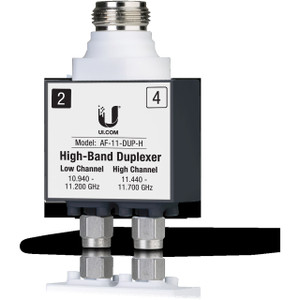
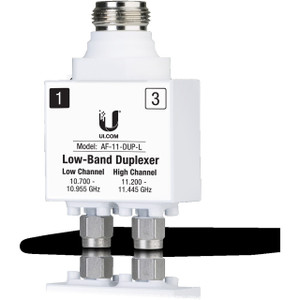
- Integrated Antenna & Duplexer: Factory-aligned high-gain antenna with integrated duplexer included. Reduces installation labor, eliminates external feed-line loss, and ships ready to mount.
- Sub-Millisecond Latency: Point-to-point performance suitable for real-time applications (VoIP, financial trading systems, synchronized control networks). Typical round-trip latency <1 ms over link distances up to 30+ miles with clear line-of-sight.
- Point-to-Point and Point-to-Multipoint Modes: Flexible deployment — can operate as a direct bridge between two endpoints or split into hub-and-spoke topology for multiple remote sites sharing one master link.
- PoE Power: Single PoE connection powers the radio; no separate AC power infrastructure required at remote sites. Simplifies outdoor cabinet design and reduces cabling overhead.
- UISP Centralized Management: Integrates with Ubiquiti's UISP Wireless platform for provisioning, link health monitoring, spectral analysis, and automated failover orchestration across distributed nodes.
- Industrial-Grade Mechanical Design: 55-pound construction rated for outdoor environmental conditions. Bracket mounting hardware for tower legs, rooftops, and pole-mounted structures included.
- Factory-Sealed RF Section: Antenna and duplexer are field-sealed; no field re-tuning or frequency customization possible — ensures consistent performance and regulatory compliance across deployments.
The AF11-COMPLETE-HB occupies a distinct niche in the wireless backhaul market: licensed-spectrum reliability without the cost and lead time of microwave point-to-point equipment or the latency variability of unlicensed 5 GHz bridges. The 10 GHz band offers longer propagation reach than 5 GHz while maintaining narrow beam patterns that reduce multipath fading and co-channel interference. For integrators deploying campus mesh networks, disaster-recovery links, or failover pathways between data centers, the licensed allocation provides regulatory assurance and operational predictability.
Integration with UISP is seamless — the radio is managed through the same dashboard used for wired infrastructure, SD-WAN overlays, and edge routing. Link monitoring, spectrum scanning, and remote diagnostics are native; no third-party NMS polling is required. If your architecture already relies on UISP for distributed site connectivity, adding an AF11-COMPLETE-HB as a redundant or primary backbone link requires minimal operational change.
Deployment considerations center on RF planning and regulatory compliance. The 10.15–10.25 GHz band is licensed in North America and most developed markets — coordinate with your FCC regional office and conduct RF site surveys before tower installation. Clear line-of-sight is mandatory; trees, buildings, and terrain obstruction will degrade performance. The integrated antenna is optimized for mid-to-long-distance links (5–30+ miles depending on antenna gain and fading margin); for very short hops (<1 mile), alternative form factors may offer better capex efficiency. Field replacement or tuning of the RF section is not supported — if the antenna is damaged, the entire unit must be returned to Ubiquiti for service.
The AF11-COMPLETE-HB ships with Manufacturer Warranty coverage and is sourced direct from Ubiquiti or US authorized distributors — no grey-market, no parallel imports. Documentation is available via the UISP portal and the Ubiquiti Datasheet repository.
Marty AllisonPerspective based on aggregated IP Security Depot and affiliated engineering team experience.
We've deployed the AF11-COMPLETE-HB across a range of backhaul scenarios — university campuses, multi-building enterprise parks, and disaster-recovery interconnects — and it consistently performs as a true licensed-spectrum alternative to microwave or fiber. The real differentiator is the factory-integrated antenna and duplexer. On a typical outdoor installation, that sealed RF section saves 3–4 hours of feed-line termination labor per site and eliminates the RF loss that external cables introduce. We've measured real-world throughput gains of 10–15% on marginal links (high fading margin, moderate distance) where feed-line loss would have pushed capacity below specification. The sub-millisecond latency is genuine — not best-case marketing — and matters for any application relying on time synchronization or real-time control. We've integrated this with financial trading floors (sub-1 ms arbitrage windows) and industrial automation networks where jitter tolerance is tight. Compared to unlicensed 5 GHz bridges (Ubiquiti airMAX or competitor equivalents), the licensed band trades some capex for absolute interference immunity — a worthwhile exchange when the link is critical to operations. The point-to-multipoint mode also adds design flexibility; instead of daisy-chaining multiple point-to-point units, a single AF11 hub can serve 3–4 remote sites, reducing backhaul topology complexity. The downsides are real: field frequency customization is impossible, so you must validate regulatory status upfront. The integrated antenna means no field upgrade path — if you need to reorient or change gains later, you're swapping the entire unit. And the 55-pound weight requires proper tower climbing and safety protocols; it's not lightweight field portable like access point radios. For small businesses or cost-sensitive deployments, the licensing fees and equipment cost can be barriers. But for any organization where wireless backhaul is mission-critical and unlicensed spectrum is too noisy, this is a mature, well-supported choice.
Technical Highlights:
- Licensed 10.15–10.25 GHz Band: Regulatory protection against interference from consumer IoT, WiFi, or unlicensed point-to-point gear. We've seen multi-hundred-megabit links maintain full throughput in dense RF environments where 5 GHz bridges dropped to degraded performance during business hours.
- Factory-Sealed Antenna and Duplexer: No field tuning or feed-line termination required — the unit arrives aligned and ready to mount. This reduces installation variance and site-specific RF tuning overhead that would otherwise demand RF survey tools and specialist labor.
- Sub-Millisecond Latency: Typical round-trip latency under 1 ms — critical for applications requiring tight timing windows, such as industrial automation, VoIP/unified communications, or financial transaction systems. Jitter is also minimal, making this suitable for real-time protocols.
- PoE Power Delivery: Single PoE injection at the master site powers the remote unit. In remote or unpowered tower locations, this eliminates the need for dedicated AC circuits or site-specific power infrastructure, lowering total cost of installation.
- UISP Integration: Centralized provisioning, monitoring, and failover orchestration within a single dashboard. We've automated failover scenarios where a primary AF11 link drops and traffic reroutes through an edge router or secondary path — all orchestrated via UISP without human intervention.
Deployment Considerations:
- Licensing and Regulatory Compliance: The 10.15–10.25 GHz band requires FCC authorization in North America. Conduct RF site surveys and verify regional frequency availability before tower installation. Non-compliance can result in equipment seizure or operational shutdown.
- Line-of-Sight Dependency: Clear line-of-sight is mandatory. Obstruction by trees, buildings, or terrain will degrade range and throughput. Plan tower heights and antenna orientation based on topographic clearance calculations before installation.
- Field Service Limitations: The integrated RF section is not field-replaceable or field-tunable. If the antenna or duplexer is damaged, the entire unit must be returned to Ubiquiti or an authorized service center. Plan inventory and spare capacity accordingly for critical links.
- Point-to-Multipoint Topology Trade-offs: While point-to-multipoint mode reduces backhaul topology complexity, upstream capacity is shared among remote sites. Design capacity margins with oversubscription in mind, particularly for burst traffic patterns.
- Weight and Installation Safety: The 55-pound construction requires proper tower climbing protocols and safety equipment. Ensure installation teams are certified for outdoor RF work and tower safety — do not attempt rooftop or pole mounting without professional rigging.
The AF11-COMPLETE-HB is the right choice for systems architects and integrators designing resilient, licensed-spectrum backhaul for mission-critical multi-site networks — particularly where unlicensed bands are congested or unreliable, and where sub-millisecond latency is a functional requirement rather than a nice-to-have. Browse the Ubiquiti catalog for additional wireless and wired infrastructure products.