


Product images are provided for reference and may not represent the exact model, configuration, or included
components.
Overview
SKU:
T83X4-1240-0
Condition:
New
Availability:
Usually ships in 24 hours
Warranty
2-Year Warranty

TSC T83X4-1240-0 Direct Thermal/Thermal Transfer Printer
TSC T83X4-1240-0 Industrial Thermal Label Printer Overview The TSC T83X4-1240-0 is a versatile thermal label printer engineered for warehouse, logist…
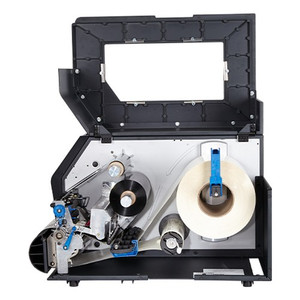
TSC T83X4-1240-0 Direct Thermal/Thermal Transfer Printer
$3,692.99
Your recommended setup
Review items below — quantities update pricing automatically.
Item
Qty
Status
Price
Optional Add-Ons recommended
Services optional
Bundle Summary
Bundle Subtotal:
$0.00
Optional Add-Ons:
$0.00
Services:
$0.00
Total:
$0.00
Overview
SKU:
T83X4-1240-0
Condition:
New
Availability:
Usually ships in 24 hours
Warranty
2-Year Warranty
Description

TSC T83X4-1240-0 Industrial Thermal Label Printer
Overview
The TSC T83X4-1240-0 is a versatile thermal label printer engineered for warehouse, logistics, and retail label production environments. This model supports both direct thermal and thermal transfer printing, delivering consistent output at 10 inches per second (ips) with 203 dpi resolution. The 8.5-inch maximum print width accommodates standard label stocks, while the color LCD display enables straightforward operator interface and real-time monitoring. WiFi connectivity ensures flexible network integration without dedicated cabling, making it suitable for mobile cart deployment and decentralized printing stations.
Key Features
- Dual Print Method: Direct thermal and thermal transfer capabilities eliminate the need for separate hardware investments based on label material preferences.
- Print Speed: 10 ips throughput reduces per-label cycle time in high-volume label applications.
- Print Resolution: 203 dpi native resolution produces sharp barcodes, QR codes, and text suitable for standard barcode scanning and compliance labeling.
- Maximum Print Width: 8.5-inch maximum width accommodates shipping labels, product labels, and multi-up label formats without media waste.
- Color LCD Display: Operator-friendly visual feedback for status, error codes, and media guidance without external software interfaces.
- WiFi Connectivity: Wireless network printing reduces infrastructure complexity and enables placement away from desk environments in warehouse and loading dock areas.
- Label Media Support: Designed for label stock compatibility, supporting rolls and fanfold formats typical to logistics operations.
- GPIO Interface: Programmable input/output pins enable integration with external conveyors, scales, and barcode scanners for automated label-on-demand workflows.
- IPDS Support: Intelligent Printer Data Stream compatibility provides enterprise-grade page description language support for IBM system environments.
- US Configuration: Factory-set for North American power and regulatory standards, eliminating setup delays.
Integration & Compatibility
The T83X4-1240-0 (often searched as T83X4 1240 0) integrates directly into network environments via standard WiFi protocols. IPDS support ensures compatibility with legacy and current IBM host systems common in large warehouse management systems. GPIO connectivity enables sensor inputs for media-out detection, jam signals, and external trigger signals from adjacent equipment. Network administrators can deploy this printer without dedicated parallel or serial ports, reducing cable runs and enabling rapid repositioning within facilities.
Typical Applications
Ideal for shipping and receiving label production, SKU labeling, compliance and traceability label printing, and multi-location label printing networks. The 10 ips speed and dual-method printing support both high-throughput scenarios and specialty label formats. Small-to-medium print volumes and distributed printing requirements benefit from the wireless deployment model.
James Everett
During facility deployments involving label consolidation across multiple warehouse zones, the TSC T83X4-1240-0 consistently performed as a reliable mid-range thermal printer. The dual print method flexibility allows operations to transition between direct thermal roll stock and thermal transfer ribbon-based labels without hardware replacement, a significant operational advantage when label specifications change mid-season or during vendor transitions.
Technical Highlights:
- Print Speed & Resolution Balance: 10 ips at 203 dpi hits the practical sweet spot for readable barcodes without sacrificing throughput in label-per-minute constraints typical to 3PL and fulfillment environments.
- WiFi Deployment Flexibility: Wireless connectivity eliminates fixed installation points, enabling dynamic label printing from portable carts and temporary workstations without infrastructure investment.
- IPDS Compatibility: Systems running IBM WMS or legacy host systems recognize IPDS support without custom printer drivers or emulation layers, reducing IT setup friction.
- GPIO for Workflow Automation: Direct sensor integration supports label-on-demand triggers from external equipment, reducing manual operator intervention in repetitive label cycles.
Deployment Considerations:
- WiFi range and signal strength should be validated in concrete-walled warehouses; consider bridge access points in large facilities to avoid dead zones.
- Label stock compatibility requires testing with your specific supplier; direct thermal and thermal transfer require different consumables and should be standardized per location to avoid operator confusion.
- The 8.5-inch print width is standard for North American labels; verify your largest label format fits within this constraint before rollout.
- Color LCD is operator-friendly but requires periodic cleaning in dusty environments; plan for routine display maintenance in high-traffic printing areas.
The T83X4-1240-0 delivers reliable thermal printing performance in distributed warehouse environments where flexibility and ease of deployment matter as much as print speed. It's a pragmatic choice for operations seeking to modernize from fixed-location printers to mobile-ready label production without overengineering for ultra-high-speed requirements.
Specifications
Product Type:
Printer
Connectivity:
WiFi, GPIO, IPDS
Form Factor:
Printer
Display Size:
Color LCD
Print Method:
Direct Thermal/Thermal Transfer
Print Speed:
10 ips
Max Print Width:
8.5
Display:
Color LCD
media_type:
Labels
Print_Width:
8.5"
Print Resolution:
203 dpi
Have Questions?
Ask an Expert.
RELATED PRODUCTS



System Design, Deployment & Technical Support
Support services and planning resources for commercial surveillance, access control, and infrastructure deployments.
Fixed scope • Fixed price
System Design Assistance
- Get help validating product compatibility
- Coverage requirements
- Storage planning and deployment architecture before you buy.
Deployment & Configuration Support
- Access fixed-scope support for rollout planning
- User setup guidance
- Migration and system standardization across single-site or multi-site deployments
Guides, Tools & Calculators
- PoE requirements
- Storage retention
- Camera selection and deployment methodology