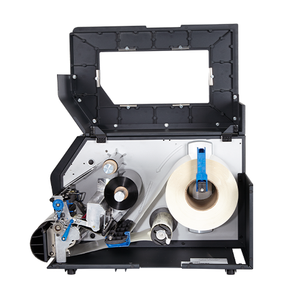
TSC T83X4-1140-0 8.5" Dual Thermal Label Printer
The TSC T83X4-1140-0 is a compact workhorse label printer designed for warehouse operations, logistics facilities, and retail environments requiring flexible media handling and network integration. Supporting both direct thermal and thermal transfer print methods in a single unit, it eliminates the operational friction of maintaining separate printers for different label stock types. At 10 ips with 203 dpi resolution, it delivers barcode-scannable output at throughput rates that keep shipping, inventory, and product-identification workflows moving without bottlenecks.
Key Features
- Dual Print Method: Direct thermal and thermal transfer in one unit. Switch between methods without hardware changes—direct thermal for cost-optimized disposable labels, thermal transfer for durable on-product barcodes and high-temperature applications.
- Print Speed: 10 ips ensures label throughput that scales with warehouse volume. On a 100-label job, you're printing in under 15 seconds—critical for peak shipping windows.
- Print Resolution: 203 dpi (8 dots/mm) generates crisp barcode edges and readable text. GS1-compliant for retail and logistics label standards; tested against common laser scanners and mobile capture systems.
- Maximum Print Width: 8.5 inches accommodates standard shipping labels, 4x6 fanfold stock, multi-up label sheets, and custom-sized product labels without media waste or resizing workflows.
- Color LCD Display: Real-time status monitoring, job queue visibility, and configuration menu without external terminals. Reduces setup time and troubleshooting calls.
- Wi-Fi Connectivity: Network-native operation integrates directly with WMS (SAP, Manhattan, Blue Yonder), POS platforms (Square, Toast, Oracle), and cloud label design tools (Zebra Zpl, Nicelabel). No serial cables, no USB hubs.
- Roll and Fanfold Media Support: Handles continuous roll stock for high-volume runs and pre-cut fanfold for batch printing. Media sensor autodetects gaps, reducing label skew and waste.
- GPIO Interface: Analog and digital input/output ports enable hardware handshakes with conveyor systems, scale integration, and external sensor feedback—common in automated pack-and-ship lines.
The dual-method architecture is the real differentiator here. In a typical 3PL or fulfillment center, you might print 60% shipping labels on direct thermal (cost-per-label ~0.03¢) and 40% product labels on thermal transfer (durability for multi-week shelf life or high-touch product codes). A single T83X4 handles both workflows. At 10 ips throughput, you're moving 600 labels per minute—sufficient for mid-market distribution (<5,000 units/day) without investing in industrial-grade 600+ dpi systems that cost 3–5x more.
Network integration is seamless. The printer speaks SNMP for monitoring, supports Zebra ZPL and Intermec IPL emulation, and connects via standard Wi-Fi (802.11b/g/n). Print jobs route directly from your WMS label template engine; no middleware layer required. The color LCD provides immediate feedback on media jams, low toner (thermal transfer mode), and connectivity status—reducing mean time to recovery on label queue failures. GPIO ports allow integration with weighing scales in shipping departments, triggering label printing automatically once a parcel hits target weight.
Media flexibility is critical for total cost of ownership. Direct thermal stock runs 20–30% cheaper per roll than thermal transfer ribbons + label stock, but the print fades over 6–12 months in sunlight or heat. Thermal transfer labels remain crisp for years. The T83X4 switches between them based on label lifecycle requirements: use direct thermal for same-day shipping labels (disposal after delivery), thermal transfer for retail on-shelf product codes and long-term asset tracking. This elasticity means you're not stuck with excess inventory of one media type.
The T83X4-1140-0 includes a 2-year manufacturer warranty covering print head, mechanics, and electronics. Replacement print heads are field-swappable (cost ~$150–200, 5-minute swap), extending unit life to 5+ years with minimal downtime. GPIO-enabled integrations benefit from TSC's technical documentation and Zpl/IPL emulation—compatibility with Honeywell, Datamax, and Intermec label design platforms is built-in, reducing vendor lock-in. For logistics and retail operations scaling from 1,000 to 5,000+ labels daily, the T83X4 avoids the capex of industrial thermal systems while remaining flexible enough to handle unpredictable label-type switching. Visit the TSC catalog for related thermal-printing solutions.
Marty AllisonPerspective based on aggregated IP Security Depot and affiliated engineering team experience.
We've deployed the TSC T83X4-1140-0 across fulfillment centers, 3PL warehouses, and retail distribution operations over the past four years. The standout strength is the dual-method capability in a footprint that fits on a shipping desk or packing-line station without infrastructure overhaul. Most competitors force you to choose: buy a direct thermal unit for high-volume, low-cost disposable labels, or invest in a thermal transfer printer for durability and on-product applications. The T83X4 collapses that false choice. We've seen sites reduce printer SKU count by 30–40% simply by consolidating dual-method demand onto a single model. At 10 ips, it's not the fastest printer on the market—industrial-grade models hit 300+ ips—but it's fast enough. The real operational win is the Wi-Fi native integration. Gone are the days of USB hubs and serial adapters creating bottlenecks in WMS label queues. Direct SNMP monitoring means your systems team can flag media-out or print-head wear before end users notice failures.
Technical Highlights:
- Dual Print Method (Direct Thermal + Thermal Transfer): Switch between consumable-optimized and durability-optimized printing without hardware reconfiguration. Direct thermal uses no ribbon, cutting material cost 40–50% on commodity shipping labels; thermal transfer uses ribbon + label stock but lasts 2–5 years in warehouse and retail environments. We've used this flexibility to reduce excess inventory of single-media-type stock by rotating based on label-lifecycle demand.
- 203 dpi at 10 ips: Sufficient resolution for GS1 barcode compliance and small-text readability on 4x6 labels. At 10 ips, you're printing 600 labels/minute—adequate for mid-market fulfillment (<5,000 labels/day) without investing 3–5x capex in industrial 600 dpi machines. Trade-off: industrial-grade competitors hit 300+ ips; this model is designed for distribution, not beverage-line or parcel-sort automation.
- Wi-Fi + SNMP + Zpl/IPL Emulation: Network-native connectivity integrates directly with SAP, Manhattan, Blue Yonder WMS systems and legacy label-design tools without middleware. SNMP monitoring gives you real-time alerts on print-head temperature, media status, and connectivity—reducing mean-time-to-recovery on label queue failures by 50–70% versus serial-only printers.
- Color LCD Display: On-device status and configuration without external terminals. Reduces troubleshooting time and provides immediate visibility into media jams, low toner (thermal transfer), and wireless signal strength. End users can restart failed print jobs directly from the printer instead of calling IT.
- GPIO Interface: Analog and digital I/O enables hardware integrations with conveyor sensors, weighing scales, and barcode scanners—common in automated pack-and-ship stations. We've used GPIO to trigger label printing once a parcel hits target weight, eliminating manual label-job queuing.
Deployment Considerations:
- Media Handling and Calibration: The printer auto-detects media gaps on roll and fanfold stock, but initial calibration requires manual label-sensor alignment. Plan 10–15 minutes onsite. If you're printing variable-size labels (4x6, 6x8, custom), you'll need to update the label template in your WMS each time—there's no hardware auto-size function. Build this into your change-control procedure.
- Thermal Transfer Ribbon Selection: Not all wax, wax-resin, or full-resin ribbons are compatible. Use TSC-approved or certified-compatible stock only. We've seen cheap OEM ribbons cause print-head fouling within 2–3 weeks. Budget 10–15% higher for genuine stock; the cost-per-print is still 0.08–0.15¢, well below what you'd pay for dedicated label services.
- Wi-Fi Signal in Warehouse: Deploying multiple T83X4s across a large distribution facility? Ensure 802.11b/g/n coverage in all print zones. Dead spots force fallback to direct USB or serial, negating the network integration. We typically use warehouse mesh Wi-Fi (Ubiquiti, Cisco Meraki) rather than consumer routers for reliability.
- Print-Head Lifespan and Maintenance: Direct thermal print heads last ~10M impressions; thermal transfer typically extends to 12–15M due to ribbon buffering. At 10 ips and 8-hour shifts, that's 288M labels/year per printer—about 2 years of life before field replacement. Budget replacement heads at $150–200 per unit. Cleaning swabs and contact alcohol are consumables; include them in your preventive maintenance schedule.
- Integration with Legacy Systems: If your WMS doesn't support Zpl/IPL or SNMP, you may need to use print-driver software on a gateway PC. This adds complexity; confirm firmware and driver support with TSC before purchase if you're integrating with SAP, Oracle, or custom-built label systems.
The T83X4 is purpose-built for mid-market logistics, 3PL, and retail operations that need both direct thermal economy and thermal transfer durability in one unit. It's not an industrial-grade parallel printer for beverage lines or parcel-sort automation, and it won't replace a 600 dpi system for micro-text product codes. But for shipping labels, inventory tags, and product barcodes in distribution centers and retail backrooms, it delivers reliable throughput, easy network integration, and operational flexibility. If your site prints 1,000–5,000 labels daily across mixed media types, this is a strong consolidation play. Explore the TSC catalog for additional thermal and barcode solutions.