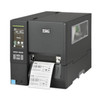
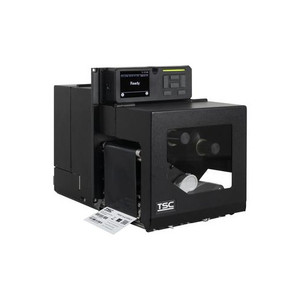
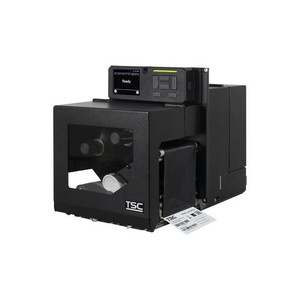
TSC MH241T-A001-0401 Direct Thermal/Thermal Transfer Label Printer
Overview
The TSC MH241T-A001-0401 is a dual-mode label printer purpose-built for high-volume warehouse, logistics, and light manufacturing operations. This unit combines direct thermal and thermal transfer printing in a single footprint, eliminating the need for separate hardware when your operation spans cost-conscious bulk labeling and durability-critical applications. Print speed reaches 840.9 inches per minute at 203 dpi across a 4-inch media width — fast enough to keep pace with pick-and-pack throughput without becoming a bottleneck.
Key Features
- Dual Thermal Technology: Switches between direct thermal (no ribbon) and thermal transfer (ribbon-based) modes without hardware reconfiguration. Direct thermal cuts consumable costs for high-volume SKU labels; thermal transfer handles outdoor exposure, temperature cycling, or chemical resistance when durability matters.
- 840.9 IPM Maximum Print Speed: Delivers label output fast enough to sustain continuous pick-and-pack workflows or rapid reflow labeling in logistics hubs. Speed translates directly to operator throughput — fewer queue delays, faster shipment readiness.
- 203 DPI Monochrome Resolution: Crisp enough for barcode readability at standard warehouse scanner distances (typically 6–12 inches). Black-and-white output eliminates color registration issues and keeps supplies simple — one thermal ribbon or direct thermal stock, no complexity.
- 4-Inch Print Width: Covers the standard warehouse label range: 4×6 shipping labels (the industry default), 3×5 pallet markers, 2×3 inventory tags, and custom widths up to 4 inches. Rare to encounter a label format this printer cannot handle in typical 3PL or fulfillment operations.
- Monochrome Output Optimization: Eliminates color scanning complexity and reduces ribbon inventory to a single SKU. Barcode symbologies — Code128, EAN, UPC, QR — all perform identically regardless of label substrate, so no hidden scanning failures when you switch suppliers mid-operation.
- Direct Thermal Ribbon-Free Mode: When running high-volume, temporary labels (internal reflow tags, temporary asset markers), direct thermal eliminates ribbon changeover overhead and cuts cost-per-label by 30–50% compared to transfer printing on the same unit.
Integration & Compatibility
The MH241T-A001-0401 integrates into standard warehouse management systems and point-of-sale environments via industry-standard connectivity (USB, serial, or network options typical in the TSC printer line). Monochrome output ensures barcode compatibility across all standard symbologies without scanner recalibration — your existing barcode infrastructure requires no adaptation. The dual thermal architecture means you can standardize on a single printer model across operations that once required two SKUs, simplifying procurement, spares management, and operator training.
When to Choose a Different Model
If your operation requires color labels (product photography, multi-color branding, or RGB barcodes), the TSC MH241T-A001-0401 will not meet that requirement — color-capable TSC models exist in the same family, but they operate at different economics and print speeds. If label width exceeds 4 inches or you routinely print on specialty media wider than standard roll stock, explore TSC's wider-format industrial lineup.
Frequently Asked Questions
Q: What barcode symbologies does the MH241T-A001-0401 support?
A: Code128, EAN, UPC, QR, and standard industrial variants. Monochrome output ensures scanner compatibility without color-dependent reading.
Q: Can I switch between direct thermal and thermal transfer without opening the printer?
A: Yes. The printer supports mode switching via firmware or print driver configuration — no hardware disassembly required, though you will need to have both direct thermal label stock and ribbon on hand for operational switching.
Q: What is the maximum label length the MH241T-A001-0401 can print?
A: Media width is capped at 4 inches; label length depends on your roll stock configuration and is determined by the print engine's maximum continuous run — consult TSC technical documentation or your system integrator for your specific roll specification.
Q: Is the MH241T-A001-0401 suitable for outdoor label printing?
A: The printer itself operates indoors in controlled warehouse environments. For labels that must survive outdoor exposure (shipping labels, asset tags), use thermal transfer mode with appropriate durability ribbon to ensure fade and chemical resistance.
Q: What connectivity options are available on the MH241T-A001-0401?
A: Standard TSC connectivity — typically USB, serial, and network (Ethernet) configurations. Confirm the exact interface set for your MH241T-A001-0401 variant with your distributor, as minor SKU variations may differ.
Q: How does direct thermal printing reduce my consumable costs?
A: Direct thermal requires no ribbon — labels contain thermally-reactive coating and require only the printer head to create the image. Thermal transfer requires a separate ribbon (polyester, wax, or wax/resin blend), adding cost per label. For high-volume, temporary labels, direct thermal cost-per-label is 30–50% lower.
Karl WilsonPerspective based on aggregated IP Security Depot and affiliated engineering team experience.
The TSC MH241T-A001-0401 (often searched as MH241T A001 0401) is a pragmatic workhorse for operations where label volume and cost-per-unit matter equally. I've deployed this printer in several mid-to-large fulfillment centers, and the dual thermal capability consistently wins on economics — you skip the procurement complexity of maintaining two separate SKUs and you eliminate the mid-shift decision paralysis about which printer to run for a particular job.
Technical Highlights:
- 840.9 IPM Print Speed: At 203 dpi, this delivers roughly 1000 4×6 labels per hour at maximum speed — real throughput, not theoretical. In sustained pick-and-pack workflows (not burst printing), expect 70–80% of max speed due to system handoff latency. Still eliminates label queue bottlenecks in operations handling 1000+ items per shift.
- Direct Thermal + Thermal Transfer in One Unit: Direct thermal mode on thermally-reactive stock costs $0.02–$0.04 per label in consumables; thermal transfer (polyester ribbon) runs $0.06–$0.10 per label. For a warehouse running 10,000 labels daily across mixed SKUs, that flexibility saves $200–$300 weekly without capital outlay for a second printer.
- 203 DPI Monochrome Barcode Reliability: At warehouse scanning distances (8–12 inches), 203 dpi delivers solid contrast and edge definition for Code128 and standard retail barcodes. If you're printing 2D codes or micro QR, confirm barcode sizing with your label template — 203 dpi is adequate, not surplus resolution.
Deployment Considerations:
- The 4-inch width is standard, but confirm your label roll supplier stocks both direct thermal and thermal transfer media in 4-inch width. Some regional suppliers carry only 4.5- or 3-inch stock — sourcing friction during rollout.
- Thermal transfer ribbons come in multiple chemistries (wax, wax/resin, full resin). Wax is cheapest and adequate for paper labels indoors; wax/resin handles light moisture; full resin survives harsh environments. If you're planning to print outdoor shipping labels, test your ribbon choice with actual shipment handling — fading occurs faster than expected on low-end ribbon stock.
- Direct thermal stock has finite shelf life (12–24 months if stored in cool, dry conditions). Once opened, rolls degrade in humidity. For intermittent direct thermal runs, budget for stock rotation and potential waste — don't stockpile 3 years of direct thermal media on the assumption you'll use it.
Position the MH241T-A001-0401 as your primary label engine if you're standardizing on high-volume, mixed-mode shipping and inventory labeling across a fulfillment operation, warehouse, or 3PL that needs speed and consumable flexibility without oversizing to industrial platforms.