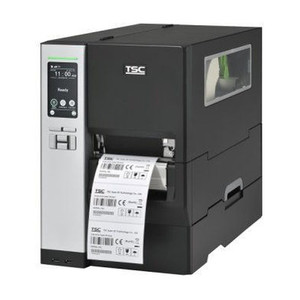
TSC MH241T-A001-0301 Industrial Thermal Transfer Printer
Overview
The TSC MH241T-A001-0301 is a purpose-built industrial thermal transfer printer engineered for high-volume label production in warehouse, distribution, and manufacturing environments. This model combines thermal transfer and direct thermal printing capability with integrated Wi-Fi connectivity, delivering consistent output in demanding 24/7 operational settings. The MH241T-A001-0301 is configured to US industrial specifications and built for the continuous duty cycles typical of supply chain logistics, asset management, and shipping operations.
Key Features
- Dual Thermal Capability (Transfer + Direct): Supports both thermal transfer and direct thermal printing — thermal transfer produces durable, fade-resistant labels suitable for barcode scanning and long-term asset tracking; direct thermal mode cuts consumable costs for short-shelf applications like temporary warehouse tags or packing slips where label longevity matters less.
- Wi-Fi Connectivity: Integrated wireless networking eliminates fixed cable dependencies, allowing flexible placement across warehouse floors and loading docks. Reduces installation time and supports mobile label printing workflows without rewiring infrastructure.
- Industrial-Grade Construction: Heavy-duty print head, reinforced media feed mechanism, and robust power supply handle extended duty cycles typical of distribution centers. Straightforward mechanical design minimizes maintenance overhead and accepts field-serviceable components (ribbons, labels, printheads) available through standard distribution channels.
- Fast Print Speed: Delivers rapid label throughput to meet high-volume production requirements without sacrificing print quality — directly reduces per-label production time and labor cost in high-throughput environments.
- Flexible Media Handling: Accepts both roll and fan-fold label formats, supporting varied label sizes and types. This flexibility allows a single printer to handle diverse labeling tasks across different warehouse applications without format-specific hardware swaps.
- Standard Programming Language Support: Compatible with industry-standard label design and printing protocols, ensuring seamless integration with existing warehouse management systems (WMS) and enterprise resource planning (ERP) platforms without custom software development.
Integration & Deployment
The MH241T-A001-0301 integrates directly into networked label production environments via standard protocols and Wi-Fi connectivity. Integrators can deploy the unit as a standalone label station at a loading dock or warehouse workstation, or configure multiple units for centralized fleet management across a distribution facility. Direct network integration with WMS and ERP systems streamlines label generation — shipping labels, asset tags, and compliance documentation print on demand without manual queue management. The printer's Wi-Fi architecture reduces installation complexity compared to traditional wired models, particularly in existing warehouse layouts where running new network cables would be disruptive or costly.
Thermal Transfer Technology Explained
Thermal transfer printing applies heat and ribbon technology to produce durable, long-lasting labels resistant to fading, moisture, and chemical exposure — critical for products moving through varied environmental conditions (cold storage, humidity-prone shipping containers, outdoor staging areas). This durability ensures barcode readability throughout the product lifecycle, reducing scanning errors and re-labeling costs. Standard ribbon widths and cartridge designs allow straightforward supply changeover, minimizing downtime during consumable replacement. Direct thermal mode, by contrast, uses heat alone without ribbon, eliminating ribbon costs and reducing consumable inventory complexity for applications where label permanence is not a primary requirement.
Operating Environment & Reliability
The MH241T-A001-0301 is rated for typical warehouse temperature and humidity ranges, tolerating dust and continuous operation. Industrial-grade components and field-serviceable design reduce mean time to repair and allow warehouse staff to perform routine maintenance without specialized technicians. Fast print speeds and intuitive operation lower operator training requirements and accelerate adoption across warehouse personnel with varying technical backgrounds.
Frequently Asked Questions
Q: What is the difference between thermal transfer and direct thermal printing on the MH241T-A001-0301?
A: Thermal transfer uses a ribbon to apply heat-sensitive ink to the label, producing durable, long-lasting output resistant to fading and moisture — ideal for barcode labels and shipping documentation that must survive handling and environmental exposure. Direct thermal uses heat alone without ribbon, eliminating ribbon costs and suitable for temporary warehouse tags or packing slips where longevity is less critical. The MH241T-A001-0301 supports both modes, allowing you to choose the cost-optimal method for each application.
Q: Can the MH241T-A001-0301 integrate with my existing warehouse management system?
A: Yes. The MH241T-A001-0301 supports standard network protocols and industry-standard programming languages commonly used in WMS and ERP platforms. Integration is straightforward for labels generated by typical logistics software. Confirm compatibility with your specific WMS during pre-sales testing.
Q: What media formats does the MH241T-A001-0301 accept?
A: The printer supports both roll and fan-fold label media, accommodating varied label sizes and types across different warehouse applications. This flexibility allows a single printer to handle diverse labeling tasks without requiring format-specific hardware modifications.
Q: How does Wi-Fi connectivity improve deployment versus wired Ethernet?
A: Integrated Wi-Fi eliminates the need for fixed network cabling, reducing installation time and allowing flexible placement across warehouse floors and loading docks. This is particularly valuable in existing warehouses where running new cable would be disruptive or costly.
Q: What are typical consumables and how often does the print head require replacement?
A: Primary consumables are thermal transfer ribbons and label stock. Print head lifespan depends on volume and label composition; replacement printheads are field-serviceable and widely available through standard distribution channels. Straightforward mechanical design minimizes unexpected downtime.
Q: Is the MH241T-A001-0301 suitable for 24/7 warehouse operations?
A: Yes. The MH241T-A001-0301 is engineered with industrial-grade construction and reinforced components to handle continuous duty cycles typical of distribution centers. Heavy-duty mechanics and robust power supply support extended operation without premature wear.
Marty AllisonPerspective based on aggregated IP Security Depot and affiliated engineering team experience.
The TSC MH241T-A001-0301 is built for logistics integrators who need a straightforward, field-serviceable label printer that won't disappoint in a high-volume warehouse. Dual thermal capability gives you real deployment flexibility — thermal transfer for durable barcode and shipping labels, direct thermal for cost-sensitive short-life applications. The Wi-Fi connectivity removes a common pain point: you're not tethered to fixed cabling, which matters when warehouses are already crowded with infrastructure.
Technical Highlights:
- Thermal Transfer + Direct Thermal: One printer handles both permanent barcode labels (thermal transfer, ribbon-based, fade-resistant) and temporary tags (direct thermal, no ribbon, lower cost). This dual-mode approach eliminates the need for separate hardware per label type and simplifies consumable management across a multi-printer fleet.
- Wi-Fi Integration: Wireless networking allows flexible placement in existing warehouse layouts without new cable runs. Reduces installation labor and supports mobile label printing workflows at loading docks, staging areas, or temporary workstations.
- Industrial-Grade Mechanics: Heavy-duty print head and reinforced feed mechanism handle continuous 24/7 operation. Field-serviceable components (ribbons, printheads, labels) are standard distribution items — no exotic supply chain surprises.
- Fast Throughput: High print speed directly reduces per-label production time, a meaningful factor in high-volume shipping or asset-tagging scenarios where every second of downtime compounds across hundreds of labels per hour.
Deployment Considerations:
- Integration with your WMS or ERP is straightforward if using standard label format protocols, but confirm compatibility with proprietary or custom label engines before commissioning. Standard network protocols support typical logistics software out of the box.
- Consumable availability is good (ribbons and thermal printheads are widely stocked), but monitor print head usage in very high-volume environments (50,000+ labels/day); replacement interval depends on label substrate and ribbon type.
- Wi-Fi range and signal strength matter in large, steel-structured warehouses; if you have dead zones, confirm coverage with a site survey before relying on wireless-only connectivity for mission-critical label stations.
Best positioned for mid-to-large distribution operations with mixed labeling demands (durable barcodes + temporary tags) where installation flexibility and field serviceability outweigh the need for exotic features. Warehouse integrators and logistics teams running multi-printer fleets will appreciate the straightforward architecture and standard consumable supply chain.