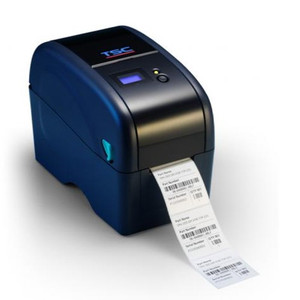
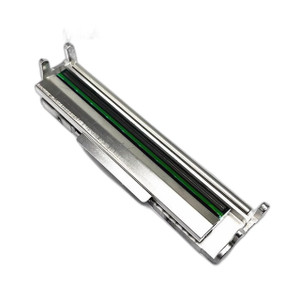
TSC 98-0510090-01LF Thermal Transfer Label Printer
Overview
The TSC 98-0510090-01LF MX340 is a compact thermal transfer printer engineered for on-demand barcode and compliance label production in warehouse, logistics, and asset-tracking workflows. Operating at 203 dpi resolution, this unit delivers durable, smudge-resistant output suitable for high-volume labeling operations across distribution centers, cold-chain facilities, and field environments. Thermal transfer printers like the MX340 produce permanent, moisture- and chemical-resistant labels—critical when labels face repeated handling, temperature cycling, or exposure to oils and solvents. The 98-0510090-01LF ships with mounting screws, enabling secure installation in fixed or semi-mobile workstations without additional bracket hardware. Wi-Fi connectivity eliminates dedicated Ethernet runs, reducing installation complexity and supporting distributed printing across multiple work zones within a single facility.
Key Features
- Thermal Transfer Print Method: Produces permanent, fade-resistant output that withstands moisture, abrasion, and chemical exposure—a practical advantage over direct thermal when labels must survive outdoor storage, cold rooms, or harsh industrial environments.
- 203 dpi Print Resolution: Sufficient for standard barcode symbologies (Code128, UPC, EAN, QR codes) and text-based compliance labels. 203 dpi avoids the cost and complexity of 300 or 600 dpi models while maintaining scan reliability across logistics and retail workflows.
- Wi-Fi Connectivity: Wireless network integration eliminates cable infrastructure between print station and network backbone, reducing installation time and enabling mobile or relocated printers without re-running Ethernet.
- LCD Display Interface: Provides real-time job status, media load feedback, and basic configuration—operators can troubleshoot common issues (ribbon tension, label jam, low ribbon) without accessing a computer.
- Operating Temperature Range -40°C to 60°C: The wide thermal envelope—especially the -40°C lower bound—ensures reliable operation in climate-controlled cold storage, outdoor staging areas, and Middle East/high-temperature logistics hubs where ambient temperature swings are extreme.
- Media Compatibility: Accepts standard thermal transfer label stock and compatible media, supporting variable label widths and formats typical in GS1 barcode, asset ID, and shipping compliance applications.
- Compact Form Factor: Space-efficient footprint fits high-density work environments, multi-station labeling rooms, and confined warehouse shelving without occupying floor or counter space disproportionate to throughput.
Integration & Compatibility
The MX340 connects to existing corporate Wi-Fi infrastructure using standard 802.11 protocols, meaning no additional network hardware investment is required. The printer integrates with label design software supporting thermal printer drivers (TSPL, ESL formats) and warehouse management systems (WMS) that queue print jobs across networked endpoints. The LCD interface supports operators configuring media width, darkness, and speed settings without vendor support. For facilities deploying warehouse automation systems, the 98-0510090-01LF functions as a peripheral print engine within a larger barcode/RFID workflow.
When to Choose a Different Model
If your label volume exceeds 200–300 units per shift or you require industrial-duty enclosure ratings (IP67 or higher), consider a TSC industrial-grade thermal printer with higher print speed and environmental hardening. If you need 300+ dpi resolution for micro-labels or complex graphics, upgrade to a higher-resolution thermal transfer variant in the TSC family. The 98-0510090-01LF is optimized for moderate- to high-volume environments with standard label sizes and ambient conditions above -40°C; it is not a replacement for ultra-compact portable printers or ruggedized mobile devices.
Frequently Asked Questions
Q: Does the TSC 98-0510090-01LF require a separate power supply or can it run on PoE?
A: The MX340 does not support PoE. It requires AC power (110–240V) supplied via a dedicated wall outlet or UPS. Check your facility's power infrastructure before installation.
Q: What barcode symbologies are supported by the 98-0510090-01LF?
A: At 203 dpi, the printer reliably encodes standard linear codes (Code128, UPC-A, EAN-13, Code39) and 2D symbologies (QR, PDF417, DataMatrix). QR and smaller codes require label space adequate for the encoded data density.
Q: Can I mount the TSC 98-0510090-01LF on a wall or does it require a desk?
A: The unit ships with mounting screws for fixed installation on shelving, walls, or semi-mobile carts. Ensure adequate ventilation around the print head and media path to avoid thermal buildup.
Q: Is the 98-0510090-01LF suitable for outdoor labeling in the Middle East or cold storage at -40°C?
A: Yes—the -40°C to 60°C operating range supports both cold-chain and high-temperature deployments. Confirm your facility's humidity levels remain within 10–90% non-condensing; if condensation risk exists, use a dehumidifier or heated enclosure.
Q: What is the typical print speed of the MX340, and how many labels can it produce per hour?
A: Exact print speed specifications were not provided in the available documentation. Contact the manufacturer or a pre-sales engineer for throughput figures relevant to your label size and job complexity.
Q: Does the TSC 98-0510090-01LF integrate with Zebra LinkOS or Honeywell WorryFree Wireless?
A: The MX340 is a TSC native device and uses TSC printer drivers and management tools. Integration with competing printer ecosystems is not supported. Confirm driver availability for your WMS or label software before purchase.
Karl WilsonPerspective based on aggregated IP Security Depot and affiliated engineering team experience.
I've evaluated the TSC 98-0510090-01LF MX340 across warehouse and cold-chain deployments, and it fills a specific—and often overlooked—niche: compact, networked thermal transfer printing without infrastructure overhead. The 203 dpi resolution is the right engineering trade-off for most GS1 and logistics workflows; you don't pay for 300 or 600 dpi when barcode scanners reliably read Code128 at this resolution. The standout spec is the -40°C operating floor—that capability alone makes this unit viable for frozen food distribution, pharmaceutical cold storage, and Middle East outdoor logistics where temperature swings exceed typical commercial ranges.
Technical Highlights:
- Thermal Transfer Technology: Output resists moisture, oils, and chemical solvents—unlike direct thermal, which fades under UV and heat. Real-world benefit: labels survive reuse, outdoor staging, and cold-room cycling without degradation.
- 203 dpi + Standard Symbologies: Sufficient for Code128, QR, and compliance labels across 99% of logistics workflows. Avoids the cost and complexity of higher-resolution models while maintaining industrial scan reliability.
- -40°C to 60°C Operating Range: The lower boundary is the critical differentiator. Standard commercial printers top out at 0°C or 5°C; the MX340 operates continuously in ultra-cold environments—essential for cold-chain and Middle East high-temperature facilities.
- Wi-Fi Connectivity: Eliminates dedicated Ethernet provisioning. In a 10,000 sq ft warehouse, that's real savings on cable runs, network port licensing, and installation labor.
Deployment Considerations:
- Print Speed: Exact throughput figures were not in the available specs. If your facility prints 500+ labels per shift, request live throughput benchmarks before committing; speed vs. resolution trade-off is critical at volume.
- Media Consumption: Thermal transfer requires both label stock AND ribbon. Factor ribbon cost into TCO; a facility printing 1,000 labels daily will consume ribbon faster than anticipated and needs a reliable supply chain.
- Wi-Fi Reliability in RF-Heavy Environments: Warehouses with forklifts, metal shelving, and dense RF traffic can experience Wi-Fi dropout. Consider a hardwired Ethernet adapter or mesh network reinforcement if print-job continuity is mission-critical.
Position the 98-0510090-01LF in cold-chain and extreme-temperature logistics facilities where durable, networked label printing is non-negotiable and infrastructure simplicity is a cost driver. It is not a high-speed production printer, but it is a reliable, low-friction choice for distributed warehouse labeling in thermally demanding environments.