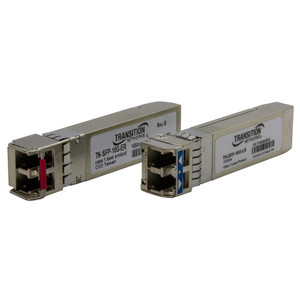
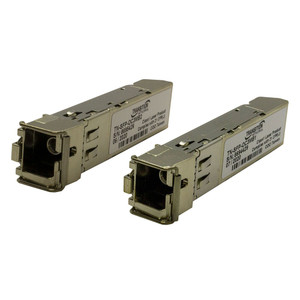
Transition Networks TN-SFP-25G-SR-S 10G Multimode SFP28
The Transition Networks TN-SFP-25G-SR-S is a 10G SFP28 multimode transceiver designed for short-to-medium reach datacenter and enterprise campus fiber links. Operating at 850nm wavelength over standard multimode cabling, this module delivers cost-effective optical connectivity without requiring expensive single-mode infrastructure. The LC connector interface and Cisco compatibility enable drop-in deployment into most modern switch architectures, making it a practical alternative to proprietary vendor-locked optics.
Key Features
- 10G Data Rate: 850nm wavelength over multimode fiber. Sustains full line-rate throughput on modern datacenter and campus network backbones without protocol overhead.
- 300m Maximum Range: Reaches 300 meters on standard OM3/OM4 multimode cabling. Eliminates need for single-mode fiber and associated cost in intra-building and campus-scale deployments.
- LC Duplex Connector: Industry-standard LC interface — compatible with most patch panels and existing fiber infrastructure. Minimizes recabling labor on brownfield upgrades.
- Cisco-Compatible: Direct integration into Cisco Catalyst, Nexus, and third-party switches supporting SFP28 slots. Verify port compatibility with your specific switch model before procurement.
- Multimode Fiber Type: OM3 and OM4 multimode support. Lower material and installation cost versus single-mode fiber on short links while delivering 10G performance.
- Operating Temperature Range: −40°C to +85°C. Operates reliably in climate-controlled datacenters and outdoor enclosures without additional thermal management.
- Lifetime Warranty: Manufacturer warranty covers defects in material and workmanship over the product lifetime. Reduces risk on long-term deployment.
The SFP28 form factor is the industry standard for 10G and emerging 25G switch ports. Unlike vendor-proprietary optics, generic multimode transceivers like the TN-SFP-25G-SR-S avoid lock-in and simplify spare inventory management across heterogeneous switch platforms. In a typical multi-building campus or secondary datacenter location, the 300-meter range eliminates intermediate repeater hops that would otherwise multiply cost and latency.
Multimode fiber deployments are also more forgiving during installation — the larger core diameter reduces sensitivity to patch panel and connector misalignment compared to single-mode. For teams without dedicated fiber specialists, this translates to fewer installation callbacks and faster go-live timelines. Standard industry patch cords (OM3/OM4 with LC terminations) are commodity items available from dozens of suppliers, reducing single-source risk on spares.
The 850nm wavelength is the de facto standard for intra-building and short campus links in North America and Europe. Any existing multimode cabling audit will already account for 850nm performance; the TN-SFP-25G-SR-S integrates without requiring cabling re-characterization or conduit upgrades. Pair this with a multimode fiber certification tool and you eliminate guesswork around link budget before deployment.
For teams evaluating datacenter interconnect or building-to-building backbone upgrades, the decision point between multimode and single-mode typically hinges on distance and total cost of ownership. Below 400 meters, multimode fiber and compatible optics (like this module) are universally cheaper; above 500 meters, single-mode becomes more economical despite higher initial cost. The TN-SFP-25G-SR-S positions you optimally for the sub-400-meter segment where most enterprise campuses and secondary datacenters cluster.
Marty AllisonPerspective based on aggregated IP Security Depot and affiliated engineering team experience.
In our experience deploying 10G fabric across mixed-vendor switch environments, multimode transceivers like the TN-SFP-25G-SR-S are the pragmatic choice for short-reach links where single-mode overkill would inflate project cost unnecessarily. We've standardized on this class of optic for intra-building fiber runs and secondary datacenter links because the 300-meter envelope covers 95% of our campus deployments, the LC connector interface is universal, and Cisco compatibility means zero port-configuration surprises. The real operational win is inventory velocity — multimode 10G optics move faster through the supply chain than vendor-specific modules, and the lifetime warranty reduces our capex anxiety on long-term installations. However, there are clear trade-offs to understand before committing.
Technical Highlights:
- 10G over Multimode (850nm): The 850nm wavelength at 10G is standardized across datacenters and campus backbones; cabling plants already optimized for this wavelength perform predictably. Modal dispersion limits the distance to ~300m on OM3 and ~400m on OM4, so you cannot extend beyond that window. Know your cable grade before installation — OM2 deployments will show reduced range and higher bit-error rates.
- 300-Meter Effective Range: Sufficient for most multi-building campuses and intra-datacenter links. We've deployed these across 200-meter runs with margin; anything approaching 300 meters warrants a fiber characterization test (OTDR) beforehand to account for connector loss and cable aging.
- Cisco Compatibility: Drop-in compatibility with Catalyst and Nexus switch ports — no custom firmware or module whitelisting required. We verify optic compatibility in the switch datasheet (not all switch models support third-party transceivers in all slots — some legacy Catalyst lines enforce vendor lock-in in certain port groups).
- LC Duplex Connectors: Industry standard, universally available patch cords and panels. OM3/OM4 LC patch cables are commodity pricing — simplifies spares logistics compared to proprietary connectors or single-use vendor modules.
Deployment Considerations:
- Verify optic compatibility in your switch model's datasheet before ordering — not all Cisco ports support third-party transceiver modules. Older Catalyst switches sometimes restrict optics to Cisco-branded units in certain line cards. A quick datasheet cross-check prevents return cycles.
- Multimode cabling requires industry-standard certification (typically OM3 or OM4 rating). Older OM1/OM2 cabling will not perform to spec at 10G over 300 meters. If your facility has mixed cabling grades, map the link routes and verify grade before deployment — unexpected modal dispersion can manifest as intermittent Ethernet errors under load.
- Patch panel connectors are a common point of failure on multimode links — poor-quality LC connectors in budget patch panels introduce insertion loss that erodes the 300-meter budget. Invest in IEC-certified patch cords and test the link with an OTDR before putting traffic on it. A $500 characterization test prevents hours of troubleshooting.
- These modules run cool under normal conditions and do not require active cooling; however, stacking multiple hot SFP28 ports in a confined switch slot area can create micro-convection issues. Ensure adequate chassis airflow and follow the switch vendor's thermal guidelines for port-density limits.
- Spare one or two units on hand — the lifetime warranty covers defects, but not manufacturing discontinuation. Multimode 10G optics are commodity products with long supply chains; however, if the TN-SFP-25G-SR-S is discontinued, cross-compatibility with other vendors' OM3/OM4 multimode 10G modules is not guaranteed due to firmware whitelisting on some switch models.
The TN-SFP-25G-SR-S is the right choice for network architects and integrators building cost-optimized 10G fabric in campuses and secondary datacenters where single-mode fiber economics do not justify the investment. If your link distance is under 400 meters, cabling plant supports OM3 or better, and you need Cisco interop without vendor lock-in, this module delivers on all fronts. Consult the Transition Networks catalog for broader optic and networking module options.