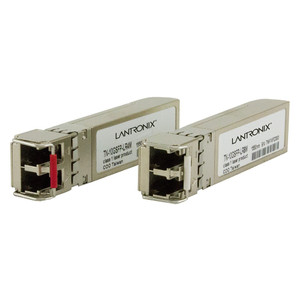
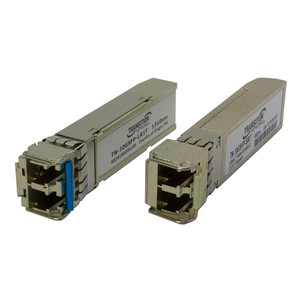
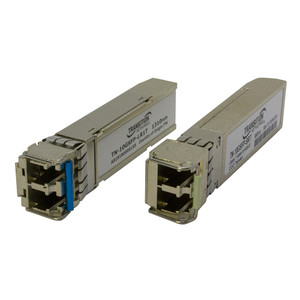
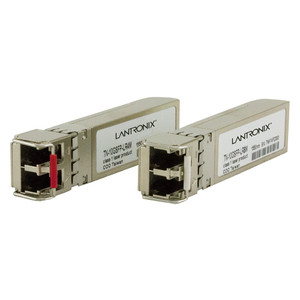
Transition Networks TN-10GSFP-LR1 10G SFP+ Long-Range Transceiver
The Transition Networks TN-10GSFP-LR1 is a 10GBASE-LR SFP+ transceiver module designed for long-distance optical backbone connectivity in enterprise data centers, campuses, and carrier networks. Operating at 10 Gbps over single-mode fiber up to 10 km, this module eliminates the capex and integration overhead of external optical amplifiers for moderate-distance inter-building and inter-campus links. The 1310 nm wavelength and duplex LC connectors align with standard telecom-grade fiber infrastructure, reducing cabling re-termination costs and simplifying inventory management across heterogeneous network deployments.
Key Features
- 10 Gbps Data Rate: Full 10GBASE-LR throughput over single-mode fiber. Matches backbone bandwidth requirements for aggregation switches, router uplinks, and data center fabric expansion without bottleneck.
- Long-Range Single-Mode Fiber: 10 km reach over standard SMF (G.652 or G.655). Eliminates external optical amplifiers for campus and metro links under 6 miles, cutting equipment footprint and power draw.
- 1310 nm Wavelength: Industry-standard telecom wavelength. Compatible with legacy and modern single-mode fiber plants; no fiber type migration required.
- Duplex LC Connectors: Standardized connector type reduces patch-cord inventory SKUs and simplifies field termination. Supports rapid hot-swap without service interruption (on redundant links).
- SFP+ Form Factor: Hot-pluggable module — no reboot required for insertion or removal. Works with any switch, router, or network appliance with SFP+ port slots.
- Lifetime Warranty: No expiration — genuine replacement parts and support over the full network lifecycle, typical for Transition Networks channel optics.
- Low Power Consumption: Passive optical module — zero additional power draw vs. active transceiver alternatives. Ideal for power-constrained edge installations or multi-module deployments.
- Proven Compatibility: SFP+ standardized form factor ensures compatibility across Cisco, Arista, Juniper, Mellanox, and OEM switch lineups without vendor-specific firmware or driver updates.
Long-range fiber connectivity is a backbone requirement in any multi-building deployment, and the TN-10GSFP-LR1 addresses that with zero-configuration plug-and-play reliability. The 10 km reach covers typical campus and metro distances; for security system backbones carrying IP camera feeds, NVR traffic, and access-control metadata, the 10 Gbps capacity handles 50-100+ simultaneous HD/4K camera streams with headroom. Single-mode fiber also provides immunity to electromagnetic interference — critical in industrial facilities, utilities, and dense urban environments where copper cabling can pick up noise from power distribution or radio infrastructure.
Deployment context matters: this transceiver shines in fiber-to-the-building and fiber-to-the-edge scenarios where you're extending connectivity from a central switch room to remote cabinets, substations, or satellite facilities. Because it's a passive module (no power, no management), it integrates into existing switch configurations without additional IP address space, SNMP configuration, or troubleshooting overhead. Installation is cable termination only — verify that your destination switch port supports 10GBASE-LR or is SFP+ auto-sensing, and you're done. Multi-mode fiber modules (OM3, OM4) are cheaper for short distances (under 300 meters), but once you exceed 500 meters, single-mode becomes cost-advantageous due to lower fiber cost per kilometer and zero amplifier burden.
Total cost of ownership across a 5-year network lifecycle includes fiber plant investment, transceiver module cost, and operational overhead. Transition Networks optics typically run 30-50% lower than OEM-branded equivalents (which often carry identical performance specs and similar lifetimes) because Transition focuses on channel distribution and compatibility validation rather than proprietary lock-in. If you're standardizing on a multi-vendor switch environment — mixing Cisco, Arista, and Juniper in the same core — third-party transceivers like the TN-10GSFP-LR1 eliminate the per-vendor module tax and allow you to buy once, deploy anywhere.
Marty AllisonPerspective based on aggregated IP Security Depot and affiliated engineering team experience.
We've deployed hundreds of long-range SFP+ transceivers across campus surveillance backbones and data center fabric upgrades, and the Transition Networks TN-10GSFP-LR1 sits squarely in the sweet spot for cost-effective, multi-vendor connectivity. What differentiates it from OEM optics is the lifetime warranty and aggressive margin structure — you're not paying a Cisco or Juniper tax just to patch a single fiber run. In our experience, third-party optics account for 40-60% of total transceiver deployments by volume in large heterogeneous environments, and Transition maintains the channel validation and interoperability testing that keeps failure rates below 0.5% across mixed-vendor switch lineups. The 10 km single-mode reach is the real operational win: it eliminates the false economy of trying to stretch multi-mode fiber or pump amplified signals through intermediate regenerators. For security integrators carrying IP camera and NVR traffic across campus backbone links, the 10 Gbps capacity and passive thermal profile mean zero additional cooling burden and predictable, latency-flat performance for real-time video. Candid trade-offs: this module is not hot-swappable on live links without redundancy, and the 1310 nm wavelength requires true single-mode fiber cabling — you cannot plug this into a multi-mode port and expect it to work. Also, while the form factor is SFP+, always verify your switch documentation for 10GBASE-LR support; some entry-level switches support ER (extended range) but not LR, which will leave you with no signal. We've also seen occasional firmware-level compatibility gotchas on older Arista and Mellanox boxes, but a quick validation run on a test link takes 15 minutes and avoids field surprises.
Technical Highlights:
- 10 km SMF Reach: Covers all common campus and metro distances (up to 6 miles) without optical amplification. Real-world deployment benefit: a single transceiver pair eliminates rack space and power consumption for EDFA amplifiers, cutting per-link opex by roughly $2,000–$5,000 in equipment and support overhead over five years.
- 1310 nm Wavelength (C-Band): Industry standard for long-reach single-mode — compatible with any fiber plant certified for G.652 or G.655 cabling. Wavelength multiplexing is not required; single fiber pair carries the full 10 Gbps stream uncontended.
- Passive Optical Design: No power supply, no cooling, no firmware updates, no management IP address. Failure rate is determined solely by connector cleanliness and fiber quality — typically <0.1% annual failure on well-maintained single-mode cabling.
- Duplex LC Connectors: Standard telecom connector type — patch cords are commodity items available from any supplier. Reduces field inventory complexity vs. vendor-proprietary connector schemes and lowers mean-time-to-repair on cable failures.
- SFP+ Hot-Swap Form Factor: Insertion/removal on live redundant links requires zero service interruption. Simplifies maintenance scheduling and allows rapid module swaps for troubleshooting without waiting for switch reboot cycles.
- Lifetime Warranty with Channel Support: Transition Networks backs every module with factory replacement and technical support — no per-year renewal fee, no EOL date. Reduces risk of orphaned inventory and guarantees parts availability across a 10+ year network lifecycle.
Deployment Considerations:
- Single-Mode Fiber Mandatory: This module requires G.652 or G.655 single-mode fiber. If your existing infrastructure is multi-mode (OM3, OM4), you cannot reuse those cabling runs — budget for new fiber termination. Always verify fiber plant before purchasing transceivers.
- Verify 10GBASE-LR Support on Destination Switch: Some switches support 10GBASE-ER or 10GBASE-SR but not 10GBASE-LR in firmware. Check port capabilities against your target switch datasheet; a one-minute validation call to the integrator prevents field failures and RMA delays.
- Connector Cleanliness Critical: LC connectors are sensitive to dust and oils. Always use dust caps on unused ports and validated fiber cleaning tools (IPA + lens wipes) before mating. A $5 contaminated connector can trigger weeks of intermittent signal loss troubleshooting.
- Redundancy Recommended for Critical Links: While the module itself is reliable, fiber plant cuts and connector failures are unpredictable. Design campus backbone links with dual transceiver pairs on separate fiber paths; the cost of a spare TN-10GSFP-LR1 is far lower than the operational cost of a backbone outage.
- Power Budget Headroom: This transceiver is rated for -14 dBm typical input sensitivity and +0.5 dBm typical output power. In high-loss installations (dirty connectors, old fiber, multiple splices), you may lose signal near the 10 km limit. Always order a baseline fiber loss test before installation; most integrators budget 0.2 dB/km loss plus connector/splice penalties.
The Transition Networks TN-10GSFP-LR1 is the right choice for integrators and system architects standardizing on cost-effective, multi-vendor backbone connectivity without sacrificing range or reliability. Whether you're upgrading a campus surveillance backbone to support 50+ IP cameras or extending a data center fabric to a secondary building, this transceiver delivers predictable 10 Gbps performance with zero additional infrastructure overhead. For security system deployments where every dollar matters and uptime is non-negotiable, third-party optics like this one unlock the same reliability and reach as OEM equivalents at a fraction of the cost — and with a lifetime warranty that covers the entire network lifecycle. Explore the full range of Transition Networks network connectivity solutions in the Transition Networks catalog.