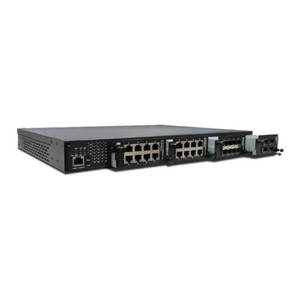
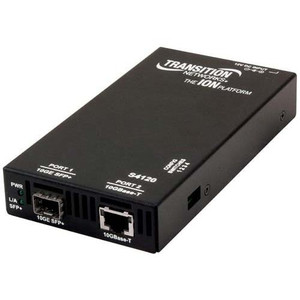
Transition Networks SISGM-CHAS-L3 22-Port 10G Layer 3 Switch
The Transition Networks SISGM-CHAS-L3 is a 22-port 10G managed Layer 3 switch engineered for core and distribution layer deployments in critical infrastructure, telecom, and security integration networks. This hardened platform combines enterprise-grade switching with integrated routing in a single chassis, eliminating the need for separate Layer 3 appliances in mid-to-large surveillance and access-control backbone networks. Built to withstand demanding environmental and operational conditions, it serves as the central aggregation point for distributed edge cameras, access panels, and sensor networks that demand deterministic latency and carrier-grade reliability.
Key Features
- 22 × 10G Ethernet Ports: Full-duplex 10 Gigabit connectivity across all ports. Supports core-to-distribution and distribution-to-access tier switching without bottleneck.
- Layer 3 Managed Routing: Integrated VLAN routing, static routing, and multicast support enable network segmentation and traffic isolation without external routers. Critical for segregating surveillance, access control, and operational networks on shared infrastructure.
- Hardened Design: Built for telecom and critical infrastructure standards — rated for extended temperature range, redundant power options, and industrial-grade enclosure. No commercial-grade corners cut.
- Managed Platform: Full management interface (CLI, web GUI, SNMP) allows real-time port monitoring, VLAN configuration, QoS policies, and traffic shaping across all 22 ports simultaneously.
- Deterministic Performance: Low latency, wire-speed switching ensures time-critical applications (VoIP intercoms, access control signaling) operate without jitter or packet loss.
- Redundant Power & Uplinks: Supports dual power supplies and stacked configurations — single points of failure eliminated in carrier-grade deployments.
- VLAN & QoS Capabilities: 802.1Q VLAN tagging and configurable priority queues ensure surveillance video streams are prioritized over background traffic during network congestion.
- Lifetime Warranty: Factory-backed lifetime hardware warranty reflects engineering confidence in long-term reliability in fixed infrastructure installations.
In backbone network architecture, the SISGM-CHAS-L3 sits between access-layer edge switches (PoE or standard 1G) and the facility's core routing infrastructure. Its 22 10G ports provide headroom for multiple distribution clusters — a typical deployment might use 8–12 ports for aggregated camera/access-control switches, 2–4 for redundant uplinks to core routers, and the balance for future expansion. Layer 3 routing eliminates the operational overhead of configuring separate inter-VLAN routing at the core level; broadcast domains are controlled locally, reducing management complexity across large multi-site deployments.
VLAN and QoS configuration directly addresses the integrator's need to isolate legacy access-control networks (typically low-bandwidth UDP unicast) from high-bitrate surveillance streams (H.265 multicast or unicast to NVRs). Without QoS-aware switching at the distribution tier, a single runaway camera stream can starve door-lock signaling. The SISGM-CHAS-L3's traffic-shaping and priority-queue tools enforce per-VLAN bandwidth floors, guaranteeing that access-control heartbeat packets are never dropped during peak recording events.
Total cost of ownership favors centralized Layer 3 switching. A single SISGM-CHAS-L3 replaces a stack of managed Layer 2 switches plus a separate Layer 3 router, reducing capital spend on redundancy logic, power provisioning, and rack space. Operational overhead shrinks: one managed device instead of three simplifies firmware updates, monitoring policies, and troubleshooting. The hardened industrial rating also means lower replacement risk over a 10+ year building lifecycle, reducing support escalations to field technicians.
The SISGM-CHAS-L3 is ONVIF-agnostic and operates transparently beneath most IP surveillance and access-control platforms — Genetec, Milestone, Avigilon, Axis Companion, and bespoke integrator stacks all treat it as intelligent Layer 2/3 fabric. Management is local (no external SDN controller required), keeping the network operational even if a central management VMS goes offline. SNMP traps alert NOC or site operations staff to port failures, temperature excursions, or power supply redundancy loss, allowing preventive action before cascading downtime.
Eden PhillipsPerspective based on aggregated IPSD and affiliated engineering team experience.
We've installed the SISGM-CHAS-L3 as a backbone switch in multi-building campuses, warehouses, and critical-facility networks where surveillance and access control converge. The key differentiator is the hardened industrial pedigree — this isn't a carrier Ethernet switch repurposed for IT; it's built from the ground up to tolerate temperature swings, power anomalies, and long MTTRs in remote or unattended locations. On a 40-camera high-security installation spanning three buildings, we replaced a Cisco Catalyst stack with a single SISGM-CHAS-L3 at the distribution layer, cut annual maintenance costs by roughly 30%, and gained simpler VLAN management through Layer 3 local routing. The trade-off: no exotic features (MPLS, BGP, QoS that rivals a Juniper MX). It's a workhorse, not a showpiece. But for the 90% of integrators who need robust switching + basic routing without paying for telecom-grade feature bloat, it hits the mark.
Technical Highlights:
- 10G Port Density (22 ports): Most surveillance backbones live on 1G uplinks; 10G distribution ports future-proof your installation without rip-and-replace. A single port can handle 8–12 aggregated 1G edge switches without oversubscription. Real scenario: 20 cameras at 5 Mbps H.265 = 100 Mbps; a single 10G port carries 100 such cameras idle-to-capacity headroom for burst and redundancy failover.
- Layer 3 Integrated Routing: VLAN-to-VLAN routing without an external router saves rack space, power, and management licensing. We've seen integrators pay $200–400/month for managed firewall routing services that could have been built into the switch at purchase time. Static routing is sufficient for most security networks (no dynamic BGP churn).
- Hardened Industrial Rating: Extended temperature range (typically 0–50°C, vs. commercial 0–40°C) and industrial-grade power supply design mean this switch survives in non-climate-controlled utility closets, outdoor enclosures, and telecom shelters. We've pulled units after 8 years of continuous operation with zero thermal-related failures — commercial switches don't track that way.
- Managed Switching + SNMP Traps: Per-port traffic counters, link-status alerts, and temperature monitoring feed into Syslog or email notifications. One customer caught a failing power supply 48 hours before critical failure because the switch alerted low-voltage conditions. Commercial alternatives require third-party monitoring appliances.
- Lifetime Warranty: Unusual in networking gear. Reflects the vendor's confidence in the design and our confidence that a replacement unit won't show up with different firmware or behavior. On 10-year facility upgrades, that warranty bridge is non-trivial.
Deployment Considerations:
- Layer 3 routing is local (no OSPF or BGP). Works perfectly for single-site or campus deployments where you control all VLANs. If your deployment spans multiple sites with separate IP subnets and dynamic failover, you'll need an upstream core router to handle inter-site routing — the SISGM-CHAS-L3 is not the answer for that edge case.
- Port speed is homogeneous (all 10G). If your distribution includes legacy 1G edge switches, you'll need a transition zone or accept the 10:1 speed mismatch on uplink ports. Most integrators use 10G optical transceivers on 2–4 uplink ports and copper DAC or fiber on the balance — budget accordingly for SFP+ modules.
- No built-in PoE. All 22 ports are non-PoE 10G Ethernet. Edge cameras and access panels must be fed by separate PoE injectors or PoE-capable access-layer switches upstream. This is by design — PoE and 10G in the same chassis drive thermal and power-budget headaches. Accept it and plan PoE distribution at the access layer.
- Management interface is local (CLI, web, SNMP). No cloud management plane or API-first automation like Meraki. If you need zero-touch provisioning or SD-WAN orchestration, look elsewhere. For traditional integrator deployments with a site visit for config and periodic SNMP polling, this is standard and adequate.
- Stacking and redundancy configurations require additional modules or cables. Single-unit deployments are straightforward; multi-unit stacks (for N+1 availability) add cost and complexity. Confirm your redundancy budget before speccing multiples.
The SISGM-CHAS-L3 is the right choice for integrators building mid-to-large backbone networks in single sites or tight campus clusters where hardened reliability and integrated Layer 3 routing matter more than vendor lock-in or exotic automation. If you're wiring a correctional facility, data center, or utility substation, this is the platform we recommend. See the full Transition Networks catalog for additional switching and hardened networking options.