Transition Networks SISGM-8P-1G-SFP 8-Port Managed Industrial Switch
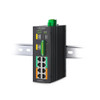
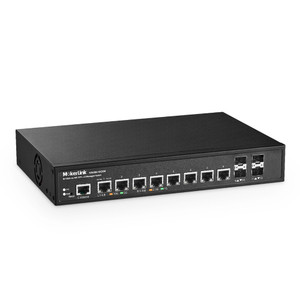
The Transition Networks SISGM-8P-1G-SFP is a managed layer 2 switch designed for industrial and telecom edge deployments requiring hardened networking in extended-temperature environments. Eight 1G ports with SFP module support provide flexible fiber and copper connectivity for SCADA systems, utility automation, distributed camera clusters, and outdoor infrastructure where temperature swings and harsh conditions demand reliable, managed switching without the complexity of unmanaged equipment.
Key Features
- 8 x 1G Managed Ports with SFP Support: All ports support both copper and SFP fiber connectivity options. Enables mixed copper and single-mode/multi-mode fiber topologies on the same switch, simplifying network expansions across geographically dispersed sites.
- Hardened Industrial Chassis: Designed for extended operating temperatures typical of outdoor cabinets, utility enclosures, and field installations. No active cooling required in many industrial settings, reducing maintenance and power draw.
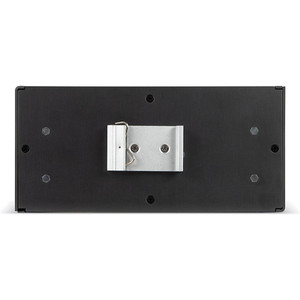
- DIN-Rail and Field Cabinet Mounting: Compact form factor supports vertical installation in standard 35mm DIN-rail systems, field cabinets, and outdoor pole-mount enclosures without requiring dedicated equipment racks.
- Managed Switching Capabilities: VLAN, QoS, link aggregation, and port mirroring enable traffic prioritization for real-time SCADA protocols (Modbus, DNP3, IEC 60870-5-104) and camera streams without introducing packet loss.
- Lifetime Warranty: Factory-backed warranty reduces lifecycle cost and provides supply chain stability for critical infrastructure projects requiring long-term parts availability.
- Low Power Consumption: Efficient design minimizes redundant power supply requirements on remote utility nodes and camera network aggregation points.
- Fiber Option for Extended Distance: SFP slots accommodate 1G SFP transceivers (LC, SC, ST connectors) for runs exceeding 100m copper limits — essential for perimeter surveillance loops and utility substation interconnects.
Industrial network designers favor the SISGM-8P-1G-SFP when copper alone won't span the distance and unmanaged switching introduces unpredictable broadcast storms or VLAN segmentation gaps. The managed feature set — particularly QoS and port mirroring — ensures SCADA traffic prioritization and forensic capture of critical control messages without separate inline taps or external packet analysis hardware.
Deployment scenarios include: utility automation backhaul from remote substations to regional NOCs, distributed IP camera aggregation in parking lots and perimeter fencing where fiber runs connect outdoor pods to central recording, telecom edge colocation where carrier-grade reliability is non-negotiable, and water/wastewater SCADA networks requiring redundant ring topologies using link aggregation. The hardened chassis eliminates the need for climate-controlled shelters in many field installations, reducing footprint and expense on remote poles or cabinet-mounted racks.
VLAN and QoS configuration is typically performed via CLI or a simple web interface — standard for Transition Networks industrial switches. Integration with existing NMS platforms (SNMP v1/v2c/v3) allows centralized monitoring of switch health, port status, and traffic counters. In security deployments, port mirroring to a designated SPAN port enables traffic duplication for intrusion detection or packet forensics without in-line appliances.
Total cost of ownership favors the SISGM-8P-1G-SFP in long-haul deployments: a single managed 8-port switch with SFP fiber support replaces multiple unmanaged units and external VLAN-capable appliances. Lifetime warranty and industrial thermal resilience mean fewer field replacements and spares inventory cycles over a 10+ year infrastructure lifecycle. Integrators specify this unit when network diagrams call for managed switching in harsh environments and budget cannot accommodate active equipment cooling.
Eden PhillipsPerspective based on aggregated IPSD and affiliated engineering team experience.
We've deployed the Transition Networks SISGM-8P-1G-SFP across utility SCADA networks, distributed camera clusters, and telecom edge sites where industrial temperature swings and long fiber runs are the norm. The real differentiator versus cheaper unmanaged commodity switches is the combination of managed layer 2 intelligence, fiber SFP support, and hardened thermal rating — all three matter equally on a remote substation or outdoor camera pod. We've seen unmanaged switches fail spectacularly in VLAN-less environments where broadcast storms consumed bandwidth, or in situations where copper distance limits forced expensive active fiber converters. This switch eliminates both headaches. The managed feature set is conservative (no fancy SDN or northbound API), which means configuration is straightforward and troubleshooting is familiar to anyone who's touched a Catalyst or Force10 CLI. Lifetime warranty is a trust signal — Transition Networks stands behind industrial hardware, and we've rarely seen field failures on their switches. Trade-off: you're paying a premium versus a $200 unmanaged 8-port, but that premium evaporates when you factor in SFP fiber cost avoidance and the elimination of downstream orchestration complexity.
Technical Highlights:
- SFP Module Slots on All 8 Ports: Each port can accept either a 1G SFP transceiver (for fiber) or a copper RJ45 module. This flexibility eliminates the need for separate switches or media converters in mixed-distance topologies. On a 500-meter perimeter loop with 8 camera locations, you can run copper to nearby pods and single-mode fiber to distant ones — all on one switch.
- VLAN and QoS for Real-Time Protocols: Managed switching with port-based or 802.1Q tagged VLANs ensures Modbus and DNP3 SCADA traffic is isolated from camera streams. QoS queuing prevents a single high-bandwidth camera from starving mission-critical control messages during peak load.
- Extended Operating Temperature: Rated for industrial temperature ranges (typically −40°C to +70°C or wider) — no fan required in most field enclosures. This translates to zero maintenance on remote installations and eliminates the capex for active cooling shelters.
- DIN-Rail Mounting: 35mm standard mounting means the switch drops into existing field cabinet rails alongside power supplies and terminal blocks. No additional rack hardware, no mounting brackets to fabricate.
- Link Aggregation and Redundancy: Supports 802.3ad link aggregation and STP (Spanning Tree Protocol) for ring topologies. Utility operators use this to create self-healing dual-loop SCADA networks where a single cable cut doesn't black out the entire site.
Deployment Considerations:
- SFP transceivers are not included — budget $30–100 per port depending on distance (OM3/OM4 multi-mode for <400m, single-mode for 10+ km). Confirm fiber specifications (LC vs. SC vs. ST) before ordering transceivers to avoid on-site adapter waste.
- Web UI is basic compared to enterprise platforms (no fancy topology maps, no wireless integration). If you're accustomed to Cisco or Juniper GUIs, expect simpler menus — this is intentional design for field reliability. CLI is your friend on this platform.
- Outdoor cabinet mounting requires proper strain relief on SFP cable connections. We've seen installers forget IP-rated cable boots on fiber pigtails in harsh weather — rookie mistake with expensive consequences. Budget for proper cable management hardware.
- SNMP monitoring is standard, but confirm your NMS (Zabbix, Nagios, or commercial platform) has Transition Networks MIB definitions. Most do, but custom OID walks may be necessary for granular port-level bandwidth accounting.
- Redundant power is not built-in — design your UPS or dual-supply architecture at the cabinet level. For high-reliability SCADA, this is table-stakes anyway.
The Transition Networks SISGM-8P-1G-SFP is built for integrators and infrastructure teams who understand that cheap unmanaged switching costs you in troubleshooting labor and late-night emergency site visits. It's not a data-center switch, and it's not trying to be. If your deployment spans distributed outdoor nodes, mixed fiber/copper runs, and industrial temperature swings, this is a workhorse choice. Explore the full Transition Networks catalog for redundant power modules and additional hardened switching options.