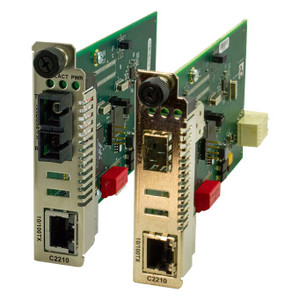
Transition Networks C2110-1013 100Mbps Fiber Media Converter
Overview
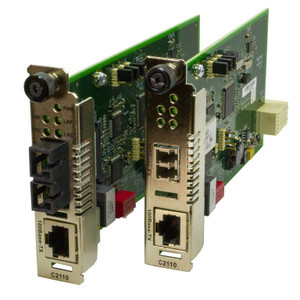
The Transition Networks C2110-1013 is a 100Mbps unmanaged fiber media converter that bridges copper Ethernet and single-mode optical fiber networks. This device converts 100BASE-TX signals transparently between RJ-45 twisted-pair and fiber optic connections, eliminating the need for configuration or active management. The C2110-1013 extends network reach to 1.2 miles over single-mode fiber — a critical distance factor when traditional copper runs are impractical or when electromagnetic isolation between network segments is required. It is TAA compliant and designed for enterprise deployment in security monitoring systems, telecom infrastructure, and industrial automation control rooms where network extension and noise rejection are primary concerns.
Key Features
- 100Mbps Fast Ethernet Support: Handles standard 100BASE-TX traffic without compression or protocol conversion. Useful for IP camera deployments, access control systems, and legacy industrial equipment that cannot tolerate latency or packet loss introduced by managed converters.
- Single-Mode Fiber Reach — 1.2 Miles: Extends networks well beyond the 328-foot practical limit of Cat5e copper. This distance becomes essential in sprawling warehouse facilities, multi-building campuses, or when running cables through high-EMI environments (near power lines, heavy machinery, RF transmitters). Avoids expensive Cat6A shielding or active repeaters.
- Unmanaged / Transparent Operation: No IP addressing, no web interface, no firmware updates required. Plug fiber and copper connectors and the device bridges immediately. Reduces operational overhead and eliminates a potential security attack surface in physically secure network closets.
- Electromagnetic Isolation: Fiber optic separation between copper segments breaks ground loops and isolates circuits from AC line noise and radio frequency interference. Measurable benefit in industrial control and security camera installations where hum and dropouts degrade video or sensor data quality.
- TAA Compliance: Meets Trade Agreements Act requirements for U.S. federal procurement. Relevant if your organization supplies or integrates systems into government agencies or defense-adjacent facilities.
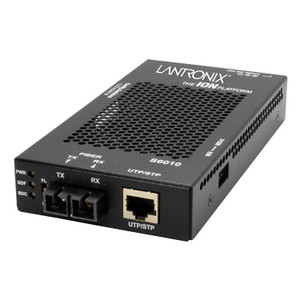
- Compact DIN Rail and Desktop Mounting: Fits standard 35mm DIN rail or sits on a shelf in network closets and control rooms. Does not consume significant rack space, important when integrating into cramped telecom or industrial automation cabinets.
Integration and Deployment
The C2110-1013 is compatible with any standard 100BASE-TX equipment — IP cameras, network video recorders, industrial PLCs, access control readers, and Ethernet switches. It works within existing network infrastructure without requiring protocol adaptation or specialized software. Install one C2110-1013 at each end of the fiber run: one in the main control room (copper in, fiber out) and another at the remote site (fiber in, copper out). Each unit acts as a passive bridge; packet forwarding is line-rate and transparent.
When evaluating media converter deployment, consider whether your environment genuinely needs the 1.2-mile distance or electromagnetic isolation. If your cabling runs are under 300 feet and EMI is not a concern, copper runs will be simpler and cheaper. If you need managed QoS, VLAN tagging, or port monitoring, a managed media converter or industrial switch would be more appropriate — the C2110-1013 forwards all traffic identically and provides no traffic shaping.
Frequently Asked Questions
Q: Does the C2110-1013 require a power supply?
A: Yes. The device requires external power (specifications available in the manufacturer datasheet). Plan for a dedicated 12VDC or appropriate power supply in both the control room and remote locations.
Q: Can I use the C2110-1013 with multimode fiber instead of single-mode?
A: The C2110-1013 is designed specifically for single-mode fiber and the associated wavelength and transceiver specifications. Attempting to use multimode fiber will result in signal degradation or complete link failure. Verify fiber type before installation.
Q: Does this converter support PoE or pass power to remote devices?
A: No. The C2110-1013 is a transparent media converter only. It bridges Ethernet signals but does not carry PoE. If you need to power remote IP cameras or switches, you must run a separate power line or use a PoE-capable managed converter.
Q: How do I know if the link is active?
A: The device includes status LEDs indicating link presence and activity on both the copper and fiber ports. Check the datasheet for LED color and behavior definitions.
Q: Can I daisy-chain multiple C2110-1013 converters?
A: Technically yes, but each conversion introduces a small delay. For most security and industrial applications, a single C2110-1013 pair (one at each end of the fiber run) is the standard practice. Avoid long chains unless specifically required.
Q: What certifications does the C2110-1013 hold?
A: The device is TAA compliant. Consult the manufacturer datasheet for additional certifications (FCC, CE, UL, etc.).
Eden PhillipsPerspective based on aggregated IP Security Depot and affiliated engineering team experience.
The Transition Networks C2110-1013 (often searched as C2110 1013) is a bare-bones but genuinely useful tool for a specific problem: extending a 100Mbps network across 1.2 miles of single-mode fiber without active management or power-hungry electronics. If your spec sheet says "copper to fiber, unmanaged, 1.2 miles, no configuration," the C2110-1013 does exactly that and nothing more — which is precisely why it works reliably in industrial and security environments where simplicity beats features.
Technical Highlights:
- Single-Mode Fiber, 1.2-Mile Reach: This is a hard distance limit that saves you from copper alternatives. Multi-mode fiber tops out around 1,600 feet; single-mode delivers 1.2 miles without signal regeneration. Meaningful in warehouse networks, campus sprawl, and remote monitoring sites.
- No Management Interface or Configuration: Zero IP footprint. No SNMP, no web login, no firmware to patch. Transparent bridging only — every packet that arrives on copper exits on fiber and vice versa. Reduces attack surface in physically secured network closets.
- Electromagnetic Isolation via Fiber: Copper networks in industrial environments pick up hum from AC power lines and RF noise from machinery. Fiber optics break that loop entirely. If your IP camera or PLC is dropping frames or showing noise spikes near motor banks or RF transmitters, this isolation becomes a measurable win.
Deployment Considerations:
- External Power Required: The C2110-1013 is not powered by PoE and does not pass PoE to remote devices. Plan dedicated power supplies at both ends — a real constraint in some remote outdoor or rooftop installations where running AC or 12VDC is difficult.
- Single-Mode Fiber Only: Installers sometimes reach for multimode (cheaper, easier to terminate) by habit. Mixing fiber types will kill the link. Verify with your fiber contractor that the run is single-mode 9/125 μm before ordering this converter.
- Unmanaged = No QoS or Traffic Control: If you need bandwidth prioritization, VLAN segregation, or packet filtering, look at managed industrial media converters instead. The C2110-1013 forwards everything at line-rate with no decision logic.
Deploy the C2110-1013 when you have a clean requirement: bridge copper and single-mode fiber over a known distance in a security or industrial control network where simplicity and electromagnetic isolation are more valuable than managed features. Typical wins are campus surveillance deployments linking a central NVR to remote camera racks, and manufacturing facilities isolating control PLCs from office IT infrastructure via fiber.