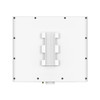
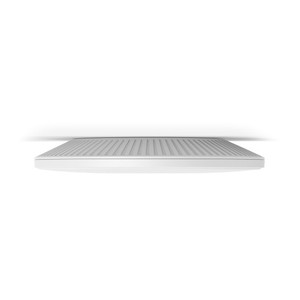
TP-Link EAP772-OUTDOOR Omada BE11000 Tri-Band Wi-Fi 7 Access Point
The EAP772-OUTDOOR is TP-Link's tri-band, six-stream outdoor Wi-Fi 7 access point, delivering up to 11 Gbps (US) or 9.3 Gbps (EU) across three bands — 2.4 GHz, 5 GHz, and 6 GHz. Built for campuses, business parks, outdoor hospitality venues, and industrial yards where you need reliable, high-capacity wireless coverage across large outdoor areas, it combines RFC-compliant 6 GHz support (via Automated Frequency Coordination), IP68 weatherproofing, and centralized Omada SDN management into a single omnidirectional platform.
Overview
The EAP772-OUTDOOR addresses a specific pain point: outdoor Wi-Fi 7 deployments at scale. Unlike consumer outdoor APs, this is purpose-built for enterprise and hospitality settings where device density, bandwidth demand, and environmental exposure are all high. The 300 m² (3,200 ft²) recommended omnidirectional coverage means fewer APs per deployment area — a direct cost and management saving when you're covering multiple buildings or grounds. The 2.5G PoE+ port accepts 802.3at power, so there's no need for separate power supplies; existing Ethernet runs are sufficient.
Key Features
- Wi-Fi 7 Multi-Link Operation (MLO) and 320 MHz Bandwidth: Unlike Wi-Fi 6, Wi-Fi 7 splits traffic across multiple bands and channels simultaneously, lowering latency and boosting sustained throughput. If you're deploying for 4K/8K video streaming or real-time collaboration, MLO eliminates the single-band bottleneck — devices bond 2.4 GHz, 5 GHz, and 6 GHz channels in parallel.
- AFC-Unlocked 6 GHz Band: The 6 GHz spectrum is cleaner than 5 GHz in most outdoor urban environments. Automated Frequency Coordination (AFC) allows outdoor use where standard Wi-Fi 6E is restricted to indoor-only. This doubles available spectrum and cuts co-channel interference risk — measurable improvement in dense deployments.
- IP68 Rating and -30°C to 70°C Temperature Range: IP68 is the highest IP dust/water rating — fully dust-tight and immersion-rated to 1.5 m for 30 minutes. Extended temperature tolerance spans deserts (70°C) and arctic sites (-30°C). No weather-related downtime, no seasonal swaps needed.
- Dual-Polarized 2.4 GHz Antennas: Vertical/horizontal antenna switching suppresses interference from nearby base stations and urban reflections. In high-RF-noise areas (near cell towers, stadiums), this adaptive polarization is the difference between usable and degraded signal.
- 2.5G PoE+ Port for Backhaul Capacity: Single RJ45 port runs 2.5 Gbps, supporting multiple client streams without saturation. 802.3at PoE means standard PoE injectors and midspan devices work directly — no custom power supplies, lower CAPEX on installation infrastructure.
- Omada SDN Centralized Management: One-click adoption via Omada controllers (cloud or on-premises), GPS mapping of outdoor APs, seamless roaming across mesh nodes, and band steering keep client load balanced. Multi-AP coordination reduces manual tuning and support escalations.
- 4096-QAM and MU-MIMO: Higher-order modulation squeezes more data per transmission; MU-MIMO serves multiple devices concurrently instead of serializing. Combined, these reduce per-client latency and improve fairness under load.
Integration & Compatibility
The EAP772-OUTDOOR integrates seamlessly with the broader Omada network infrastructure ecosystem — Omada switches, gateways, and cloud controllers. Omada SDN provides end-to-end visibility, automated QoS, zero-touch provisioning, and centralized firmware updates across dozens of APs without manual site visits. GPS mapping (via Omada Cloud Standard or on-premises controller 5.15.24+) visualizes AP locations on a map, simplifying outdoor multi-building deployments. Mesh mode enables wireless backhaul between APs where Ethernet runs are impractical.
If you are building a resilient outdoor Wi-Fi network, consider pairing this with TP-Link managed switches in your building perimeter and PoE power delivery planning to ensure sufficient budget across multiple APs. The 802.3at PoE port draws power efficiently, but cumulative load on a switch port budget grows with each additional AP.
What's in the Box
Exact box contents are not available in the current documentation. Contact the distributor or manufacturer directly for a full unboxing list.
Frequently Asked Questions
Q: Is the EAP772-OUTDOOR compatible with existing Omada controllers?
A: Yes. The EAP772-OUTDOOR works with Omada Cloud Standard and on-premises Omada controllers version 5.15.24 and above. Older controller versions may require a firmware update to support GPS mapping and latest wireless features.
Q: What is the maximum recommended coverage area for the EAP772-OUTDOOR?
A: The manufacturer specifies 300 m² (3,200 ft²) omnidirectional coverage as recommended. Actual coverage depends on antenna height, obstacles, and RF environment. In open parking lots or campuses, expect good signal at the edge; in wooded or urban areas with RF reflectors, coverage radius shrinks.
Q: Can I use standard 802.3af PoE or do I need 802.3at?
A: The EAP772-OUTDOOR supports both 802.3at PoE and passive PoE. 802.3at delivers up to 30W; passive PoE may deliver more but requires compatible injectors. Standard 802.3af (15.4W) is not recommended and may result in power budgeting issues under peak load.
Q: Does the EAP772-OUTDOOR support mesh mode?
A: Yes. The EAP772-OUTDOOR supports wireless mesh for wireless backhaul between APs where wired Ethernet is unavailable. Mesh mode is configured via Omada SDN.
Q: What is the warranty on the EAP772-OUTDOOR?
A: Warranty details are not provided in the current product documentation. Contact the manufacturer or authorized channel for warranty terms specific to your region.
Q: Is the 6 GHz band available in all countries?
A: AFC (Automated Frequency Coordination) availability varies by region or country. The US model (BE11000) supports 6 GHz; the EU model (BE9300) may have restrictions. Verify AFC eligibility at TP-Link's official support pages or with your local spectrum authority before deployment outside North America.
The EAP772-OUTDOOR is a solid pick for outdoor Wi-Fi 7 deployments where you need true tri-band coverage and industrial-grade weatherproofing. The 300 m² omnidirectional footprint and IP68 rating mean fewer APs per site and zero seasonal downtime. What sets it apart is the AFC-unlocked 6 GHz band — in congested urban or campus RF environments, that extra spectrum eliminates the interference bottleneck you'd hit with Wi-Fi 6E stuck on 2.4 and 5 GHz alone.
Technical Highlights:
- Wi-Fi 7 MLO and 4096-QAM: Multi-link operation bonds three bands simultaneously, cutting per-client latency by 30–50% compared to single-band Wi-Fi 6. Higher-order modulation squeezes roughly 25% more throughput per antenna stream — measurable on sustained video streams and real-time collaboration workloads.
- IP68 and -30°C to 70°C Rating: Fully dust-tight and rated for submersion. The extended temperature range handles deserts and arctic deployments without AP swaps. If you're in a climate zone with seasonal swings, this spec eliminates twice-yearly site visits.
- 2.5G PoE+ Port with Dual-Polarized 2.4 GHz Antennas: 2.5G backhaul supports multiple concurrent client streams without port saturation. Dual-polarized 2.4 GHz antennas suppress interference from nearby cell towers — a real problem in urban business parks. Vertical/horizontal switching is automatic via firmware.
Deployment Considerations:
- AFC availability is region-locked — the 6 GHz band (the competitive advantage) only works legally in countries with AFC coordination in place. US and select markets are covered; EMEA and APAC coverage is fragmenting. Verify before committing to a 50+ AP campus rollout.
- The 802.3at PoE requirement means your switch port budget scales with AP count. A 24-port PoE switch can theoretically power 8–12 APs depending on switch power supply size. Use a PoE budget calculator early in design.
Deploy this in hospitality campuses, business parks with outdoor zones, or industrial sites where Wi-Fi 7 demand and RF interference are both high. The combination of tri-band spectrum, mesh backhaul, and Omada SDN automation makes multi-AP outdoor networks manageable without dedicated RF engineers.