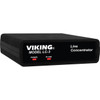
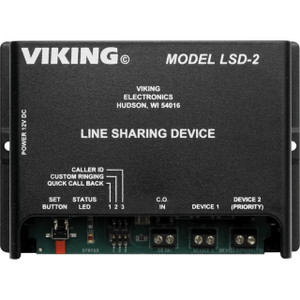
Viking Electronics LC-3 Three Port Line Concentrator
The Viking Electronics LC-3 is a three-port line concentrator that lets up to three emergency phones share a single telephone line — a practical solution for elevator banks, stairwells, and parking structures where running a dedicated line to every handset is cost-prohibitive or structurally impractical. When any connected phone initiates a call, the LC-3 grants it the line; the unit handles the arbitration automatically so there's no need for manual switching or complex programming. If you're specifying Viking Electronics emergency phone systems for a multi-floor or multi-point installation, the LC-3 is the consolidation piece that keeps your line count manageable.
Key Features
- Three Emergency Phones on One Line: The LC-3 supports up to three connected emergency phones over a single telephone line. In elevator or parking garage installs, this can eliminate two additional POTS lines per concentrator — directly reducing monthly recurring telco costs and conduit runs.
- Automatic Line Arbitration: Whichever phone initiates a call receives the line immediately and automatically. There's no software configuration, no dial plan, and no PBX required — the LC-3 operates as a standalone passive device on the line side, which keeps troubleshooting simple and maintenance burden low.
- Built-In 32VDC Talk Battery: The LC-3 supplies 32VDC talk battery voltage to connected phones. This is important in installations where the telco line or VoIP adapter doesn't provide sufficient loop current — common with ATA adapters and hosted VoIP lines. The onboard battery source ensures connected Viking phones have the voltage they need to operate reliably without requiring a separate power injector.
- Standard RJ-11 Modular Connections: All five connections use RJ-11 modular jacks — one for the telephone line and three for the connected phones, plus the power input. Installers work with standard phone cable and off-the-shelf connectors, which speeds up commissioning and simplifies future moves or additions.
- 120V AC Power Input with 13.8V AC 1.25A Adapter: The unit runs on standard 120V AC via a 13.8V AC 1.25A wall adapter. No special power infrastructure is needed — plug it into a standard outlet in the elevator machine room or utility closet and it's powered. The compact 5.0" x 5.0" x 1.5" footprint fits in tight equipment enclosures without consuming valuable panel space.
- Broad Operating Temperature Range: Rated 32°F to 90°F operating temperature with 5% to 95% non-condensing humidity tolerance. Suitable for climate-controlled machine rooms and interior utility spaces; not rated for uncontrolled outdoor environments or extreme cold.
- Lightweight and Compact Form Factor: At 2.0 lbs shipping weight and 5.0" x 5.0" x 1.5" dimensions, the LC-3 mounts easily in a machine room, closet, or inside a larger enclosure alongside other elevator or life-safety equipment. The small footprint means it doesn't compete with more critical equipment for rack or panel space.
Integration and Compatibility
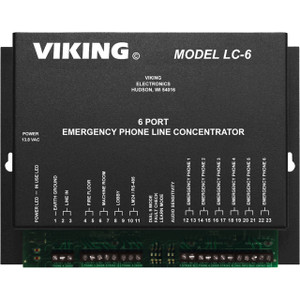
The LC-3 is designed for use within the Viking emergency phone ecosystem. Viking's own documentation references compatibility with the 1600A Series elevator phones, and the same line-concentrator architecture is used across the LC family — the LC-6 handles up to six phones and the LC-8 adds automatic inbound call answering and touch-tone transfer for more complex scenarios. If your project requires more than three emergency phones sharing a line, or if you need inbound call answering and fire-floor phone connectivity, evaluate the LC-6 or LC-8 within the same Viking product line before specifying the LC-3.
Because the LC-3 operates on the analog telephone interface, it works with POTS lines, VoIP-to-analog adapters, and analog ports on hybrid phone systems. The 32VDC built-in talk battery compensates for ATA adapters that deliver insufficient loop current — a common integration headache on VoIP-driven emergency phone deployments. Pair the LC-3 with a compatible telephone entry or emergency communication system for a complete solution. For installations requiring line supervision or monitoring, review your local AHJ requirements — the LC-3 itself does not include supervised line circuitry.
Frequently Asked Questions
Q: How many emergency phones can the LC-3 support on a single telephone line?
A: The LC-3 supports up to three emergency phones sharing one telephone line. If you need more capacity, Viking's LC-6 supports six phones and the LC-8 supports eight phones with additional features.
Q: Does the LC-3 require any programming or configuration?
A: No. The LC-3 operates automatically — when any connected phone initiates a call, it is given the line without any programming, dial plan, or PBX involvement. It functions as a standalone passive concentrator.
Q: What power supply does the LC-3 use?
A: The LC-3 runs on 120V AC input via a 13.8V AC 1.25A adapter. A standard 120V AC outlet in the equipment room is all that's required.
Q: What is the talk battery voltage supplied by the LC-3?
A: The LC-3 provides 32VDC talk battery voltage to connected phones. This is particularly useful when the telephone line or VoIP ATA adapter does not supply adequate loop current for reliable operation.
Q: What type of connectors does the LC-3 use?
A: The LC-3 uses five RJ-11 modular jacks — standard telephone-style connectors compatible with off-the-shelf phone cable and connectors.
Q: Is the LC-3 suitable for outdoor installation?
A: No. The LC-3 is rated for 32°F to 90°F operating temperature in non-condensing humidity environments. It is designed for climate-controlled interior spaces such as elevator machine rooms or utility closets, not uncontrolled outdoor locations.
The LC-3 (also searched as LC 3) solves a specific and recurring problem on elevator phone deployments: the cost and complexity of running a dedicated telco line to every cab. The built-in 32VDC talk battery is the spec I tell integrators to pay attention to first — most VoIP ATA adapters deliver 24–26VDC loop current, which is marginal for Viking emergency phones under load. The LC-3's onboard 32VDC supply keeps connected phones operating reliably without adding a separate power injector to the bill of materials.
Technical Highlights:
- Three-port line sharing: Up to three Viking emergency phones share one analog telephone line, reducing line count and monthly recurring telco expense per elevator bank by up to two lines.
- 32VDC talk battery: Onboard voltage supply compensates for low-loop-current VoIP ATA adapters — addresses the most common failure mode in VoIP-driven emergency phone installs without additional hardware.
- Compact 5.0" x 5.0" x 1.5" footprint: Fits inside standard elevator machine room enclosures and utility panels without displacing other equipment; 2.0 lb shipping weight makes it easy to stage and position.
Deployment Considerations:
- The LC-3 operates at 120V AC via a 13.8V AC 1.25A adapter — confirm a standard outlet is accessible in the machine room during rough-in, as adding a circuit after the fact in an existing elevator shaft is expensive.
- Operating temperature is rated only to 90°F, which can be a real constraint in non-air-conditioned machine rooms in warm climates — verify ambient conditions before specifying. If your project needs inbound call answering, fire-floor phone support, or more than three phones per line, step up to the LC-8 within the Viking family.
The LC-3 is the right fit for new construction or retrofit elevator phone projects in climate-controlled buildings where three or fewer emergency phones need to share a single analog or VoIP-analog line, and where keeping the bill of materials lean matters more than advanced call-routing features.