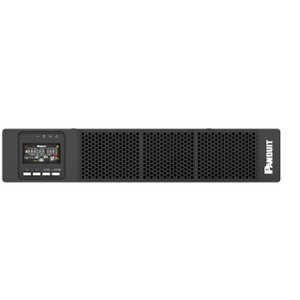
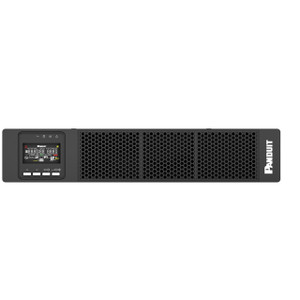
Panduit U01S13V SteadySine™ Rack-Mount UPS
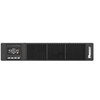
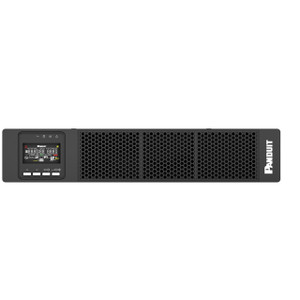
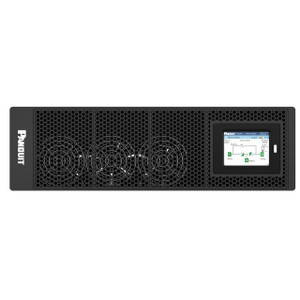
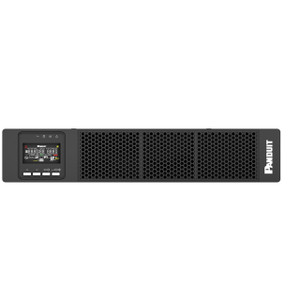
The Panduit U01S13V delivers enterprise-grade uninterruptible power in a compact 2U rack-mount form factor, purpose-built for data center, edge computing, and modular data center (MTDC) deployments where every rack unit counts. Part of Panduit's SteadySine™ family, this UPS provides true sine wave output that protects sensitive IT equipment—servers, network switches, storage arrays, and telecom gear—from power anomalies, voltage sags, and outages. The 17.3-inch width fits standard 19-inch racks with mounting hardware, while the 3.4-inch height preserves vertical space for compute and networking gear. Unlike consumer-grade UPS units that produce stepped-approximation waveforms, SteadySine™ technology ensures clean AC power that won't trigger power-supply faults or reduce equipment lifespan. For integrators managing multi-vendor infrastructure stacks, this UPS slots into Panduit's broader physical infrastructure ecosystem—sharing the same rack rails, cable management, and monitoring protocols as Panduit PDUs, patch panels, and environmental sensors.
Key Features
- SteadySine™ pure sine wave output protects servers, switches, and storage from harmonic distortion and power-factor penalties
- 2U rack-mount chassis (3.4" H × 17.3" W) maximizes usable rack space in 42U cabinets and micro data centers
- Data center / edge / MTDC-certified design meets uptime requirements for distributed IT infrastructure and remote sites
- Hot-swappable battery architecture (field-replaceable without downtime in most configurations)
- Network management integration via SNMP, Modbus, or web interface for centralized monitoring through DCIM platforms
- Automatic voltage regulation (AVR) extends battery life by handling minor fluctuations without switching to battery mode
- Front-panel LCD provides real-time load, runtime, battery health, and fault diagnostics
- Configurable alarm contacts and relay outputs trigger automated shutdown scripts or building management system (BMS) alerts
SteadySine™ UPS units address a common problem in edge deployments: IT-grade equipment installed in mechanical rooms, retail back offices, or telco huts with inconsistent commercial power. A security integrator installing a 48-port PoE switch, two NVRs, and a firewall in a strip-mall back room can't rely on the building's aging electrical service. The U01S13V provides line-interactive protection—monitoring incoming AC, correcting voltage without battery drain, and switching to battery backup in under 4 milliseconds when mains power fails. The pure sine wave output matters for PoE switches that power IP cameras and access points; modified sine wave UPS units can cause switch power supplies to run hot, trip overcurrent protection, or fail to deliver full PoE wattage to downstream devices. True sine wave also eliminates the 60 Hz hum and coil whine that cheaper UPS topologies introduce into audio/video installs. Runtime calculations depend on connected load—a typical edge stack drawing 400W will run 10-15 minutes on battery, enough time for generator startup or graceful shutdown. For longer runtime, Panduit offers external battery cabinets that daisy-chain to the UPS via DC bus connectors, scaling backup time without consuming additional rack space in the main cabinet.
Installation follows standard rack-mount procedures but requires planning for weight distribution and cable routing. The U01S13V ships with L-brackets and cage nuts for front-mount or mid-mount placement in square-hole or round-hole racks. Best practice: mount the UPS low in the rack (below the equipment it protects) to lower the center of gravity and simplify battery replacement—most models slide the battery tray out the front. Input power typically connects via C20 inlet (requires C19-to-C20 cord from PDU or wall outlet); output provides multiple C13 or C19 receptacles to feed server power supplies and switch AC inputs. For greenfield installs, coordinate UPS placement with Panduit PDUs so critical gear connects to UPS-backed outlets and non-critical devices (KVM, lights, test equipment) connect to PDU non-battery outlets. Network monitoring requires an Ethernet drop to the UPS management port—this connects the UPS to the data VLAN for SNMP polling or web UI access. Configure SNMP traps to alert when runtime drops below 5 minutes, battery health falls below 80%, or the UPS switches to battery mode more than twice per day (a sign of upstream power quality issues). Many DCIM platforms (Panduit PIM, Nlyte, Sunbird) auto-discover UPS units via SNMP and correlate power events with temperature, humidity, and rack-level power draw.
The U01S13V integrates into Panduit's Unified Physical Infrastructure (UPI) strategy, where power distribution, cable management, environmental monitoring, and asset tracking share common mounting planes, management interfaces, and documentation standards. For a 10-rack edge data center, you might deploy one U01S13V per rack (protecting that rack's IT load) plus a larger Panduit UPS at the input to the PDU daisy-chain (providing whole-room backup). This tiered approach balances cost, runtime, and failure domains: individual rack UPS units handle brief outages and allow staggered shutdowns, while the room-level UPS bridges longer outages until generator transfer or controlled shutdown completes. Battery replacement follows a 3-5 year cycle depending on temperature and discharge frequency—hotter environments (above 77°F / 25°C) accelerate aging. The front-panel LCD displays battery health as a percentage; when it drops below 80%, order replacement batteries and schedule a maintenance window. Most Panduit UPS models support hot-swap: press the bypass button to transfer load to mains power, slide out the old battery tray, slide in the new tray, release bypass. Total downtime: under 60 seconds, no need to power down connected equipment. For mission-critical racks, keep a spare battery tray on-site to avoid waiting on distributor lead times.
This UPS suits commercial security integrators running hardened network stacks (PoE switches, NVRs, access control panels) in unstaffed locations, datacenter installers protecting server racks in colocation facilities, and IT teams deploying micro data centers at branch offices or retail sites. The SteadySine™ designation confirms pure sine wave topology, critical for power-factor-corrected (PFC) server supplies and PoE injectors that refuse to operate on modified square wave. Panduit's 17.3-inch width matches their NetRunner cable management and PanZone rack ecosystem, so mounting rails, vertical managers, and blanking panels align without adapter brackets. For integrators already standardized on Panduit infrastructure, the U01S13V eliminates the multi-vendor compatibility testing and documentation overhead that comes from mixing UPS brands with Panduit racks and PDUs.