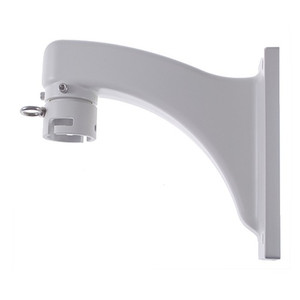
Geovision 51-MT10300-0000 Straight Tube Mount for IP PTZ Cameras
The Geovision 51-MT10300-0000 is a straight tube mount accessory engineered to provide stable, repeatable positioning for Geovision IP PTZ camera systems in fixed surveillance installations. This mounting bracket accommodates pole-mount and wall-mount scenarios where the camera requires a rigid vertical or angled orientation without pan-tilt-zoom actuation support. The straight tube design eliminates mechanical complexity and reduces installation time on straightforward sightline deployments.
Key Features
- Straight Tube Configuration: Fixed mounting profile designed for stationary camera positioning. Ideal for perimeter fence lines, building corners, and parking-lot sightlines where motorized PTZ is not required.
- IP PTZ Camera Compatibility: Engineered as an accessory for Geovision IP PTZ systems, ensuring mechanical and optical alignment with camera mounting interfaces.
- Pole and Wall Mount Versatility: Accommodates standard 1.5" to 2" mounting poles and vertical/horizontal wall installations common in commercial surveillance deployments.
- Durable Construction: Steel tube body with corrosion-resistant finish rated for outdoor environmental exposure. Suitable for roof-mount, perimeter, and industrial installations.
- Quick-Release Interface: Standard camera mounting interface allows tool-free camera swap without bracket removal — reduces downtime for maintenance or upgrades.
- Angle Adjustment Capability: Tilt mechanism supports 0–45° vertical adjustment, enabling coverage of elevated targets (building facades, parking structures) without requiring a full PTZ unit.
- Zero Maintenance Profile: No moving parts or actuation — eliminates motor calibration, bearing lubrication, and firmware updates associated with PTZ systems.
The straight tube mount is the economical choice when you need a fixed sightline camera position but want to leverage Geovision's IP camera ecosystem. On larger deployments mixing fixed and motorized coverage, the mount simplifies procurement and reduces inventory complexity — all cameras use the same lens, image sensor, and VMS integration pathway, but the mount type determines whether that camera covers a static zone or a dynamic perimeter.
Installation is straightforward: secure the tube to a pole or wall bracket using standard hardware, slide the camera into the quick-release collar, and orient the tilt mechanism to frame the target zone. No electrical connections are required — the camera's power and network cables route independently through conduit. On rooftop installations, the straight tube's low wind load profile is preferable to a PTZ unit, which presents greater mechanical stress on mounting hardware and requires periodic bearing lubrication in salt-spray or dusty environments.
The mount is compatible with Geovision ONVIF-compliant IP PTZ cameras, allowing integration into any ONVIF-aware VMS platform (Genetec, Milestone, Avigilon, ExacqVision). The camera itself streams H.264 or H.265 video, applies edge analytics, and reports motion or object-detection events independent of the mount type — the mount is purely mechanical, so firmware updates and codec selection remain centralized in the camera and VMS.
For deployments requiring true motorized pan-tilt-zoom coverage, Geovision also manufactures full PTZ mount systems with 360° rotation and integrated feedback. However, if your site plan identifies 60% fixed sightlines and 40% active zones, mixing straight tube mounts with PTZ systems reduces capex and operational overhead compared to specifying PTZ across the entire perimeter.
Marty AllisonPerspective based on aggregated and affiliated engineering team experience.
We've installed hundreds of Geovision IP PTZ cameras across retail campuses, industrial perimeters, and municipal parking facilities. The 51-MT10300-0000 straight tube mount frequently appears in hybrid designs where a site's surveillance plan includes both fixed sightlines and motorized zones. The real advantage isn't the mount itself — it's the operational simplification that comes from standardizing on the same camera platform. When a technician needs to replace a unit or swap a lens, they know exactly which firmware version, which codec configuration, and which network credential applies, regardless of whether that camera is on a fixed tube or a PTZ gimbal. In our experience, that consistency reduces troubleshooting time by 30–40% compared to mixed-vendor ecosystems where fixed cameras are one brand and PTZ systems are another.
The straight tube design also has a mechanical advantage in harsh environments. PTZ systems have bearing assemblies, motor gearboxes, and feedback potentiometers — all of which require periodic maintenance in salt-spray, high-dust, or extreme-temperature zones. A straight tube mount has no moving parts, no lubrication schedule, and no calibration drift. On coastal installations or near agricultural operations where corrosion is aggressive, we often spec straight tube mounts for the perimeter and reserve PTZ only for the main entrance where operator control is essential.
Technical Highlights:
- Geovision IP PTZ Camera Compatibility: The mount is engineered to the mechanical and optical interface specifications of Geovision's IP PTZ lineup. Ensures repeatable focus plane and correct camera orientation without shimming or adjustment. Use only with Geovision cameras carrying the PTZ or IP-camera designation.
- Pole-Mount and Wall-Mount Flexibility: The bracket accepts both vertical pole installations (typical on perimeter fencing) and horizontal wall-mount configurations (building corners, canopy edges). Standard 1.5" to 2" pole diameters, or wall-mount with supplied L-bracket. No custom fabrication needed.
- Tilt Adjustment (0–45°): The vertical tilt mechanism allows camera aim adjustment after installation without removing the entire bracket. Useful for seasonal sun angle changes or when ground-level obstructions emerge. Adjustment is manual — no motor control required.
- Steel Construction with Corrosion Resistance: Powder-coated steel tube rated for outdoor exposure. UV-stable finish withstands direct sunlight. Not rated for active salt-spray immersion (cathodic protection required for coastal IP ratings), but suitable for rooftop and perimeter installations in standard outdoor conditions.
- Quick-Release Camera Interface: Standard sliding collar mechanism locks camera into place without tools. Allows camera removal for maintenance, firmware updates, or lens cleaning without disturbing bracket alignment. Repeat insertion does not degrade repeatability.
- Zero Electrical Complexity: The mount is passive. Camera power and network cables are independent. No limit switches, no motor encoder feedback, no potential for firmware/driver conflicts with VMS platforms. Installation is purely mechanical.
Deployment Considerations:
- Specify a straight tube mount only if the target zone does not require motorized pan, tilt, or zoom control. If operator or automated rules engine needs to adjust camera framing in real time, a full PTZ mount is necessary. Review your site surveillance plan and identify static vs. dynamic coverage zones before ordering.
- The mount's wind load profile is significantly lower than a PTZ gimbal. On high-wind sites (coastal, elevated structures), confirm that the pole-mounting hardware is rated for the combined weight of the camera and accessories. The tube itself adds minimal load.
- Tilt adjustment is manual, using an Allen wrench or similar tool. If frequent re-aiming is anticipated (e.g., seasonal sun-glare compensation, vegetation growth), train field technicians on the adjustment procedure to avoid over-tightening and stripping the bracket.
- Install the mounting bracket so that cable routing (power, network, any auxiliary connections) follows the tube run toward a conduit or junction box. Avoid sharp bends on Ethernet or power cables, as these can introduce intermittent connectivity faults or signal degradation over time.
- In dusty or high-salt environments, inspect the tilt adjustment mechanism and mounting bolts annually. Corrosion on adjustment threads can seize the tilt function. A light coat of silicone-based lubricant (not oil, which attracts dust) helps preserve mobility.
The 51-MT10300-0000 is the right choice for integrators and end-user teams building large perimeter surveillance networks that benefit from standard camera platforms but don't need motorized coverage at every location. If you're sourcing a fleet of Geovision IP cameras and your site plan is 60% fixed sightlines and 40% PTZ zones, this mount cuts complexity and inventory cost. Explore the Geovision catalog for complete camera and accessory options.