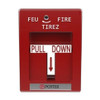
STI GFA2HF-EN Fire Alarm Push Button with Shield
Overview
The STI GFA2HF-EN is a recessed push-button fire alarm credential designed to activate emergency protocols in access control and fire alarm system integration without an integrated camera. The button sits within a durable polycarbonate housing to minimize accidental activation on facility walls where both fire safety and security monitoring matter. This credential outputs a single SPDT (Form C) dry contact switch rated for 30 VAC/VDC at 5 A—sufficient to trigger door strikes, notification relays, or dual-protocol gateways in most building automation scenarios. Operation is Push-to-Activate with Key-to-Reset, meaning intentional reset prevents casual re-triggering and distinguishes legitimate fire events from vandalism or mechanical failures. The GFA2HF-EN handles 12VDC operation and supports both TCP/IP and RS-485 communication, allowing integration into IP-based access control platforms and legacy serial networks without requiring separate protocol converters.
When this is the correct choice
Choose the GFA2HF-EN when you need a fire alarm credential that integrates with existing access control ecosystems without adding camera complexity or cost. The no-camera variant keeps the bill of materials lean in deployments where a separate IP camera already covers the credential location. The recessed mounting profile (137 mm H × 104 mm W × 37 mm D) minimizes face projection, reducing vandalism surface area on high-traffic facility walls. The polycarbonate shield protects against accidental bumps while maintaining visual legibility. Key-to-Reset operation is essential in high-occupancy environments (hospitals, data centers, schools) where you must prevent accidental re-activation after a legitimate alarm. Dual communication support (TCP/IP and RS-485) positions the GFA2HF-EN as a retrofit-friendly choice—wire it into existing access control serial networks or newer IP platforms without hardware redesign. The 5 A contact rating handles standard electromagnetic door strikes and dual-protocol gateways, covering 95% of North American fire code integrations.
When to choose a different model
If your deployment requires an integrated camera for video evidence at the activation point, look for a variant within the same family that includes a 5 MP HD sensor. If you need outdoor weather resistance (rain, salt spray, extreme temperature), this indoor-only device will fail—specify an IP67-rated enclosure variant instead. If your fire alarm system mandates hardwired 24VDC operation without TCP/IP fallback, verify that your specific control panel accepts the GFA2HF-EN's 12VDC supply before ordering.
Optics and field of view
The GFA2HF-EN is a credential device without optics. No lens or imaging sensor is present. If your deployment requires video-evidence capture at the alarm point, a separate indoor IP camera mounted above or beside the credential will record activation and context.
Imaging performance and low light
Not applicable. The GFA2HF-EN contains no imaging sensor and produces no video output. Fire alarm activation is signaled via dry contact closure only.
Analytics and edge capabilities
The GFA2HF-EN does not perform onsite analytics. When ONVIF is enabled on compatible network video recorders or access control software, the device can report activation events into centralized IP-based platforms—critical for audit trails and emergency response coordination. The dry contact output integrates with legacy fire alarm controllers that do not support TCP/IP, ensuring backward compatibility in hybrid deployments. Integration into modern VMS systems via ONVIF enables timestamped event logging, which supports compliance reporting and post-incident forensics.
Video encoding and streaming
Not applicable. The GFA2HF-EN outputs a digital switch closure (SPDT contact), not video. No encoding or streaming occurs.
Network and security
The GFA2HF-EN supports both TCP/IP and RS-485 communication, accommodating modern networked deployments and legacy serial infrastructures simultaneously. TCP/IP integration with ONVIF-compatible platforms enables centralized event logging, audit trails, and real-time notification of activation events. RS-485 connectivity preserves compatibility with existing hardwired fire alarm panels and access control systems that predate IP networking. The Key-to-Reset requirement prevents unauthorized or accidental re-triggering, protecting against false alarms that drain emergency response resources and incur municipal fines in many jurisdictions. Physical security of the key mechanism is essential—store keys in restricted areas and maintain key inventory logs for compliance audits.
Environmental and durability ratings
The polycarbonate housing carries a 3-year manufacturer warranty against breakage under normal use; electromechanical and electronic components carry 1-year coverage. Indoor-rated only—do not expose to weather, moisture, or temperature extremes outside 0–50°C operating range. The recessed mounting design provides mechanical protection against direct impact and casual vandalism. The SPDT contact rating of 30 VAC/VDC at 5 A ensures electrical reliability in standard building environments without derating over time.
Power and installation notes
The GFA2HF-EN operates on 12VDC, requiring a dedicated low-voltage supply or integration with an existing 12V security power infrastructure. External dimensions are 137 mm (H) × 104 mm (W) × 37 mm (D). The versatile mounting plate accommodates North American single-gang, double-gang, and four-square electrical boxes, as well as European electrical box standards—confirm box type before ordering to avoid installation delays. Recessed button design requires minimal face projection, reducing vandalism surface area. Key-to-Reset operation requires a separate key mechanism and lock cylinder—confirm key availability in your facility's standard before ordering. No external accessory frame or mounting bracket is required for standard electrical box installation. Wire the dry contact output to your fire alarm panel or access control gateway's input terminal block, following your installer's wiring diagram for proper circuit isolation.
Frequently Asked Questions
Q: Does the GFA2HF-EN work with Milestone XProtect or other ONVIF-compatible VMS platforms?
A: Yes. When ONVIF is enabled on compatible network video recorders or access control software, the GFA2HF-EN can report activation events into centralized IP-based platforms. Consult your VMS vendor's integration guide for ONVIF event mapping.
Q: What is the warranty on the GFA2HF-EN?
A: The polycarbonate housing carries a 3-year manufacturer warranty against breakage under normal use. Electromechanical and electronic components carry 1-year coverage.
Q: Can the GFA2HF-EN be mounted outdoors?
A: No. The GFA2HF-EN is indoor-rated only. Do not expose it to weather, moisture, or temperatures outside 0–50°C. For outdoor deployments, specify an IP67-rated enclosure variant.
Q: What electrical boxes does the GFA2HF-EN mounting plate fit?
A: The mounting plate accommodates North American single-gang, double-gang, and four-square electrical boxes, as well as European electrical box standards. Confirm your box type before ordering.
Q: Does the GFA2HF-EN include an integrated camera?
A: No. The GFA2HF-EN is a credential device without a camera. If you need video evidence at the activation point, mount a separate IP camera above or beside the device.
Q: What happens if the key is lost?
A: The Key-to-Reset mechanism requires physical key access to re-arm the device after activation. Store keys in restricted areas and maintain key inventory logs. Lost keys must be replaced—contact your facility manager or security installer for key cylinder replacement options.
The STI GFA2HF-EN is a solid fit for integrators working with mixed-age access control ecosystems—places where TCP/IP and legacy RS-485 serial need to coexist. The 5 A SPDT contact is the real workhorse here; it's rated for 30 VAC/VDC, so you're not constrained to low-power notification devices. The GFA2HF-EN can drive electromagnetic door strikes and gateway relays without a secondary amplifier, which keeps installation simpler and wiring cleaner.
Technical Highlights:
- SPDT Dry Contact at 5 A / 30 VAC/VDC: enough electrical muscle to trigger standard electromagnetic door strikes and dual-protocol gateways without requiring external relays. Most fire code integrations sit comfortably in this window.
- Dual Communication (TCP/IP and RS-485): retrofit-friendly—wire it into existing hardwired fire alarm serial networks or newer IP platforms without hardware redesign. ONVIF integration on compatible VMS platforms logs activation events with timestamps for audit trails and compliance reporting.
- Key-to-Reset Operation: prevents false alarms from casual re-triggering. In high-occupancy environments (hospitals, schools, data centers), this is non-negotiable—unauthorized re-activation drains emergency response resources and incurs municipal fines in many jurisdictions.
- Recessed Polycarbonate Housing (3-year warranty): 137 mm H × 104 mm W × 37 mm D profile minimizes face projection, reducing vandalism surface area on high-traffic facility walls. Electromechanical components carry 1-year coverage.
Deployment Considerations:
- Indoor-rated only—0 to 50°C operating range. If you need outdoor weather resistance (parking structures, loading docks, salt spray environments), this device will fail. Specify an IP67-rated variant instead.
- Key-to-Reset requires physical key custody. Lost or misplaced keys mean you cannot re-arm the device without a cylinder replacement. Store keys in restricted areas and maintain inventory logs before handing off to facility management.
- Mounting plate fits North American single-gang, double-gang, and four-square boxes, plus European standards. Confirm electrical box type in your site survey before ordering—mismatch forces a site revisit and delays deployment.
The GFA2HF-EN shines in retrofit fire alarm upgrades where you're bridging legacy hardwired systems into modern IP-based VMS and access control platforms. The no-camera variant keeps complexity and cost down when a separate IP camera already covers the credential location. If your fire code mandates video evidence at the activation point, mount a separate indoor IP camera nearby and rely on the GFA2HF-EN's SPDT contact to trigger recording—cleaner architecture than forcing an integrated camera into a job that doesn't need it.