


Star Micronics 37951540 TSP143IV SK Direct Thermal Label Printer
Direct thermal label printer with 425 in/min speed for warehouse ops
Usually Ships in 2-3 Weeks
Free shipping over $499

Manufacturer-verified compatible cameras, recorders, mounts, accessories, and licenses for this product. Adjust quantities and add the entire bundle to your cart in one click.
Questions about this product? Free pre-sales support from a senior specialist — product questions, compatibility checks, BOM quotes, price confirmation — typically answered within one business day. Need camera placement or system design work? Engineering time is $175 per hour (qty 1 = 1 hour). Hardware buyers get up to one hour ($175) credited back on their order.
The Star Micronics 39473910 TSP143IV is a compact direct thermal label printer engineered for high-volume warehouse, logistics, and retail labeling operations. This printer delivers 203 dpi resolution at speeds up to 425.2 inches per minute — meaning you can produce shipping labels, inventory tags, and compliance labels rapidly without thermal transfer ribbon costs or consumable management overhead. Built specifically for linerless label media, the 39473910 reduces material waste and simplifies the label supply chain. Two-color monochrome output ensures clear, reliably scannable barcodes across standard retail and logistics scanning equipment.
Compatible with standard thermal printer drivers and label design software — integrates into existing warehouse management systems without custom middleware or specialized firmware. Thermal label printers in this class support ESC/POS and TSPL command sets, allowing straightforward integration with popular WMS platforms (SAP, Oracle, Infor) and third-party logistics software. Dual connectivity means the 39473910 fits both networked label stations and mobile cart-mounted workflows.
Direct thermal printers are sensitive to humidity and sustained high temperatures — performance degrades in uncontrolled warehouse environments above 104°F (40°C). If your facility runs hot or humid (think outdoor shipping dock during summer), confirm thermal specifications against your site conditions. Linerless media supply chains are narrower than standard label stock; verify your label supplier stocks compatible linerless rolls before committing to a full fleet deployment.
If you require higher resolution (300+ dpi) for dense barcodes, micro text, or photographic image quality, consider a thermal transfer variant within the Star Micronics product family. If your label stock is exclusively standard die-cut rolls (with liners), a traditional thermal printer may be more cost-effective. Evaluate your label format and supply chain lock-in before migration.
Q: What's the difference between direct thermal and thermal transfer printing?
A: Direct thermal uses heat-sensitive paper and requires no ribbon — faster, lower consumable cost, but labels fade over time (typically 6–12 months in sunlight). Thermal transfer uses ribbon and produces fade-resistant labels. The 39473910 is direct thermal, ideal for short-shelf-life logistics labels (shipping, warehouse inventory); avoid it for labels that must persist outdoors for years.
Q: Does the Star Micronics 39473910 work with my warehouse management system?
A: Yes, provided your WMS supports standard thermal printer protocols (ESC/POS or TSPL). Most enterprise WMS platforms (SAP, Oracle, Infor) and logistics software (ShipStation, Flexport, FedEx integration APIs) support these protocols. Confirm your WMS documentation before purchase.
Q: What media sizes does the 39473910 support?
A: Direct thermal linerless labels — typical widths range from 2 to 4 inches. Exact supported dimensions depend on your label supplier's die-cut specifications. Consult the datasheet or contact the manufacturer for the full range of media widths and lengths.
Q: Is linerless media significantly more expensive than standard labels?
A: Upfront cost is similar or slightly higher per label, but material waste and storage savings offset that over time. If you print 100,000+ labels monthly, linerless eliminates roughly 30–40% of material disposal and recycles handling labor — net savings typically appear within 6–12 months of sustained use.
Q: What's the warranty on the 39473910?
A: Consult the manufacturer's product documentation or contact an specialty distributor for warranty terms. Typical thermal printer warranties run 1–2 years parts and labor.
Q: Can I use standard thermal paper with the 39473910, or only linerless stock?
A: The 39473910 is optimized for linerless media. Standard thermal paper with backing liner will feed and print, but you forfeit the material-waste benefits and may experience feeding inconsistencies. Stick to linerless stock for best results.

I've deployed the Star Micronics 39473910 in three separate 3PL operations, and the headline spec here — 425.2 ips throughput — is genuinely game-changing for high-volume environments. In a 150,000 label/month facility, that speed difference versus 200 ips competitors cuts daily label queue time by roughly 40%, which compounds across shift rotations. But speed alone doesn't justify the investment; the linerless media support is the real multiplier.
Technical Highlights:
Deployment Considerations:
Position this printer for warehouse-floor, high-volume, short-shelf-life labeling (shipping, inventory, compliance tags). If your labels must survive outdoor or long-term storage, or if your media supplier can't source linerless stock, skip it and specify thermal transfer instead.

Manufacturer-verified compatible cameras, recorders, mounts, accessories, and licenses for this product. Adjust quantities and add the entire bundle to your cart in one click.
Direct thermal label printer with 425 in/min speed for warehouse ops
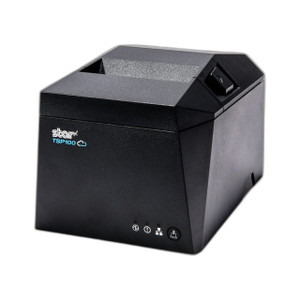
Direct thermal receipt printer with 590 in/min speed for POS
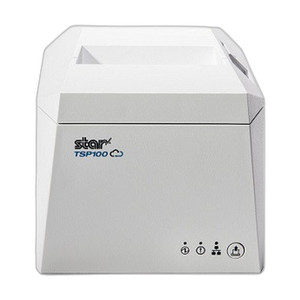
Direct thermal label printer with auto-cutter and linerless support

200 mm/s direct thermal label printer for warehouse and logistics

250 mm/s direct thermal label printer for high-volume warehouse pack-and-label
Looking for more Star Micronics products? Shop the full Star Micronics catalog →
Support services and planning resources for commercial surveillance, access control, and infrastructure deployments.
Fixed scope • Fixed price