Viking Electronics E-70-SS-EWP Stainless Steel Entry Phone with Proximity Card Reader
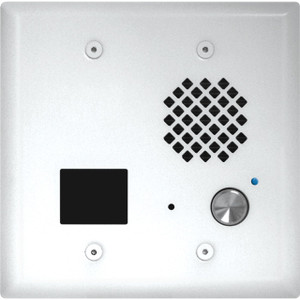
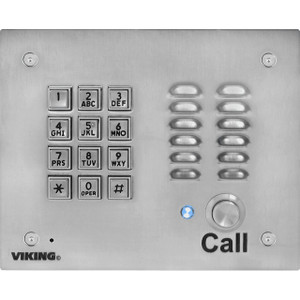
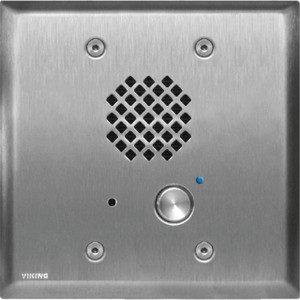
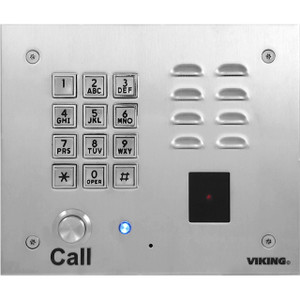
The Viking Electronics E-70-SS-EWP is a telephone-line-powered, two-way handsfree entry speakerphone with a built-in 125 kHz 26-bit Wiegand proximity card reader — built for exterior door control applications where you need audio communication, credential reading, and weather resistance from a single flush-mounted device. The 304 stainless steel faceplate (4.875" x 4.938") pairs with Enhanced Weather Protection (EWP) board treatment and IP66-rated sealing, making it a sound choice for covered entryways, vestibules, loading docks, and any outdoor access point that sees rain, dust, or temperature extremes.
Overview
Most entry phone deployments require two separate devices — a door phone and a card reader. The entry phone E-70-SS-EWP consolidates both into a double-gang footprint that mounts flush in a standard electrical box or surface-mounts with the optional VE-5x5 enclosure. It draws power entirely from the telephone line (minimum 20mA loop current), so there is no separate power run required to the door — a practical advantage when retrofitting existing intercom wiring. The result is a compact, vandal-resistant station that handles access control and voice communication over the same infrastructure.
The Viking Electronics entry phone line has a long track record in commercial building access, K-12 schools, and healthcare facilities where plain-language communication at a controlled door matters as much as the credential read.
Key Features
- 125 kHz 26-Bit Wiegand Proximity Reader: The onboard reader operates at 125 kHz and outputs standard 26-bit Wiegand data — the most broadly supported format in commercial access control. That means it wires directly to virtually any Wiegand-input access control panel without protocol adapters. Read range is 1.25" to 2.0", which keeps credential presentation deliberate and reduces unintentional reads on busy corridors.
- LED and Beep Card-Read Confirmation: Visual LED and audible beep feedback at the reader confirm a successful credential read to the cardholder without requiring the access panel to send a relay response. Reduces user confusion at the door and cuts down on "did it work?" service calls.
- Telephone-Line Powered (20mA Minimum Loop Current): The unit draws everything it needs from the telephone loop — no 12VDC or PoE run to the door. On retrofit jobs where conduit and cable are already in place for a phone system, this eliminates a second pull entirely. Verify your loop delivers at least 20mA; older analog systems or long cable runs on thin wire can fall short.
- IP66 with EWP Board Protection: IP66 means powerful water jets and total dust ingress are both blocked — adequate for most exterior door applications short of flood-zone or fully submerged installs. The EWP treatment goes further by protecting the internal board from condensation and humidity up to 100%, extending service life in coastal, car-wash, or high-condensation environments.
- Operating Range -30°F to 150°F: That's a genuine cold-climate to desert-heat window. An unheated parking structure in Minnesota or a sun-baked exterior wall in Arizona — the E-70-SS-EWP handles both without a heater kit or shade enclosure.
- 304 Stainless Steel Faceplate: Grade 304 stainless resists rust and surface corrosion in normal outdoor exposure. The 0.17" profile sits nearly flush against the wall, giving vandals minimal leverage and presenting a clean appearance for commercial lobbies or institutional entryways.
- Selectable Auto Answer for Monitoring: When configured for auto answer, the unit can be used as a passive monitoring station — the connected phone can open audio without requiring the remote party to press anything. Useful for nursing stations or security desks that need ears on a corridor.
- 62 dB Speaker Volume at 1m: Adequate for a covered exterior entry or an indoor vestibule. In high-ambient-noise environments (loading docks next to running equipment, outdoor areas near HVAC), you may need to evaluate whether 62 dB carries clearly enough — this is not a high-output horn speaker.
- 25V AC RMS Minimum Ring Voltage, REN 0.8A: Standard POTS-compatible ring requirements. Integrates directly with analog telephone systems, PBX analog extensions, and most ATA adapters driving VoIP lines to analog doors.
- CPC Auto-Disconnect (300ms Minimum): The unit monitors for a 300ms Calling Party Control signal to detect hang-up and automatically disconnect, keeping the line free. This is important in multi-station systems where a hung-up line would block the next incoming call.
- Flush or Surface Mount: Flush-mounts in a standard double-gang electrical box; surface-mounts with the optional VE-5x5 enclosure. The faceplate is 4.875" x 4.938" — verify rough opening before ordering if flush-mounting into existing drywall cutouts.
Integration & Compatibility
The Wiegand output connects to any access control panel with a standard Wiegand input — this covers the majority of commercial panels from manufacturers including HID, Lenel, Software House, Bosch, and DSC. The 26-bit format is the industry default; confirm your panel supports 26-bit if using a less common credential format. The audio side connects to analog telephone lines, PBX extensions, or VoIP ATAs — not SIP natively. If your deployment is fully IP-based, plan for an ATA at the head end. For deployments where weather exposure is more severe, pair with the VE-5x5 surface mount enclosure to add a physical weather hood. For sites running structured PoE switch infrastructure, note that this unit is telephone-line powered only — it does not accept PoE.
Frequently Asked Questions
Q: Does the E-70-SS-EWP require a separate power supply at the door?
A: No. The E-70-SS-EWP is telephone-line powered and requires only a minimum 20mA loop current from the connected telephone line or PBX extension. No separate 12VDC or PoE power run is needed at the door.
Q: What card formats does the proximity reader support?
A: The built-in reader operates at 125 kHz and outputs 26-bit Wiegand data — the most common format in commercial access control. It is compatible with standard HID proximity cards and most 125 kHz prox credentials. High-frequency (13.56 MHz) cards such as MIFARE or iCLASS are not supported.
Q: What is the IP rating, and is the EWP model suitable for direct rain exposure?
A: The E-70-SS-EWP carries an IP66 rating, meaning it is protected against powerful water jets and total dust ingress. It is rated for humidity up to 100%. The EWP (Enhanced Weather Protection) board treatment adds additional protection against condensation and moisture. It is appropriate for exterior door use but is not rated for submersion.
Q: What is the operating temperature range?
A: The unit operates from -30°F to 150°F, covering cold-climate unheated entryways through high-heat exterior installations without requiring supplemental heating or cooling.
Q: How does the E-70-SS-EWP mount, and what electrical box does it require?
A: It flush-mounts in a standard double-gang electrical box or surface-mounts using the optional VE-5x5 enclosure. The faceplate measures 4.875" x 4.938" x 0.17". Verify your rough opening dimensions before flush-mounting in existing construction.
Q: Does the E-70-SS-EWP work with VoIP phone systems?
A: The unit connects to analog telephone lines or PBX analog extensions. It is not a SIP device. For VoIP deployments, connect through an Analog Telephone Adapter (ATA) that provides a standard analog loop to the door station.
The E-70-SS-EWP earns its place in commercial door control deployments precisely because of its telephone-line-only power requirement — 20mA loop current is all it needs, which means on any job site where analog wiring already runs to the door, you are not pulling a second cable or finding a local power source. That single constraint shapes where this unit fits and where it does not.
Technical Highlights:
- 26-Bit Wiegand Output: Direct connection to any Wiegand-input access panel — no protocol converter, no gateway. The 1.25" to 2.0" read range is intentionally short, keeping credential presentation deliberate and reducing false reads in traffic-heavy corridors.
- IP66 + EWP Board Protection: IP66 handles rain and dust at the enclosure level; the EWP board coating handles the condensation and humidity-up-to-100% scenario that kills unprotected electronics in covered but damp entryways — think parking garage stairwells or cold-storage vestibules.
- -30°F to 150°F Operating Range: No heater element, no thermostat kit. That range covers unheated outdoor installations in northern climates and sun-exposed south-facing walls in warm regions without add-on hardware.
Deployment Considerations:
- Verify loop current before commissioning — the 20mA minimum means long cable runs on 22 AWG or aging analog infrastructure can put you below threshold. Measure at the door, not at the head end.
- The 62 dB speaker output at 1m is adequate for quiet to moderate ambient noise. On a loading dock running forklifts or near HVAC equipment, evaluate whether voice intelligibility holds up before finalizing placement — this is not a high-SPL device.
Best fit: a controlled exterior entry at a commercial building, healthcare facility, or K-12 school where existing analog wiring runs to the door, the access panel accepts 26-bit Wiegand, and the installation needs a clean flush-mount finish without a separate power run or reader enclosure.