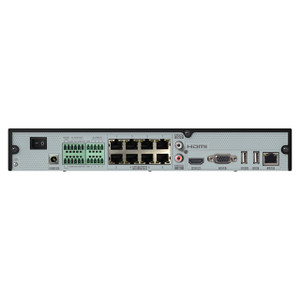
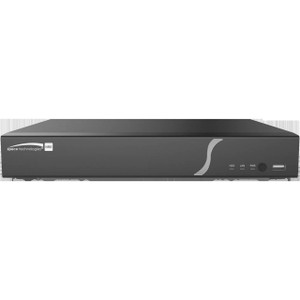
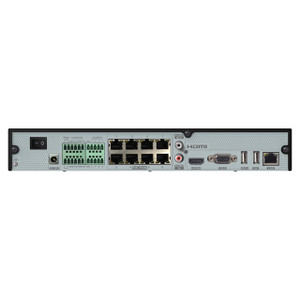
Speco Technologies N8NRX 8-Channel Facial Recognition NVR
Overview
The Speco Technologies N8NRX is a purpose-built 8-channel network video recorder engineered for deployments where facial recognition and advanced analytics must operate locally, without cloud dependencies or external analytics servers. Unlike traditional NVRs that offload intelligence to a separate appliance or subscription service, the N8NRX integrates facial detection and recognition directly into the recording platform—reducing infrastructure overhead, eliminating third-party software licensing, and keeping sensitive biometric data on-premise. This architecture is critical for federal, state, and local government installations, as well as enterprise security integrations where network video recorder compliance with the National Defense Authorization Act (NDAA) and domestic sourcing mandates are non-negotiable.
Key Features
- 8-Channel IP Video Input: Supports simultaneous recording from up to 8 standard IP cameras over your network. More channels than a 4-camera system, but still compact enough for branch offices, warehouses, or mid-sized facilities without requiring a larger, multi-NVR infrastructure.
- Integrated Facial Recognition Engine: On-board processing for facial detection and recognition—no external server, no cloud subscription, no latency. Runs continuously during live monitoring or executes retrospectively during investigation. Meaningful for applications where you need to identify persons of interest in seconds, not hours.
- H.265 Compression: Cuts storage overhead roughly 40–60% compared to H.264 depending on scene complexity and motion. On a 24/7 8-camera recorder, this translates to weeks or months of additional retention on the same disk capacity, or a smaller (cheaper) storage footprint for fixed retention windows.
- ONVIF Compatibility: Integrates with IP cameras and VMS platforms that support open standards. Eliminates vendor lock-in—you can mix cameras from multiple manufacturers and connect to third-party video management systems without proprietary adapters or licensing constraints.
- NDAA Section 889 Compliance: Meets National Defense Authorization Act domestic sourcing and component restrictions. Non-negotiable for federal contracts, government agencies, and sensitive private-sector deployments (critical infrastructure, defense contractors, law enforcement).
- Local Processing Architecture: All facial recognition and analytics execute on the NVR itself. Valuable in air-gapped networks, facilities with limited or unreliable internet, and installations where data residency and privacy regulations (GDPR, CCPA, state-level mandates) require biometric data to remain on-premise.
- Real-Time Analytics: Facial recognition operates without cloud round-trip latency. Video analysis happens instantly as frames arrive—critical for live security operations where a delay of even a few seconds can mean the difference between intervention and post-incident review.
- Secure Boot and Firmware Integrity: Cybersecurity hardening appropriate for critical infrastructure. Ensures the NVR cannot be tampered with via boot-time exploits or unsigned firmware updates—important for government, energy, and financial deployments where supply-chain security is audited.
- Scalable Multi-Site Deployment: Consistent analytics performance across locations. If you're rolling out surveillance across a chain of warehouses, office parks, or retail properties, the N8NRX delivers the same facial recognition capability at each site without needing separate edge appliances or cloud infrastructure.
Integration and Compatibility
The N8NRX functions as an ONVIF-compliant network video recorder, meaning it accepts input from any standards-based IP camera and works with third-party VMS platforms (Milestone XProtect, Genetec, etc.) that support open protocols. No proprietary plugins or licensing required. The on-board facial recognition engine processes video natively—integration partners do not need additional servers, edge devices, or cloud accounts to enable recognition workflows. This is a significant operational cost reduction compared to traditional NVR + analytics appliance stacks.
Because the N8NRX is designed for air-gapped and low-bandwidth environments, it is well-suited to remote facilities, rural installations, and deployments where internet connectivity is intermittent or restricted by policy. Facial recognition and analytics operate continuously regardless of WAN uptime.
When to Choose a Different Model
If your deployment requires more than 8 camera inputs, evaluate higher-channel-count variants within the Speco Technologies catalog. If facial recognition is not a requirement and you need a cost-optimized standard NVR without embedded analytics, consider entry-level models from the same family that omit the recognition processor. If you require real-time cloud integration, geospatial metadata tagging, or AI-driven behavioral alerts (loitering, crowd density, etc.), confirm that the N8NRX's on-board analytics suite meets your specific use case before purchase.
Frequently Asked Questions
Q: Is the N8NRX NDAA Section 889 compliant?
A: Yes. The N8NRX meets National Defense Authorization Act requirements for domestic sourcing and component restrictions, making it eligible for federal and government contracts.
Q: Does the N8NRX require internet connectivity to perform facial recognition?
A: No. Facial recognition and all analytics execute locally on the device. Internet is not required for recognition to function. This is ideal for air-gapped networks and facilities with unreliable connectivity.
Q: What IP cameras are compatible with the N8NRX?
A: Any ONVIF-compliant IP camera can be integrated. You are not restricted to a single manufacturer—mix and match models from Axis, Hikvision, Dahua, Uniview, or any vendor that supports ONVIF standards.
Q: Can the N8NRX integrate with a third-party VMS like Milestone XProtect?
A: Yes. ONVIF compliance enables integration with standard VMS platforms. Confirm with your VMS vendor that they support ONVIF Profile S or T for full compatibility.
Q: How much storage do I need for 8 cameras recording 24/7?
A: H.265 compression reduces storage overhead by 40–60% versus H.264. Consult a storage calculator or capacity planning guide (available from your integrator) to size retention based on your desired lookback window and camera resolution.
Q: Does the N8NRX support two-way audio or microphone input?
A: Confirm audio I/O options with the current datasheet or your integrator. The source evidence does not specify audio capabilities.
Ted PerryPerspective based on aggregated IP Security Depot and affiliated engineering team experience.
The Speco N8NRX represents a meaningful shift in how 8-channel NVRs approach analytics. Most recorders in this channel class bolt on facial recognition via a third-party edge server or cloud subscription—both of which introduce latency, licensing overhead, and data residency questions. The N8NRX integrates recognition directly into the platform, which means you are not paying per-stream analytics fees and facial detection happens in real time. For a multi-agency federal deployment or a warehouse network with 8–16 camera locations, that matters operationally and economically.
Technical Highlights:
- H.265 Compression: Cuts storage footprint 40–60% versus H.264. On an 8-camera 24/7 recorder, that typically means 4–6 additional weeks of retention on the same disk, or a smaller SSD investment if your retention window is fixed.
- ONVIF Compliance: No vendor lock-in. Swap cameras, integrate a different VMS, scale to a second site—the N8NRX adapts without proprietary licensing or appliance-specific firmware.
- NDAA Compliance: Eligible for federal procurement without waiver or exception process. If you are bidding on a government contract or supporting a defense contractor, this certification removes a significant approval hurdle.
Deployment Considerations:
- Facial recognition accuracy depends on camera placement, lighting, and face angle. High-angle top-down shots perform better than profile-mounted cameras. Plan your camera layout with facial geometry in mind.
- On-board processing means the NVR's CPU is busy during peak recognition workloads. If you are running continuous background subtraction, crowd counting, and facial recognition simultaneously on all 8 streams, expect some thermal load. Ensure adequate ventilation in the rack or enclosure.
- Biometric data stays on-premise, which is a privacy win. But it also means you own backup and secure decommissioning of old media. Plan your data lifecycle before deployment.
The N8NRX is built for deployments where NDAA compliance, local analytics, and on-premise data residency are mandatory—federal agencies, critical infrastructure, and large private-sector integrations where you control the entire stack. It is not the right fit if you need cloud-scale scalability, AI model updates, or real-time geospatial dashboards across 50+ sites. For a 4–16 camera federal or air-gapped installation, it is a solid, low-latency choice.