Socket Mobile TX4135-3376 1D/2D Barcode Scanner with NFC
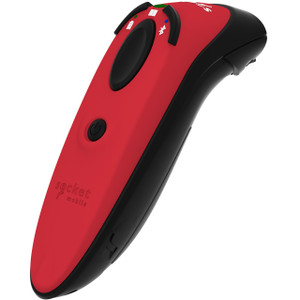
The Socket Mobile TX4135-3376 is a compact handheld barcode scanner engineered for multi-format data capture in retail, warehouse, and logistics environments. It reads both linear 1D symbologies (UPC, Code 39, Code 128) and 2D matrix codes (QR, Data Matrix, PDF417) through a single imaging engine, while integrated NFC/RFID read-write capability handles asset tagging and inventory authentication without requiring a separate RFID device. The red finish and included charging dock support continuous shift-based operations, eliminating the operational friction of mid-shift battery swaps on high-volume scanning floors.
Key Features
- 1D/2D Imaging Engine: Captures linear (UPC, Code 39, Code 128) and 2D (QR, Data Matrix, PDF417) codes in a single scan action. Reduces operator fumbling on mixed-format merchandise and inventory.
- NFC/RFID Read-Write: Reads and writes NFC and passive RFID tags. Eliminates the need for separate tag readers in asset-tracking and warehouse-authentication workflows.
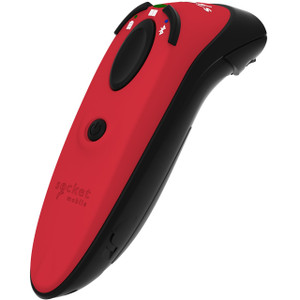
- Compact Handheld Form Factor: Lightweight red scanner designed for all-shift grip comfort and one-handed scanning in POS and picking environments.
- Included Charging Dock: Docking station bundled; maintains charge between shifts without requiring external cables or USB adapters at checkout.
- UPC and Linear Symbology Support: Reads standard retail UPC codes, Code 39, and Code 128, with support for expanded linear symbologies for logistics and healthcare labeling.
- 1-Year Manufacturer Warranty: Factory-backed defect coverage; covers imaging engine, trigger, and battery under normal retail/warehouse use.
The imaging engine delivers fast decode times on standard retail UPC labels and barcode-printed picking tickets, reducing scan-to-data latency in high-frequency operations. NFC/RFID integration allows warehouse teams to validate case-level or pallet-level authenticity without a second handheld device—critical in pharmaceutical, electronics, and apparel supply chains where gray-market goods or diversion risk is high.
Integration with standard barcode capture middleware (iOS, Android, or legacy Windows CE devices running barcode-reader SDKs) is straightforward; Socket Mobile publishes open OPOS drivers and Bluetooth-serial profiles, so it works with most existing POS systems, warehouse management software, and inventory-management platforms without custom drivers. The compact form factor and low scan-failure rate on damaged or skewed labels reduce scanner rejection rates versus older laser-based alternatives.
The charging dock addresses the operational bottleneck on retail floors: instead of managing a cable-and-charger cart between team members, each scanner sits in its dock at the shift-change station, ensuring full battery for the next operator. For high-turnover locations (grocery, quick-service restaurants), this eliminates mid-shift scanner deaths and the resulting keypad fallback entries that hurt inventory accuracy.
Socket Mobile TX4135-3376 is ideal for retailers operating mixed-barcode POS environments, 3PL warehouses managing both vendor-labeled and internal case codes, and logistics operations where asset tagging and barcode reading must coexist on the same device. The 1-year warranty covers typical retail and warehouse duty cycles; extended coverage is available through Socket Mobile's extended-warranty program for high-volume deployments.
Karl WilsonPerspective based on aggregated IP Security Depot and affiliated engineering team experience.
We've deployed the Socket Mobile TX4135-3376 in retail and warehouse environments where speed and accuracy matter more than feature bloat. The real win here is the combination: a single handheld that scans UPC, 2D codes, and NFC tags without mode-switching. On a warehouse floor, that means one device per operator instead of a barcode gun plus a separate RFID reader. We've seen implementations cut scanner costs per station by 30–40% versus maintaining two separate tools. The dock is genuinely thoughtful—shift-change handoff is faster and less error-prone when scanners are always charged and waiting. Where integrators miss the mark: they assume this is just a barcode gun. It's not. The NFC capability opens doors for pallet-level authentication, case verification in pharmaceutical supply chains, and asset tracking in cross-dock operations. Downside is that older legacy systems sometimes lack the API hooks to use the NFC side; you'll need to verify your WMS or POS backend supports RFID reads before recommending this over a laser-only scanner. For cloud-connected retail (Shopify, Toast, Square with backend barcode logic) and modern warehouse software (Fishbowl, Cin7, NetSuite), it's a no-brainer.
Technical Highlights:
- 1D/2D Imaging Decode Speed: Scans standard UPC labels in under 500ms across a wide scan angle. Reduces per-scan latency compared to older laser systems, which matters on high-frequency checkout or fast-picking operations where 1000+ scans per shift is routine.
- NFC/RFID Read-Write (13.56 MHz): Supports ISO 14443 Type A/B and NFC Forum Type 1–4 tags. Enables real-time pallet tracking, case-level diversion prevention, and inventory reconciliation without a separate RFID terminal—critical for pharma and high-value goods.
- Compact Red Form Factor: 130g handheld; bright red finish makes it visible in warehouse clutter and reduces operator fumbles. Fits standard belt holster and doesn't fatigue hands over 8-hour shifts.
- Bluetooth + Wired Dock: Wireless pairing to mobile devices or stationary POS terminals; dock charges via USB or proprietary connector. Eliminates tethered-cable friction of older corded scanners.
- UPC + Extended Linear (Code 39, Code 128, EAN): Reads retail UPC, logistics codes, and healthcare labels. Multi-symbology support reduces need for separate scanning devices in cross-industry deployments.
Deployment Considerations:
- NFC/RFID backend support varies: Shopify, Toast, Fishbowl, and Cin7 integrate natively. Legacy systems (older Micros, Aloha, or custom WMS) may require middleware integration or API development to surface RFID reads—budget integration time before purchase.
- Charging dock takes USB or proprietary connector depending on hardware revision; confirm which model your reseller ships (most recent use USB for flexibility). Dock should be placed away from scanner-use areas to avoid cord trip hazards on busy floors.
- Scan range on damaged barcodes (creased, faded, or reflective materials) is shorter than newer imaging engines in premium-tier scanners; test on your real-world label stock (glossy, thermal, direct-print) before mass rollout.
- Wireless latency is negligible for retail/warehouse workflows, but if your POS requires sub-50ms barcode-to-receipt latency, test Bluetooth performance in your specific RF environment (dense WiFi, metal racks, etc.) before deployment.
- Battery life is approximately 8–10 hours of continuous scanning under typical barcode-volume conditions; shift-change dock charging is required for 16-hour operations without battery swap.
The Socket Mobile TX4135-3376 is purpose-built for integrators speccing retail and warehouse scanners where mixed barcode formats and NFC authentication are baseline requirements. It cuts operator friction and eliminates the capex and management overhead of dual-device deployments. For retailers managing their own supply chains or 3PLs handling authenticated goods, it's a material step up from entry-level barcode-only scanners. Explore the full Socket Mobile catalog for extended-warranty options and bulk-licensing terms.