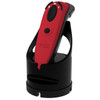
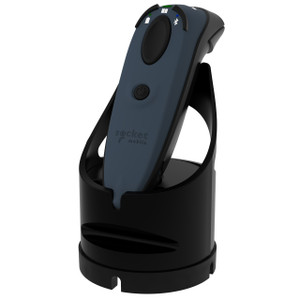
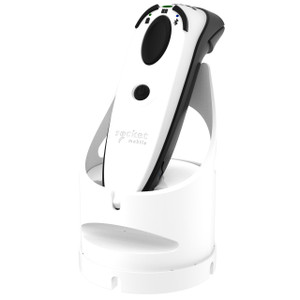
Socket Mobile CX4682-3965 1D/2D Barcode Scanner with Charging Dock
The Socket Mobile CX4682-3965 is a handheld 1D/2D barcode scanner designed for retail, warehouse, and logistics operations requiring fast, reliable data capture in mobile workflows. The included charging dock enables shift-based operations and multi-user deployments without inventory-tracking downtime. Red chassis design provides visibility on busy warehouse floors and in point-of-sale environments, while the dual-engine imager handles both linear (UPC, Code 128, EAN) and 2D area-based symbologies (QR, Data Matrix, PDF417) in a single form factor.
Key Features
- 1D/2D Barcode Engine: Reads linear UPC, Code 128, EAN and area-based QR, Data Matrix, PDF417 symbologies. Eliminates the need for separate 1D and 2D devices in mixed-barcode environments.
- Integrated Charging Dock: Dock included in kit. Simplifies battery management in shift-based or multi-operator deployments; reduces scan-cycle downtime versus manual charging cables.
- Red Handheld Chassis: High-visibility design improves equipment accountability and reduces accidental loss on warehouse floors.
- Socket Mobile SDK Support: Native SDK integration with iOS and Android platforms. Direct API access for custom WMS and POS workflows without vendor-lock middleware.
- WMS/POS Compatibility: Works with mainstream warehouse management systems and point-of-sale platforms via standard data interfaces. Minimal integration overhead for existing tech stacks.
- Portable Field Deployment: Handheld form factor designed for on-the-move inventory checks, shipment verification, and retail floor scanning without tether to a terminal.
The CX4682-3965 targets operations where barcode velocity is high and devices change hands frequently across shifts. The inclusion of a charging dock eliminates the capex and logistics burden of managing separate chargers across a fleet. In warehouse receiving, for example, multiple operators can pick up a fully charged scanner from the dock, process incoming SKUs, and hand off the device for the next shift — no downtime hunting for cables or waiting for overnight charging cycles.
Integration is straightforward via the Socket Mobile SDK, which supports both iOS and Android native development. For teams building or maintaining custom WMS front-ends, the SDK provides low-level scanner control and event callbacks; for teams running third-party WMS platforms (NetSuite, Fishbowl, SAP Small Business), the scanner typically maps through standard Bluetooth HID or USB serial emulation, requiring minimal driver configuration. Test data-capture workflows on your target platform before large-scale deployment to confirm barcode-decode speed and metadata routing align with your throughput expectations.
Lifecycle and warranty coverage span one year from purchase. In high-volume scanning environments (200+ scans per shift per device), factor scanner durability and drop tolerance into your device-per-operator ratio. Socket Mobile publishes detailed barcode-readability distance tables for each symbology; verify that your labeling standard (label size, contrast ratio, mounting angle) meets minimum contrast and resolution specs to avoid decode failures in the field.
Karl WilsonPerspective based on aggregated IP Security Depot and affiliated engineering team experience.
We've deployed the Socket Mobile CX4682-3965 in retail chains, 3PL warehouses, and hospital supply-chain operations where barcode velocity and device churn are constant realities. The real operational win is the charging dock — it sounds minor until you're managing 30 scanners across three shifts and no one has time to hunt for micro-USB cables. The 1D/2D imager eliminates the retail nightmare of stocking two different scanner models; a single device handles legacy UPC labels, supplier-generated QR codes, and custom Data Matrix tags without operator training on which scanner to grab. We've seen integration time collapse from weeks to days when teams have a clear socket-based SDK path versus reverse-engineering proprietary protocols. The red chassis is underrated for accountability — high-visibility color dramatically reduces scanner loss in busy fulfillment centers where devices walk off shelves and dock stations. That said, this is not a rugged industrial scanner; drop-test ratings and water resistance are baseline, not exceptional. In outdoor logistics hubs or extreme-cold warehouses, consider a hardened alternative. For typical indoor retail and warehouse operations with standard shift practices, the CX4682-3965 delivers solid barcode throughput and minimal integration friction.
Technical Highlights:
- Dual-Engine 1D/2D Imager: Single optics stack reads UPC, Code 128, EAN (linear) and QR, Data Matrix, PDF417 (area) without mode switching. Operationally, this means no operator decision-making — hand any barcode to any scanner and it decodes. In high-volume retail self-checkout or shipping label verification, that simplicity reduces error and training burden.
- Charging Dock in Kit: Prevents the common capex gotcha of buying 20 scanners and discovering you need 20 separate chargers. Multi-operator shift workflows depend on synchronized charging; the dock handles 1–3 concurrent devices and keeps battery state transparent.
- Socket Mobile SDK (iOS/Android): Native Bluetooth API gives your development team direct scanner control and barcode-event callbacks. No middleware translation layer — real-time decode results feed straight to your app's business logic.
- Standard WMS/POS Integration: USB and Bluetooth HID emulation work out of the box with NetSuite, Fishbowl, Lightspeed, Toast, and most cloud-based POS platforms. Reduces vendor dependency for typical retail and warehouse deployments.
- 1-Year Manufacturer Warranty: Covers defects and typical use degradation. In high-churn environments, factor device replacement cycles and warranty renewal costs into your 5-year TCO model.
Deployment Considerations:
- Barcode contrast and label size matter — low-contrast labels (faded or printed on metallic surfaces) may require closer read distance or repositioning. Test decode performance on your actual labels in the field before fleet-wide rollout.
- Charging dock placement should be centralized and accessible to all shifts. In multi-location operations, you may need multiple docks to prevent contention and downtime during peak scanning periods.
- SDK integration requires in-house or contractor development time if you're building custom workflows. For third-party WMS/POS systems, typical integration is plug-and-play over USB/Bluetooth; validate HID compatibility on your specific platform version before purchase.
- Handheld form factor is NOT ruggedized for outdoor or high-impact environments. If your deployment involves outdoor lot scanning, extreme vibration (conveyor lines), or frequent drops, escalate to a hardened industrial barcode scanner with higher IP ratings and drop ratings.
- Battery life is typically 8–12 hours per shift depending on scan frequency and wireless radio usage. For operations with back-to-back 12+ hour shifts, maintain at least a 1:1 device-to-operator ratio and ensure the charging dock can refresh batteries between shifts.
This scanner is the right fit for retail operations modernizing point-of-sale, third-party logistics warehouses, and healthcare supply chains where barcode standards are mixed and integration velocity matters more than rugged durability. Teams seeking a balance between feature richness and plug-and-play simplicity should evaluate the CX4682-3965 alongside comparable models in the mid-market handheld barcode category. For more Socket Mobile solutions tailored to mobile data capture, visit the Socket Mobile catalog.