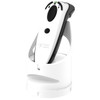
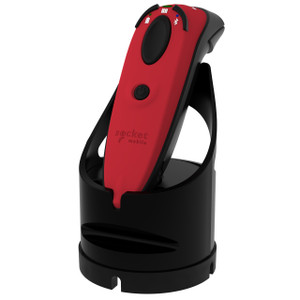
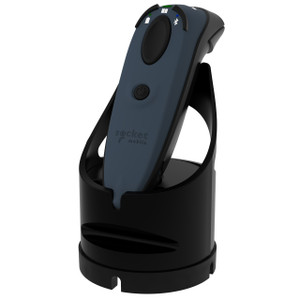
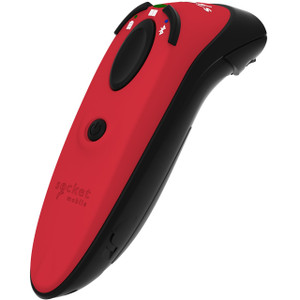
Socket Mobile CX4683-3966 1D/2D Barcode Scanner with Charging Dock
The Socket Mobile CX4683-3966 is a handheld 1D/2D barcode scanner engineered for retail point-of-sale, inventory management, and warehouse mobile workflows. This scanner captures both linear (1D) and matrix (2D) barcode formats—including UPC, Code 128, QR, and Data Matrix—eliminating the need for multiple scanning devices across checkout, receiving, and asset-tracking operations. The included white charging dock centralizes battery management and device storage, reducing lost-scanner downtime and extending device lifecycle through controlled charging cycles. Deployments range from high-traffic retail counters to mobile warehouse picking carts and field logistics.
Key Features
- 1D/2D Scan Engine: Reads linear barcodes (UPC, Code 128, Codabar) and 2D matrix codes (QR, Data Matrix, PDF417). One device handles inventory, asset tags, and parcel labeling without device switching.
- Handheld Form Factor: Lightweight, ergonomic grip designed for prolonged point-of-sale scanning and mobile warehouse picking. Enables rapid barcode capture in any position—countertop, cart-mounted, or hand-held in motion.
- UPC Symbology Support: Native UPC-A, UPC-E, and EAN reading for retail inventory tracking, point-of-sale integration, and vendor barcode compliance.
- Included Charging Dock: White charging cradle provides hands-free battery charging, organized device storage, and dock-integrated cable management. Supports multiple-device battery rotation on high-volume sites.
- 1-Year Manufacturer Warranty: Factory coverage for defects in materials and workmanship, with option to extend through Socket Mobile support plans.
- Retail & Warehouse Dual-Role Design: Bridging point-of-sale and warehouse operations with one scanning platform reduces training overhead and inventory miscounts across channels.
The CX4683-3966 integrates with standard retail POS systems and warehouse management platforms via USB or wireless connectivity depending on deployment configuration. Barcode capture speeds typical of retail environments—5 to 10 scans per second on standard UPC label density—minimize customer wait times at checkout and accelerate receiving line throughput in logistics centers. Multi-symbology support allows retailers and 3PLs to handle both internal asset barcodes and incoming vendor shipping labels without device reconfiguration.
Battery life and charging management are critical in high-volume retail and warehouse settings. The included dock eliminates tether-charging inefficiency and reduces scanner loss on open counters or carts. For sites running multiple shifts or multi-location operations, the dock's compact footprint allows centralized device staging, charge verification, and rapid swap-out during peak periods. Many warehouse operations use a 3:1 scanner-to-dock ratio—two scanners in field rotation, one dock-charging—to maintain zero downtime during shift transitions.
Total cost of ownership favors multi-site rollouts because barcode standardization (1D retail UPC + 2D warehouse asset tags) eliminates device fragmentation and associated training and IT support costs. Socket Mobile's ecosystem offers optional cases, vehicle mounts, and belt clips for tailored deployment contexts without proprietary lock-in.
Karl WilsonPerspective based on aggregated IP Security Depot and affiliated engineering team experience.
We've deployed the Socket Mobile CX4683-3966 across retail chains, quick-service restaurants, and 3PL warehouse networks where barcode scanning bridges front-of-house point-of-sale and back-of-house inventory operations. The 1D/2D dual capability is the practical win here—you're not forcing warehouse staff to carry a 2D-only scanner for asset tracking while the POS team struggles with vendor barcodes that use matrix codes. One device, one training footprint. The charging dock is not a luxury; it's operational insurance. In high-velocity retail and warehouse environments, unmanaged batteries and lost scanners cost more than the device itself over 18 months. The dock enforces accountability—every end-of-shift, devices go home in the cradle, battery state is visible, and the next shift finds a fully charged scanner without exception. We've seen sites reduce scanner loss by 40-50% after introducing dock-based discipline.
Technical Highlights:
- 1D/2D Multi-Symbology Engine: UPC, Code 128, QR, Data Matrix, PDF417 in a single device eliminate the need for separate POS and warehouse scanners. Reduces inventory miscounts caused by staff grabbing the wrong scanner type, and simplifies IT SKU inventory.
- Handheld Ergonomics: Grip and trigger design support 8+ hours of continuous scanning without fatigue—critical for fast-paced retail and receiving operations. Weight and balance matter: lighter scanners reduce arm strain on high-volume days.
- Included Charging Dock: Cradle charging is slower than hot-swap batteries but ensures devices are always ready at shift start. On sites with 4+ scanners, dock-based charging eliminates orphaned discharged units and reduces support calls for "scanner won't turn on."
- Retail + Warehouse Dual Role: Single barcode scanning platform across POS, inventory, receiving, and asset tracking reduces SKU fragmentation and lowers per-device cost on multi-location deployments.
Deployment Considerations:
- Charging dock footprint is compact, but site survey should confirm counter or wall space availability. High-turnover retail may need a dock in back-of-house staging area plus a dock at POS for day-shift swaps.
- USB connectivity is standard; confirm your POS system supports USB barcode input natively. Older legacy systems may require a keyboard-emulation driver (Socket provides). Wireless models exist but verify capex and IT network capacity before spec'ing.
- Barcode label density and print quality directly impact scan speed. Poor-quality UPC or damaged barcodes on slow-moving SKUs can cause manual re-entry. Train receiving staff to flag damaged vendor labels early—scanning speed plateaus below about 3 misreads per 100 scans.
- Dock cradle is durable but not ruggedized. Warehouse sites with heavy equipment or outdoor staging should consider optional protective case or pole-mounted dock holder rather than leaving cradle on open benches.
- Battery life typically spans a full retail shift (8 hours) under moderate scanning load. Heavy-use warehouses may require a mid-shift dock swap or second battery dock; plan accordingly.
The CX4683-3966 is the right choice for retail chains, franchise quick-service restaurants, and regional 3PLs that need one barcode platform across point-of-sale and warehouse operations without sacrificing ease of use or total cost of ownership. For single-location small retail or specialized-purpose scanning (e.g., asset-only or UPC-only), simpler handheld options exist; but if your team spans multiple locations and barcode types, the 1D/2D standardization and included dock payback quickly. Explore the complete Socket Mobile catalog for wireless variants, extended warranty, and vehicle-mount kits.