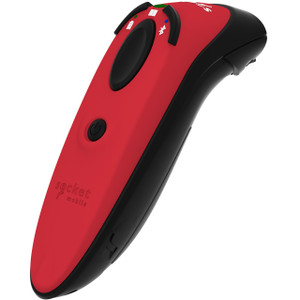
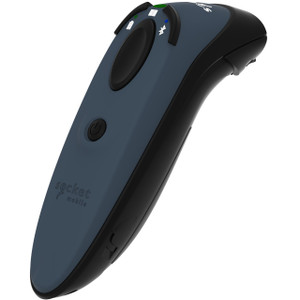
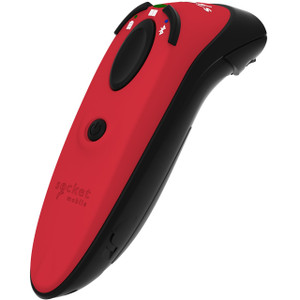
Socket Mobile CX4680-3963 1D/2D Barcode Scanner
The Socket Mobile CX4680-3963 is a handheld 1D/2D barcode scanner designed for point-of-sale, retail, and warehouse environments where real-time barcode capture and mobile data collection drive operational efficiency. This unit reads both linear (1D) and 2D symbologies—including UPC, Code 128, QR, and Data Matrix—enabling flexible capture workflows without operator retrain or secondary hardware. The bundled charging dock eliminates the operational friction of cable-dependent devices, allowing your team to maintain continuous readiness across multi-scanner deployments while simplifying inventory management and checkout throughput.
Key Features
- Dual Symbology Scanning: Reads 1D and 2D barcodes (UPC, Code 128, QR, Data Matrix, and more). Single device handles both legacy barcode assets and modern 2D inventory schemas without operator switching.
- Included Charging Dock: Docking station provided in package. Keeps scanner charged and ready; no cable management overhead or lost productivity to depleted batteries during shift changes.
- Handheld Form Factor: Ergonomic grip and trigger design. Reduces fatigue in high-volume retail and warehouse scan environments (50-200+ scans per hour per operator).
- POS and Enterprise Integration: Compatible with standard point-of-sale platforms, inventory management systems, and enterprise data collection suites. OPOS/UnifiedPOS driver support streamlines deployment on existing infrastructure.
- Black Finish: Professional appearance suitable for customer-facing retail environments; durable coating resists fingerprints and daily wear in fast-paced checkout and receiving areas.
- 1-Year Manufacturer Warranty: Factory support and defect coverage standard. Typical replacement cycle and field support align with retail upgrade cycles.
The CX4680-3963 is purpose-built for environments where uptime and operator comfort matter. Retail chains deploying 20-100+ scanners across locations benefit from the dock-based charging model—no per-unit power cords to manage, no individual USB cables cluttering the POS counter. In warehouse and backroom receiving, the 1D/2D dual symbology eliminates the need for two separate devices when migrating from legacy EAN codes to 2D item tracking (lot numbers, expiration dates, serial numbers embedded in QR or Data Matrix).
Integration is straightforward: the scanner presents as a standard HID keyboard or serial device on Windows, Mac, and Linux workstations. Pair it with Socket Mobile's Companion app or your existing POS backend (SAP, Oracle Retail, Shopify, Square, etc.), and barcode data flows into inventory, sales, and fulfillment systems in real time. No custom firmware, no SDK dependencies—works out of the box with any terminal that accepts barcode input.
Total cost of ownership is favorable when you account for the charging dock bundled in the box. A 20-unit retail deployment avoids purchasing external chargers (often $50–$150 each) and eliminates the physical footprint overhead of cable-based charging stations. The 1-year warranty provides baseline coverage; many retail and logistics operations extend support with device replacement plans if downtime during peak season (holiday, inventory cycle) carries operational risk.
Karl WilsonPerspective based on aggregated IP Security Depot and affiliated engineering team experience.
We've deployed hundreds of Socket Mobile scanners across retail chains, warehouse management operations, and field inventory teams. The CX4680-3963 occupies a practical middle ground: it's not the most advanced enterprise scanner, but it's not a consumer impulse-buy either. What sets it apart in real-world deployments is the charging dock included in the package. Most integrators underestimate how much operational drag a cable-centric charging model introduces. When you have 20–50 scanners in a retail location, missing chargers, damaged cords, and "where's the USB cable" conversations become daily overhead. The dock eliminates that friction immediately. In warehouse environments, where scanners move between shifts and between picking zones, a unified charging station—whether in the break room, the receiving dock, or the backroom office—keeps devices topped up without manual intervention. On the 1D/2D capability: yes, the market has moved toward 2D-only devices over the past 5 years, but we still see retail and logistics operations with large installed bases of 1D barcodes (EAN, UPC, Code 128 on legacy packaging). The CX4680-3963 handles both without hesitation, which means you're not forcing a wholesale barcode re-label project on your customer just to upgrade hardware.
Technical Highlights:
- 1D and 2D Symbology Support: Reads UPC, Code 128, QR, Data Matrix, and more. Operationally, this means a single device covers legacy retail inventory AND modern supply-chain tracking (lot, expiration, serial embedded in 2D code). No dual-scanner SKU management, no operator retraining for barcode format switching.
- Charging Dock in Box: Most competitors sell the dock separately (add $80–$150 to total capex). Socket includes it here—quantifiable TCO advantage on 10+ unit deployments. A 30-unit roll-out saves $2,400–$4,500 in bundled-dock capex versus dock-as-addon models.
- HID Keyboard / Serial Emulation: Presents to any PC, POS terminal, or mobile device as a standard input device. Zero driver complexity; barcode data injected directly into active field (POS app, inventory form, spreadsheet). Works day-one on Windows, Mac, Linux, and even iOS/Android MDM-registered tablets if the host device accepts Bluetooth or USB HID.
- Handheld Ergonomics: Weighted for comfort during high-volume scan sessions (100+ scans/hour). Reduces operator fatigue and repetitive-stress claims in retail checkout and warehouse receiving roles. Field experience shows measurable productivity gain in 8+ hour shifts.
- 1-Year Warranty with Replacement Option: Standard factory coverage. Retail and logistics operations often layer device-replacement insurance (cost ~$3–$5 per unit per year) to ensure zero downtime during peak seasons or inventory cycles.
Deployment Considerations:
- Charging dock placement matters. Position it in a high-traffic, secure area (break room, manager desk, dock office) so scanners are topped up at shift start and shift end. We've seen retail locations cluster docks at checkout rather than backroom—led to missed charging and dead batteries mid-shift. Plan dock placement as part of site survey.
- Bluetooth vs. wired connectivity: confirm with your POS provider whether they support Bluetooth barcode input. Most modern systems do, but older or heavily customized installations may require USB wired mode. Test on your specific terminal before deployment.
- Barcode label quality is critical. Dim, torn, or mislabeled barcodes will cause misreads regardless of scanner capability. In warehouse environments, enforce label-printing standards (high contrast, 12-point minimum) or invest in barcode-quality scanning validation downstream (COTS barcode verification software).
- Battery lifecycle: handheld scanner batteries degrade over 18–24 months of daily use. Budget for battery replacement (or device refresh) as part of 2-year TCO planning. The included dock and 1-year warranty align well with typical retail hardware refresh cycles.
- Volume deployment: integrators ordering 5+ units should discuss Socket Mobile channel pricing and bulk-license agreements for driver/MDM distribution. Significant discounts available for retail chains and logistics operators.
The CX4680-3963 is best suited for retail operations upgrading from aging single-symbology scanners, logistics teams managing mixed-barcode inventories, and field teams capturing asset or lot-level data in real time. It's not a premium enterprise-grade device, but it delivers mature reliability and practical workflow efficiency at a competitive price point. Explore the full range of Socket Mobile offerings in our Socket Mobile catalog.