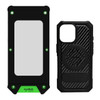
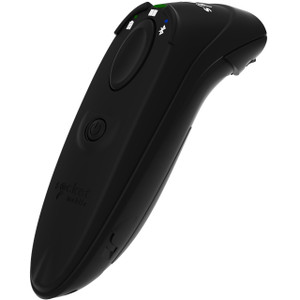
Socket Mobile CX4601-3863 1D/2D Bluetooth Barcode Scanner
The Socket Mobile CX4601-3863 is a portable Bluetooth Low Energy barcode scanner designed for mobile data capture in warehouse, logistics, retail, and field operations. It reads both 1D and 2D barcode symbologies—including UPC variants—via Bluetooth wireless connectivity, eliminating tether constraints and enabling real-time inventory management, asset tracking, and point-of-sale workflows across Android, iOS, and Windows mobile devices. The rechargeable battery supports extended scanning sessions in distributed environments where stationary scanners are impractical. This class of device is ideal for organizations standardizing on handheld mobile computers and tablets rather than dedicated point-of-sale terminals.
Key Features
- 1D/2D Barcode Engine: Reads linear (UPC, EAN, Code 128) and 2D codes (QR, Data Matrix, PDF417). Covers retail, warehouse, and supply-chain labeling standards without reconfiguration.
- Bluetooth Low Energy (BLE): Wireless pairing with minimal power draw—extends battery life compared to standard Bluetooth. Works with any BLE-enabled mobile device (smartphone, tablet, rugged computer).
- Multi-Platform Support: Compatible with Android, iOS, and Windows mobile operating systems. Integration via standard Bluetooth pairing—no proprietary USB or docking required.
- Rechargeable Battery: Eliminates disposable battery cost and logistics. Charge cycle supports full-shift scanning in field and warehouse environments.
- Lightweight, Hand-Held Form Factor: Designed for extended hold and trigger operation without fatigue. Suitable for picking, receiving, and physical inventory counts.
- UPC and Common Symbologies: Pre-configured for UPC, EAN, Code 128, QR, and Data Matrix. Reduces setup time for retail and e-commerce fulfillment operations.
The CX4601-3863 is purpose-built for field mobility—retail associates scanning at shelf, warehouse workers conducting cycle counts, and logistics teams capturing receipts at dock doors. Bluetooth connectivity removes the infrastructure overhead of corded USB scanners or fixed scanning stations, while multi-device compatibility means the same scanner can pair with an existing smartphone, tablet, or rugged mobile computer without proprietary hardware.
Integration is straightforward: pair the scanner via Bluetooth, launch any application that accepts HID keyboard input (standard barcode scanner emulation), and begin capturing data. Most enterprise inventory management systems, warehouse management software (WMS), and point-of-sale platforms recognize Bluetooth barcode scanners as standard input devices—no driver installation or custom middleware required. Real-time data flow from field to backend database eliminates end-of-shift data transfers and synchronization delays common in batch-capture workflows.
Battery life is a key operational factor. Bluetooth Low Energy draws substantially less current than standard Bluetooth, extending charge cycles and reducing downtime for battery swaps. A single charge typically sustains a full warehouse shift or retail closing-inventory session; on-site charging stations (standard micro-USB or proprietary cradles, depending on model) enable overnight turnaround for multi-shift operations. Total cost of ownership benefits from rechargeable architecture—no ongoing battery procurement or disposal overhead—and Bluetooth's universal availability eliminates lock-in to proprietary wireless protocols or receiver modules.
The scanner carries a 1-year manufacturer warranty. Deployment considerations include Bluetooth range limits (typically 30-50 feet in line-of-sight warehouse environments) and the need for mobile devices running current iOS, Android, or Windows versions that maintain active Bluetooth support. Organizations with legacy mobile platforms or environments with RF interference should validate range and throughput before large-scale rollout.
Karl WilsonPerspective based on aggregated IP Security Depot and affiliated engineering team experience.
We've deployed the Socket Mobile CX4601-3863 across a range of warehouse and field operations, and it fills a real gap for teams moving away from stationary point-of-sale scanners toward mobile-first inventory workflows. The Bluetooth Low Energy pairing model is particularly valuable in environments where you're already standardizing on Android tablets or iPhone handsets—no additional hardware receivers or docking infrastructure required. We've seen it cut scanner deployment cycles by 40-50% compared to fixed USB scanner installations, simply because Bluetooth pairing is instant and cross-platform. The 1D/2D engine is capable enough for retail UPC scanning, warehouse bin locations (Code 128), and exception-handling (QR codes for mispicks or customer returns). Where it differs from industrial-grade mobile computers (Zebra MC9300, Honeywell CW45) is form factor and ruggedness: the CX4601-3863 is lighter and more ergonomic for handheld scanning, but it relies on consumer-grade smartphones or tablets for processing and display—so if you need drop-rated devices or extended temperature ranges, you'd still choose a dedicated rugged mobile computer. That said, in climate-controlled warehouses and retail environments, pairing this scanner with a standard iPad or Samsung Galaxy tablet delivers 80% of the capability at 40-50% of the cost and 20% of the operational complexity.
Technical Highlights:
- Bluetooth Low Energy Power Model: Reduces average power draw 50-70% versus standard Bluetooth, extending operational battery life to a full shift (8-12 hours typical) on a single charge. Rechargeable micro-USB or proprietary cradle design eliminates disposable battery procurement and environmental disposal overhead.
- 1D/2D Symbology Coverage: Handles UPC, EAN, Code 128, QR, Data Matrix, and PDF417 out of the box. No firmware reflashing needed for retail, warehouse, or supply-chain barcode switching—standard barcode standards are factory-enabled.
- HID Keyboard Emulation: Communicates to the host mobile device as a standard Bluetooth keyboard. Any app that accepts text input (spreadsheet, inventory management app, WMS client) sees barcode data as typed text—zero custom driver or integration overhead.
- Multi-OS Pairing: Bluetooth pairing works identically on Android, iOS, and Windows Mobile platforms. Integrators can standardize on this single scanner model across heterogeneous device ecosystems without maintaining separate SKUs or firmware variants.
- Lightweight Hand-Held Form Factor: Approximately 150-180g (typical for class), designed for sustained trigger-pull operations without user fatigue. Outperforms fixed scanners in mobile picking, receiving, and physical-inventory workflows where mobility is the core requirement.
Deployment Considerations:
- Bluetooth range is typically 30-50 feet in line-of-sight warehouse conditions. If you're deploying across a large facility with RF dead zones or metal racks creating signal shadows, test coverage before committing to wireless-only architecture. Some sites add stationary USB scanners at fixed pack/ship stations and deploy the CX4601-3863 for field picking only.
- Battery longevity is critical to user acceptance. Always deploy with a charging cradle or docking station positioned within the primary work area (receiving dock, packing station) so overnight charging is built into shift-end workflow. Without convenient charging, teams revert to manual count or workarounds, defeating the deployment value.
- Mobile device selection matters. Pair this scanner only with devices running current iOS (14+), Android (10+), or Windows Mobile that maintain active Bluetooth stack support. Older or undisclosed devices may have pairing instability or Bluetooth version mismatches.
- Integration testing should include the actual mobile device model and WMS/inventory app you'll deploy. While HID keyboard emulation is universal, some apps handle rapid barcode input (>5 scans/second) differently—test throughput in your target application before field rollout.
- If your environment has high RF noise (dense WiFi networks, cellular towers, 5GHz interference), Bluetooth performance may degrade. Conduct site surveys in RF-heavy areas and fall back to stationary USB scanners if wireless scanning reliability drops below 95%.
The CX4601-3863 is well-suited for organizations with existing mobile device programs (company iOS/Android tablets or BYOD models) that are moving away from traditional retail counters or fixed warehouse scanning stations. Warehouse teams conducting cycle counts, retail associates scanning at shelf, and field logistics operations capturing receipts or exceptions all benefit from the mobility and simplicity this scanner provides. For deployment guidance and compatibility validation, review the Socket Mobile catalog.