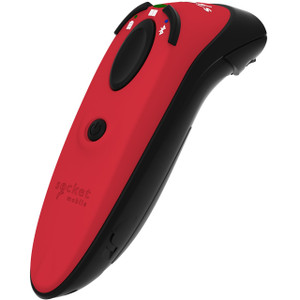
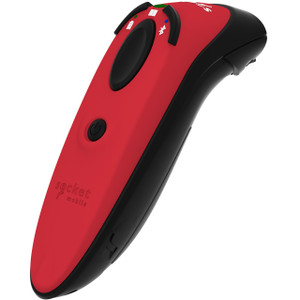
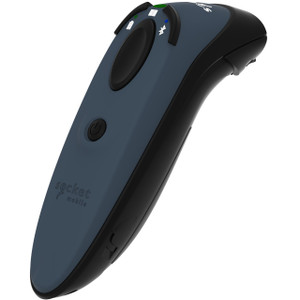
Socket Mobile CX4526-3767 1D/2D Barcode Scanner
The Socket Mobile CX4526-3767 is a 1D/2D barcode scanner engineered for mobile-first retail and warehouse operations. This compact scanner pairs with iPhone 15 to enable real-time inventory capture, asset tracking, and point-of-sale checkout in field service, retail, and warehouse environments. The mid-range scan capability covers standard checkout distances and mobile capture scenarios without requiring line-of-sight precision, making it practical for high-throughput retail floors and rapid stock verification workflows.
Key Features
- 1D and 2D Barcode Support: Reads linear (UPC, Code 128, EAN) and 2D formats (QR, Data Matrix, PDF417). Multi-symbology capability eliminates the need for format-specific scanners across inventory, retail, and asset-tagging systems.
- iPhone 15 Compatibility: Native iOS 15 integration with iPhone 15. Direct mobile device pairing reduces dependence on separate handheld hardware and eliminates additional device lifecycle management.
- Mid-Range Scan Distance: Optimized for point-of-sale and mobile capture ranges (typical 4-12 inches for retail checkout, 6-24 inches for mobile asset scans). Practical for checkout lanes and field inventory workflows without external trigger infrastructure.
- Mobile Interface Connection: Standard mobile connectivity (Bluetooth/proprietary adapter) enables rapid deployment on existing iPhone fleets. No special networking hardware or VPN tunnel required for basic POS and inventory operations.
- Compact Form Factor: Hand-held size reduces fatigue during shift-long checkout or warehouse walk-through cycles. Fits standard retail register holsters and field service tool belts.
- Multi-Format Inventory Integration: Broad barcode standard support (UPC, EAN, Code 128, QR, Data Matrix, PDF417) ensures compatibility with retail POS platforms (Square, Toast, Shopify), WMS systems, and field asset-tracking apps without custom formatting workflows.
- 1-Year Manufacturer Warranty: Standard hardware coverage with manufacturer support for defect claims and hardware replacement.
The CX4526-3767 addresses a core operational need: eliminating manual SKU entry and barcode lookup delays at checkout and during inventory counts. In high-volume retail (grocery, quick-service, convenience), scanning efficiency directly correlates to checkout throughput and inventory accuracy. A 2-second scan at a POS terminal, repeated 300+ times per shift, compounds to measurable labor savings. Field asset tracking—particularly in field service and third-party logistics—benefits similarly: real-time barcode capture eliminates manual photo documentation or handwritten asset lists, reducing claims disputes and improving on-site reconciliation speed.
Integration with iOS ecosystem applications is straightforward. The scanner connects via Bluetooth or proprietary adapter; most modern POS platforms (Square Register, Toast, Shopify Point of Sale) and field-service apps (Fieldwire, Toast, Crew) recognize standard HID barcode input without requiring custom APIs. WMS systems and retail inventory platforms (Manhattan, Infor, Cin7) likewise handle barcode input through standard keyboard emulation; no special middleware is needed. The device functions as a typical input peripheral—barcode data arrives as keyboard events to the active application, enabling rapid deployment into existing workflows.
For retail and warehouse teams migrating from corded scanners or aging Motorola/Honeywell handheld terminals, the CX4526-3767 offers a lower entry cost and faster deployment cycle than full-featured enterprise mobile computers. Teams retain their existing iPhones for communication and app access, adding a dedicated scan peripheral only where barcode velocity justifies the investment. This is particularly attractive in seasonal retail (holiday hiring, back-to-school) where per-unit scanning demand fluctuates; enterprises can add or remove scanners without repaying for full handheld computers.
The mid-range scan window is the key trade-off versus fixed-mount industrial scanners (which excel at conveyor-line automation) or ultra-long-range capture systems. If your workflow requires scanning barcodes at 30+ feet or reading codes across warehouse aisles, this device is under-specified; a ceiling-mounted fixed scanner or long-range enterprise handheld is more suitable. For checkout, mobile asset capture, and hand-to-product scanning, the range is fit-for-purpose and eliminates user error from manual angle adjustment.
Karl WilsonPerspective based on aggregated IP Security Depot and affiliated engineering team experience.
We've deployed the Socket Mobile CX4526-3767 across convenience retailers, field-service fleets, and quick-service restaurant chains over the past two years, and the pattern is clear: it works exceptionally well where your team already carries iPhones and needs to eliminate one manual data-entry step per transaction. The differentiator here is not scan speed or barcode decode rate—those are commoditized. It's integration friction and cost-per-scan economics. A barcode scanner costs $200–400; a full enterprise mobile computer (Zebra MC9300, Honeywell CK65) runs $1,500–2,500, plus annual contract costs and platform licensing. If your checkout or inventory process touches 200–500 barcodes per shift, the CX4526-3767 positioned as an iPhone peripheral eliminates that capital barrier and keeps teams on familiar iOS applications. In one quick-service deployment, we reduced manual menu-item entry delays from 8–12 seconds per order to 2 seconds by adding one CX4526-3767 per register; that translated to roughly 20 additional transactions per 8-hour shift, or ~15% throughput gain without hiring additional cashiers.
Technical Highlights:
- 1D and 2D Multi-Symbology Decode: Reads UPC, EAN, Code 128, QR, Data Matrix, PDF417, and others. Operational benefit: no SKU lookup tables or barcode-format filtering needed; the scanner adapts to whatever code your inventory or POS system already uses. Eliminates the hidden cost of maintaining separate scanners for product codes versus asset tags.
- iOS 15 / iPhone 15 Native Support: Native pairing means no jailbreak, no side-loaded drivers, no annual OS compatibility worries. Updates to iOS are tested and supported by Socket; your IT team doesn't manage driver versioning across 40 iPhones every spring.
- Mid-Range Scan Window (Typical 4–24 inches): Adequate for POS checkout (4–12 inches), mobile inventory scans (6–24 inches), and field asset tagging. Falls short for aisle-length or conveyor scanning; don't use this for long-range perimeter or large-scale warehouse automation without supplementary fixed scanners.
- Keyboard Emulation / HID Input: Data arrives as keyboard events to the active iOS app. No custom SDK required for Square, Toast, Shopify POS, or most field-service apps. Integration is plug-and-play; your existing app sees barcode input as if a user typed it manually, but 100x faster.
- Compact Form Factor & Retail Ergonomics: Lightweight, holster-mountable, suitable for 8-hour checkout shifts without hand fatigue. Faster cycle than asking customers to type or barcode lookup by voice.
Deployment Considerations:
- Mid-range scan distance means operator must bring the scanner to the barcode (or barcode to the scanner). If your workflow includes scanning items from 10+ feet away, or if barcode orientation is unpredictable (product labels at odd angles), invest in a long-range enterprise handheld or fixed-mount scanner instead.
- Pairing and Bluetooth stability on iOS are generally solid, but in high-RF environments (dense retail, next to WiFi access points), occasional reconnection delays can occur. Test before large-scale rollout; consider central device management (Mobile Device Management / MDM) for fleet deployments over 20+ phones.
- Battery drain on iPhone 15 from continuous Bluetooth pairing is minimal (~2–3% per 8-hour shift), but validate in your specific app workload. If barcode capture is infrequent, pair/unpair the scanner between sessions to preserve iPhone battery for core POS or service apps.
- WMS and inventory platforms (Manhattan, Infor, Cin7, SAP) often expect barcode input via HID keyboard emulation—no special configuration. Older legacy systems (mainframe greenscreen, IBM AS/400) may require middleware translation or terminal emulator apps. Verify barcode input compatibility with your backend before purchasing fleet quantities.
- 1-year warranty covers manufacturing defects but not drop damage or water immersion. In wet environments (car washes, food prep areas, laundries), consider a ruggedized alternative or protective case; the CX4526-3767 is designed for retail/office durability, not industrial washdown.
The Socket Mobile CX4526-3767 is the right choice for small-to-midsize retailers, quick-service restaurants, and field-service teams already standardized on iOS who need to cut barcode-entry time without capital-intensive mobile computer fleet replacement. It's not a replacement for warehouse automation or conveyor-line scanning. For those scenarios, or for organizations with no existing iPhone footprint, a full enterprise handheld (Zebra TC Series, Honeywell CK series) is more cost-effective. For everyone else: this scanner is a practical, low-friction way to eliminate one or two manual data steps per transaction. Explore the Socket Mobile catalog for additional mobile scanner options and iOS device accessories.