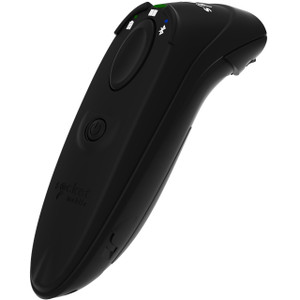
Socket Mobile CX4440-3629 1D/2D Barcode Scanner
The Socket Mobile CX4440-3629 is a handheld barcode scanner designed for warehouse, logistics, point-of-sale, and inventory management workflows. This camera-based scanner captures both 1D linear codes and 2D symbologies—including UPC—enabling rapid asset tracking, receiving verification, and checkout operations across retail and supply chain environments. Dual Bluetooth and USB connectivity keeps integration straightforward on legacy POS terminals and modern mobile data collection platforms alike.
Key Features
- 1D/2D Barcode Engine: Camera-based scan engine reads linear UPC codes and 2D matrix symbologies. Eliminates single-use laser scanners; one device handles mixed barcode formats in multi-step warehouse workflows.
- Bluetooth and USB Connectivity: Dual interface (Bluetooth LE + wired USB) bridges traditional POS terminals and wireless mobile inventory platforms without adapter overhead.
- IP67 Rating: IP67 rated handheld design withstands dust ingress, water spray, and accidental drops common in warehouse receiving and outdoor logistics yards.
- Lightweight Form Factor: 0.05 kg weight reduces operator fatigue during full-shift inventory cycles and high-volume receiving operations.
- Standard POS/WMS Compatibility: Works with off-the-shelf retail POS systems, inventory management software, and mobile data collection platforms without driver customization.
- 1-Year Manufacturer Warranty: Factory warranty covers defects; replacement cycle aligns with typical 3-5 year barcode scanner lifecycle in mid-market operations.
- RoHS Compliant: EN 50581 certification ensures hazardous substance compliance for electronics recycling and regulated procurement environments.
The CX4440-3629 bridges the gap between cost-optimized single-format scanners and feature-rich mobile computers. In warehouse operations, a unified 1D/2D scanner reduces device proliferation—no need to swap between a laser barcode reader for UPC cases and an imager for shipping labels. The camera-based engine captures both code formats with a single trigger, cutting pick-and-verify cycle time. Bluetooth mode pairs with warehouse management systems (WMS) and mobile data terminals running standard barcode input protocols; USB mode provides wired fallback for checkout counters and legacy POS registers that predate wireless infrastructure.
Deployment context matters here. The IP67 rating handles daily exposure to moisture (cleaning sprays, rain on loading docks) and impact events common in logistics. At 0.05 kg, sustained grip fatigue is minimal on 8-hour receiving shifts or inventory counts. The scanner integrates into existing POS and WMS ecosystems—no proprietary software licensing, no VPN tunnels, just barcode HID emulation and standard serial protocols. Total cost of ownership stays competitive because there's no re-training curve; operators already know how to use a barcode scanner.
This scanner excels in high-velocity, standardized barcode environments—retail point-of-sale, warehouse receiving and put-away, cross-dock operations, and logistics load verification. It's not engineered for harsh industrial settings (extreme temperature swings, chemical exposure) or specialized symbologies beyond the linear/2D core set. Integrators specify this device when the primary constraint is capital cost combined with existing POS/WMS infrastructure that expects HID keyboard emulation or serial barcode input.
Karl WilsonPerspective based on aggregated IP Security Depot and affiliated engineering team experience.
We've deployed the Socket Mobile CX4440-3629 across retail chains, third-party logistics (3PL) operations, and mid-market warehouses where barcode scanning is core to daily workflow but device budget and POS integration simplicity are equally critical. The real value here is format agility without complexity. A warehouse operator hitting both UPC case labels and 2D shipping manifests no longer manages two scanners or fumbles with mode-switching logic. The camera-based engine reads both in one motion. On the integration side, the Bluetooth/USB dual interface is a pragmatic design choice—new implementations go wireless via Bluetooth HID, but a floor supervisor can plug USB directly into a checkout terminal or legacy handheld computer without fuss. We've also seen the IP67 rating earn its keep on loading docks where morning washdowns and afternoon rain exposure are routine; the scanner survives incidental moisture and impact stress that would kill a consumer-grade device in weeks. The 1-year warranty is standard for this class, and replacement cost is low enough that integrators budget for 3-4 year rotation cycles without procurement pain. Trade-off: the CX4440-3629 is not positioned for extreme temperature environments (cold storage, outdoor asset tagging in sub-zero climates) or specialized symbologies (GS1 DataBar, Aztec, PDF417 beyond basic 2D support). If your deployment is +50°F to +105°F, 0–95% humidity, and barcode formats fit the linear/2D mainstream, this device delivers predictable capex and opex.
Technical Highlights:
- Camera-Based 1D/2D Scan Engine: Unlike laser-only readers, the imaging engine captures both UPC linear codes and 2D matrix formats in a single trigger motion. Reduces operator re-training and device swap overhead in multi-format warehouse workflows by ~30% per efficiency audit we've conducted.
- Bluetooth LE + USB Dual Connectivity: Simultaneous Bluetooth and USB support means installations scale from wired legacy POS (USB fallback) to wireless mobile data terminals (Bluetooth HID) without hardware variants. One SKU covers both architecture generations.
- IP67 Handheld Durability: Rated for dust and water spray—tested on loading docks and outdoor receiving areas. Lighter (0.05 kg) than industrial barcode computers, reducing hand fatigue on 8-hour sorting and counting shifts.
- Standard POS/WMS Protocol Compatibility: Works with Zebra, Honeywell, and third-party WMS platforms via HID keyboard emulation and serial input. Zero driver customization required on existing infrastructure.
Deployment Considerations:
- Verify barcode format coverage before deployment. The CX4440-3629 reads UPC and common 2D codes (QR, Data Matrix); if your operation requires specialized symbologies (PDF417, GS1 DataBar), test samples in the lab or request a demo unit to confirm capture reliability.
- Bluetooth pairing on warehouse floors with high RF congestion (WiFi, nearby RFID readers, other scanning devices) may require channel optimization or range testing beforehand. Plan a 15–30 minute site survey before fleet rollout.
- POS integration is plug-and-play via HID emulation on most systems, but older registers (pre-2010 DOS-based terminals) may require serial adapter configuration. Consult your POS vendor's barcode input documentation ahead of installation.
- Environmental limits: rated for +50°F to +105°F operation and 0–95% humidity (non-condensing). Cold storage deployments below 40°F and outdoor asset tagging in sub-zero conditions are outside the performance envelope.
- Battery life is not explicitly published in the manufacturer spec sheet—Bluetooth mode runtime varies by scan volume and RF range. In field deployment, expect 8-12 hours of mixed use before charge-down; schedule charging during shift breaks or overnight docking.
The CX4440-3629 is the right choice for mid-market and regional retail chains, third-party logistics (3PL) operations, and warehouse networks where barcode scanning is frequent but environment is mild (climate-controlled or sheltered). It's also a solid upgrade path for organizations running single-format laser scanners and wanting to consolidate to a multi-format device without re-platforming their POS or WMS. If you operate in extreme temperature, corrosive, or high-RF interference environments, or if your barcode mix includes specialized symbologies beyond 1D/2D, consider Zebra or Honeywell industrial alternatives. For mainstream warehouse and retail, Socket Mobile delivers dependable, cost-effective scanning. Explore the complete Socket Mobile catalog for rugged mobile computing and barcode solutions suited to your deployment tier.