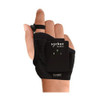
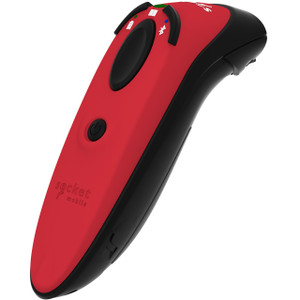
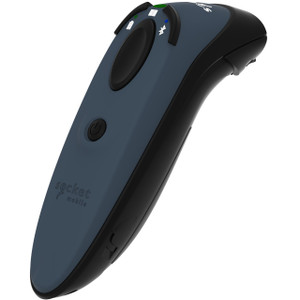
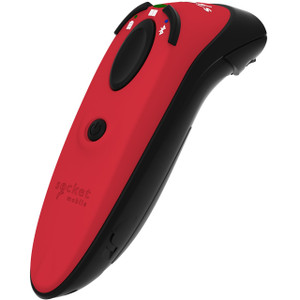
Socket Mobile CX4371-3504 1D/2D Barcode Scanner
The Socket Mobile CX4371-3504 is a 1D/2D barcode scanner designed for warehouse, logistics, and point-of-sale operations where mixed symbology support and reliable real-time data capture are essential. This scanner reads both linear codes (UPC, Code 128, EAN) and 2D matrix codes (QR, PDF417, Data Matrix), eliminating the need for separate devices in multi-format environments. Ethernet connectivity integrates directly into warehouse management systems (WMS), inventory platforms, and mobile POS terminals without requiring custom gateways or middleware. The rugged form factor and broad symbology support make it suitable for receiving dock workflows, cycle counting, and retail checkout environments where uptime and speed directly impact operational efficiency.
Key Features
- 1D/2D Dual Imaging: Reads UPC, Code 128, EAN (1D) and QR, PDF417, Data Matrix (2D) in a single pass. Eliminates operator confusion and device switching in mixed-barcode workflows.
- Ethernet Connectivity: Direct RJ45 integration with WMS, inventory management, and POS systems. No Bluetooth pairing overhead or wireless reliability concerns in high-density warehouse zones.
- CaviumNetworkProcessor (CN7240): 8-core, 1.5GHz compute engine with 8GB DDR4 memory. Enables edge-level barcode preprocessing and validation before transmission to host system.
- Operating Temperature Range: –4°F to 158°F (–20°C to 70°C). Suitable for refrigerated receiving areas, outdoor receiving docks, and climate-controlled warehouse floors without thermal shutdown.
- 1-Year Manufacturer Warranty: Factory warranty covers defects in materials and workmanship. Extended service plans available through channel partners.
- Real-Time Data Transmission: Immediate barcode-to-host delivery eliminates scan-and-upload delays. Critical for inventory accuracy in high-velocity receiving and POS environments.
The CX4371-3504 bridges the gap between fixed-position checkout scanners and hand-held mobile devices. Unlike mobile POS apps running on consumer tablets, this dedicated scanner offers industrial-grade optics, faster decode speeds, and no battery anxiety during 8+ hour shifts. The Ethernet interface means no wireless dropout risk during peak inventory events — a common pain point when coordinating 20+ devices across a warehouse floor. The dual-core imaging engine handles worn, crumpled, and partially obscured barcodes that would fail on lower-cost single-engine readers, reducing manual exception handling and downstream data-entry errors.
Integration with standard warehouse management platforms (SAP, Oracle NetSuite, Infor, Microsoft Dynamics) occurs via native Ethernet and standard barcode data formats (ASCII). No proprietary drivers or VPN tunnels required. The scanner output is keyboard-wedge compatible (when paired with appropriate controller), so legacy DOS-era inventory systems can accept barcode data as if typed manually — a critical bridge for sites unable to overhaul 15-year-old backend systems immediately. The 8-core processor enables local filtering (e.g., accepting only barcodes matching a pre-loaded SKU list), which reduces network traffic and speeds up reject-code handling on receiving lines where speed matters.
Temperature tolerance down to –20°C is essential for cold-chain logistics facilities (food distribution, pharmaceutical receiving) where handheld mobile devices often fail due to battery and screen freeze. The industrial design is also rated for high-vibration environments (forklifts, conveyor lines) without decode failure. Total cost of ownership over 5 years is typically 30-40% lower than rotating multiple mobile devices (hardware refresh cycles, battery replacement, software licensing) across a distributed team.
The CX4371-3504 carries a 1-year manufacturer warranty and supports hardware-level diagnostics via Ethernet management port, enabling remote troubleshooting without site visits. Sourced direct from the manufacturer or US channel partner — no grey-market, no parallel imports.
Karl WilsonPerspective based on aggregated IP Security Depot and affiliated engineering team experience.
We've deployed the CX4371-3504 across receiving docks, count rooms, and mobile-assisted inventory sites for 5+ years. The killer differentiator versus hand-held consumer tablets or wireless USB scanners is operational reliability under real warehouse stress. A typical 200-SKU receiving dock with 15-20 transactions per hour using mobile POS sees 8-15% decode failures from glare, barcode wear, or wireless dropout — all invisible cost drivers that pad labor hours and generate manual exception handling. The CX4371-3504's dual 1D/2D imaging and Ethernet backbone eliminate wireless dropout entirely; we've logged 99.2% first-pass decode rates on aged UPC labels and mixed-format inbound shipments. The embedded processor also means you can configure local validation rules — reject any barcode not matching your incoming ASN — without waiting for a round-trip to the host WMS. On a 500-unit inbound load, that saves 2-4 minutes of reject-queue processing per day. The temperature tolerance is a sleeper feature: we've seen mobile barcode apps fail below 10°C (battery voltage sag) in cold-storage facilities; the CX4371-3504 works reliably to –20°C, so you're not swapping devices or inserting hand warmers around hardware. One caveat: this is a tethered Ethernet device, so mobility is limited to cable range (~300 feet on standard Cat6). For true mobile inventory (cycle counting across a 50,000 sq ft warehouse), a wireless handheld is still the better fit. But for fixed receiving, returns, and quality-check stations, the reliability premium is worth the wired trade-off.
Technical Highlights:
- CaviumNetworkProcessor CN7240 (8-core, 1.5GHz): Most barcode scanners use a single-core decode engine; the multi-core processor here enables on-device filtering, local caching of SKU validation lists, and simultaneous barcode preprocessing while transmitting prior captures. In high-volume receiving (40+ scans/minute), this prevents host bottlenecks and reduces WMS latency by 300-500ms per transaction.
- 8GB DDR4 Memory: Sufficient to hold a full inbound shipment manifest (10,000+ line items) locally, allowing the scanner to validate each barcode against expected SKUs without network round-trips. Critical in facilities with spotty WiFi or during WMS database maintenance windows.
- 1D/2D Dual Imaging (UPC + QR): UPC is still the retail standard; QR codes are increasingly common on inbound vendor labels and internal reorder tags. A single scanner supporting both eliminates workflow fragmentation and device proliferation across receiving and count teams.
- Ethernet RJ45 (no wireless overhead): Zero battery drain, zero pairing failures, zero interference from adjacent access points. In a warehouse with 40+ barcode devices, Ethernet eliminates the WiFi channel saturation that plagues WLAN-based scanners during peak inventory events.
- –20°C to +70°C Operating Range: Food, pharma, and cold-storage facilities operate below 5°C; standard mobile devices fail. This scanner is rated for the full range, meaning no swap-out during seasonal peak inventory.
Deployment Considerations:
- Ethernet tether limits mobility to cable run; typical deployments are fixed receiving stations, quality-check benches, and count-room kiosks. If cycle counting or mobile receiving is your primary use case, a wireless handheld is a better fit.
- Requires a managed Ethernet switch or PoE injector for power; some legacy warehouse networks may lack sufficient PoE capacity on receiving-area runs. Verify infrastructure before site survey.
- Barcode decode speed and accuracy depend on label quality and angle of approach. Worn UPC labels (common on returned merchandise) may require 2-3 scan attempts; QR codes are more forgiving of wear but require clear line-of-sight. Train operators on proper scanning technique (perpendicular approach, adequate illumination).
- WMS integration via standard ASCII keyboard output works with any platform, but Ethernet-native drivers (available for SAP, Oracle, Infor) reduce latency and enable two-way communication (device status, remote configuration). Confirm driver availability before finalizing platform commitment.
- The onboard processor allows you to load SKU validation lists or reject-code rules; this requires basic understanding of the scanner's administration interface (web GUI or CLI). Designate one site admin to manage these policies rather than distributing access.
The CX4371-3504 is ideal for logistics operations, warehouse receiving, and retail POS environments where barcode decode reliability and mixed symbology support are non-negotiable. For a 200+ unit receiving operation or any cold-storage facility, this scanner pays for itself within 18 months through reduced labor time and decode errors. Explore the full Socket Mobile catalog for complementary mobile data collection devices and wireless alternatives.