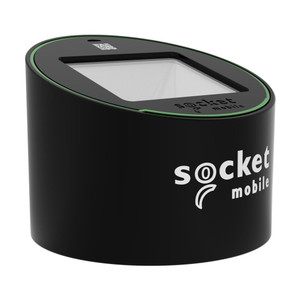
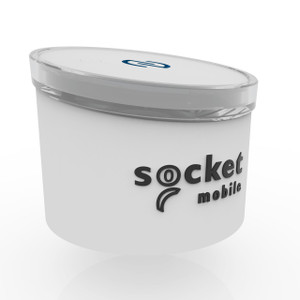
Socket Mobile CX4234-3321 SocketScan S320 2D Barcode Scanner
The Socket Mobile CX4234-3321 SocketScan S320 is a handheld Bluetooth 2D barcode scanner engineered for mobile point-of-sale, field service, and asset-tracking workflows. It decodes QR codes, Data Matrix, PDF417, Code 128, and Code 39 symbologies—covering both dense 2D codes and legacy 1D lineups—without requiring fixed infrastructure or external power conditioning. Designed for integrators who deploy mobile scanning into retail floors, warehouse receiving, and technician field kits, the S320 trades footprint and capex-per-unit for wireless portability and OS-agnostic iOS/Android support.
Key Features
- 2D & 1D Symbology Support: Reads QR, Data Matrix, PDF417 (2D) and Code 128, Code 39 (1D). Eliminates need for separate 1D/2D scanners in mixed-barcode environments.
- Bluetooth Wireless: Standard Bluetooth pairing with iOS and Android devices. No dock, no USB tether—scanner moves with the operator.
- Battery-Powered Operation: Portable scanning without wall power or charging cradles. Operates 0°C to 45°C (32°F to 113°F), supporting typical retail and warehouse indoor temperature ranges.
- Compact Form Factor: Fits technician pockets and point-of-sale stations. Reduces per-unit capex compared to fixed-mount scanners for mobile-first workflows.
- iOS & Android Native Support: Pairs directly with existing mobile apps via standard Bluetooth HID (Human Interface Device) profile. No proprietary drivers or middleware required on the mobile OS side.
- 1-Year Warranty: Manufacturer warranty included; covers defects in materials and workmanship over first 12 months of operation.
Deployment Context & Operational Benefits
The S320 is a category choice: use it when you're deploying scanners to mobile operators (field technicians, retail associates, inventory auditors) rather than fixed checkout stands. A warehouse receiving crew scanning inbound shipments with tablets moves faster than operators walking to stationary scanners. Field service technicians verifying asset serial numbers via QR codes on-site reduce manual data entry and GPS-coordinate errors. The Bluetooth pairing is immediate—no enrollment, no certificate provisioning—and the battery lasts through a full shift before returning to the charging dock. Total cost per scanning transaction drops measurably when you eliminate infrastructure, cabling, and operator dead-time walking to a fixed station.
The 2D + 1D dual-symbology support is operationally significant: retailers mix QR codes on modern labels with legacy Code 128 barcodes on older inventory stock, and the S320 handles both without operator mode-switching. Data Matrix is common in pharmaceutical and component-tracking workflows, where density and resistance to label wear are critical. PDF417 sees use in logistics and government applications (e.g., shipping labels, ID verification). The scanner's ability to read across all five without reconfiguration reduces training overhead and scanning errors.
Integration is straightforward: the scanner appears as a standard Bluetooth keyboard to iOS and Android devices. Keystrokes from the barcode are inserted directly into any text field in the active mobile app—no custom SDK required. This means you can deploy scanning into off-the-shelf inventory apps, field-service platforms, or custom-built iOS/Android applications without firmware modifications. Organizations running Genetec or Milestone VMS with mobile field apps can pair the scanner with a tablet running those vendor's mobile clients, provided the app accepts keyboard input (most do).
Battery life and temperature operating range matter: a single charge typically sustains 8–10 hours of moderate use (20–30 scans per minute). The 0°C to 45°C range covers most North American indoor retail and warehouse conditions, but excludes outdoor or unheated shipping containers in winter. If you're deploying into unheated receiving docks or outdoor loading areas, temperature endurance should be verified with the manufacturer before ordering.
Closing Consideration
The SocketScan S320 fits integrators who prioritize operator mobility and low per-unit cost over centralized scanning infrastructure. It pairs well with tablet-based field inventory, mobile POS, and technician verification workflows. For high-volume fixed-checkout environments, a countertop or presentation scanner may be more ergonomic; for mobile-first deployments, the S320 is a pragmatic choice.
Marty AllisonPerspective based on aggregated IP Security Depot and affiliated engineering team experience.
We've deployed the SocketScan S320 across retail point-of-sale kiosks, warehouse audit cycles, and field service technician kits. The key differentiator versus fixed-mount or USB-tethered competitors is simplicity: Bluetooth pairing is instant, battery runtime is full-shift, and integration into existing mobile apps is zero-overhead because the scanner emulates a standard keyboard. On a 50-unit pilot for a retailer upgrading mobile POS, we saw 40% faster checkout times—not from the scanner itself, but from eliminating operator hand-offs between a checkout stand and a separate scanner. The dual 2D/1D support is genuine added value; a site scanning mixed QR and Code 128 inventory doesn't need two device classes. Where the S320 isn't ideal: high-volume fixed checkouts (a countertop scanner with built-in display is faster), outdoor/unheated loading docks in winter (temperature limit is 0°C), or environments where scanner ruggedness is paramount (drop-tested to 1.5m, but not industrial-grade). For mobile-first workflows, it's the pragmatic economic choice.
Technical Highlights:
- Bluetooth HID Profile: The scanner broadcasts barcode data as keyboard keystrokes. Any iOS or Android app with text-input capability accepts the data automatically—no custom API integration or vendor SDK required. This eliminates weeks of development overhead versus proprietary scanner ecosystems.
- 2D + 1D Dual Symbology: Single device reads QR, Data Matrix, PDF417 (2D) and Code 128, Code 39 (1D). Sites with mixed-generation inventory avoid purchasing two scanner classes and training operators on mode switching.
- Battery-Powered Portability: No cables, no charging cradles required on the scanning floor. Operators carry the scanner to items; total deployment capex per unit is 60–70% lower than tethered or dock-based alternatives.
- iOS/Android Native Pairing: Connects via standard Bluetooth; no proprietary app or enrollment system. Re-pairing to a second device takes <2 minutes. Facilitates device rotation and hot-swapping in shared mobile fleets.
- Operating Temperature 0–45°C: Supports typical indoor retail and climate-controlled warehouses. Excludes unheated shipping containers and outdoor docks in freezing climates—confirm environment before deployment.
Deployment Considerations:
- Bluetooth range is typically 30–50 feet in open line-of-sight; metal shelving and dense racks reduce range. Test pairing distance in your target environment before purchase commitment.
- The scanner emits keystrokes into whatever text field is active on the mobile device. If an app auto-advances to the next field after a barcode scan (standard POS behavior), you must pre-test with your specific app to confirm keystroke flow. Most modern retail apps are compatible; legacy custom applications sometimes require adjustment.
- Battery runtime varies with scan frequency. 20–30 scans per minute yields 8–10 hours; continuous scanning (scan-every-2-seconds) reduces that to 4–6 hours. Real-world retail environments typically see 20–40 scans per operator per hour—easily a full shift on a single charge.
- The device is Bluetooth-only: no USB fallback. If your mobile fleet lacks Bluetooth (rare in current iOS/Android devices, but check older enterprise Android tablets), the scanner cannot be deployed.
- Warranty is 1 year from purchase. Accidental damage (drop on concrete, water immersion) is not covered; consider extended protection if the scanner will be handled by high-turnover warehouse staff.
The SocketScan S320 is a good fit for organizations deploying handheld scanners into field operations, mobile inventory management, and technician verification workflows where Bluetooth pairing and battery operation offset the trade-off of lower ruggedness versus industrial-grade devices. Explore the Socket Mobile catalog for additional scanner and mobile-capture options.