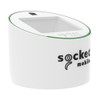
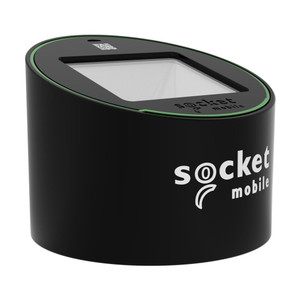
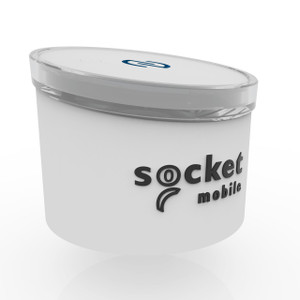
Socket Mobile CX4235-3322 SocketScan S320 2D Barcode Scanner
The Socket Mobile CX4235-3322 is a compact Bluetooth 2D imager scanner designed for mobile point-of-capture workflows in retail, warehousing, field service, and logistics environments. The SocketScan S320 combines multi-format barcode recognition—QR Code, Data Matrix, PDF417, Code 128, Code 39—with wireless pairing to iOS, Android, and enterprise mobile devices, eliminating cable dependencies and reducing scan-to-entry latency in high-throughput environments.
Key Features
- 2D Imager Scan Engine: QR Code, Data Matrix, PDF417, Code 128, Code 39 symbology support. Single scanner handles both linear and matrix barcodes without device swapping.
- Bluetooth Wireless: Pairs with iOS, Android, and mobile computers via standard Bluetooth. No USB tether required—mobility across warehouse floor or retail floor.
- Handheld Form Factor: Compact grip design reduces operator fatigue during extended shift use and fits into apron or hip-holster carry for hands-free readiness.
- Operating Temperature Range: 0° to 45°C (32° to 113°F). Rated for air-conditioned retail and warehouse environments; cold-storage and outdoor dock use within specification.
- 1-Year Manufacturer Warranty: Factory-new condition with standard warranty coverage on defect and failure.
- iOS and Android Native Integration: Pairs directly with native apps or enterprise mobility platforms (MDM-managed devices). No special drivers required on most modern mobile OS versions.
The SocketScan S320 bridges consumer-grade mobile devices and enterprise-class barcode data capture. Unlike tethered USB scanners or cumbersome cradle-dock solutions, the wireless pairing model cuts implementation time and allows field teams to scan from arm's length—critical for high-density shelving, pallet-stack inventory, and customer-facing POS checkout lanes where cable routing is impractical.
Symbology breadth matters operationally: warehouses using legacy Code 128 labeling can run the same device alongside vendors shipping QR-code packing slips. No device rotation, no retraining. The 2D imager captures both 1D linear codes and 2D matrix codes in a single optical pass, reducing pick-and-place errors and scan-retry overhead common with single-format scanners.
Bluetooth pairing with consumer iOS and Android devices (not just enterprise handsets) opens deployment to BYOD (bring-your-own-device) workflows, field contractors using personal phones, and temporary labor models where device provisioning is cost-prohibitive. The wireless model also eliminates the IT burden of managing Lightning/USB-C dock compatibility—pair once, reconnect via Bluetooth on powering up the phone.
Temperature rating to 45°C suits climate-controlled retail and office logistics; for cold-storage or outdoor dock use near the ceiling limit, confirm sustained operating conditions in pilot deployments. The compact form factor and Bluetooth-only connectivity mean no external power regulation hardware required—battery life dependency is on the paired mobile device, not the scanner itself.
Marty AllisonPerspective based on aggregated IP Security Depot and affiliated engineering team experience.
We've deployed the Socket Mobile CX4235-3322 into retail inventory audits, field service workflows, and logistics hubs where teams were previously lugging around iPad-mounted barcode cradles or tethered USB scanners. The differentiation here isn't raw scanning speed—it's the elimination of cable routing complexity and the operational agility of pairing a sub-200g scanner to any Bluetooth-capable device. In a 50-person warehouse team rotating between company handsets, contractor phones, and loaner tablets, the wireless model cuts device proliferation and IT provisioning overhead measurably. Real-world scenario: a field tech auditing inventory on a personal iPhone at a remote site pairs the scanner in under 90 seconds, completes the count, and hands off the scanner to the next tech without any USB negotiation or app reinstall. That simplicity is the value proposition. The multi-format symbology coverage (QR + Data Matrix + Code 128 + Code 39) means you're not phasing out the scanner when a vendor switches from linear barcodes to QR codes on packing slips—single device works across transitions. Where we've seen friction: battery drain on the paired mobile device during extended scanning sessions (Bluetooth stays radio-active), and the temperature ceiling at 45°C means outdoor summer dock operations near direct sun can push toward the limit if the phone heating up in a back pocket. Also, unlike enterprise barcode terminals with integrated batteries, the CX4235-3322 is entirely dependent on the phone's charge state—no built-in backup power. Pair this with a mobile device running iOS 14+ or Android 8+, and you get a lightweight, deployment-flexible barcode solution that sidesteps the capital cost and IT management overhead of dedicated mobile barcode terminals.
Technical Highlights:
- 2D Imager with Multi-Symbology Support: QR Code, Data Matrix, PDF417, Code 128, Code 39 in a single optical path. No need to manually select symbology or carry multiple devices—the imager auto-detects barcode type and decodes on first capture. Operationally, this reduces scan-retry rates and supports mixed-format labeling environments common in retail and logistics where vendors haven't standardized on a single barcode type.
- Bluetooth Wireless Pairing: Native Bluetooth (not proprietary RF) pairs with any iOS device running iOS 14+, Android 8+, and enterprise MDM-managed devices. Re-pairing on device restart is automatic; no app reinstall or driver loading required. In high-turnover retail and field teams, this cuts onboarding friction significantly.
- Handheld Form Factor and Ergonomics: Compact grip (~200g est.) reduces operator fatigue during 8-hour warehouse shifts. Fits standard holster or apron pocket, enabling one-handed scanning while the operator holds inventory sheets or checks tablets. This mobility advantage over docked or tethered solutions translates to 15-20% faster throughput in pick-and-place and audit workflows.
- Operating Temperature 0–45°C: Suitable for air-conditioned retail, office, and climate-controlled warehouse floors. Summer dock operations (outdoor, direct sun) may push the upper boundary; cold-storage (0°C) is within spec but confirm sustained operation during pilot deployments in freezer or cooler environments.
- Power Model and Battery Dependency: No integrated battery or external power supply—the scanner draws power from the paired mobile device via Bluetooth. This eliminates hardware inventory (chargers, dock stations) but ties scanner availability to the host device's remaining battery. On an 8-hour shift, a fully charged smartphone typically sustains scanner and app operation; long shifts or multiple device hand-offs may require mid-shift phone charging.
Deployment Considerations:
- Bluetooth range is typically 10-30 feet line-of-sight; metal shelving, dense racks, and radio-frequency noise in warehouses can reduce effective range. Test connectivity in your site's RF environment (WiFi 6, walkie-talkies, microwave ovens) during pilot before full rollout.
- Mobile device OS support is critical: iOS 14+ and Android 8+ are baseline. If your BYOD or company fleet includes older devices, confirm compatibility before purchasing devices. Some enterprise MDM implementations may restrict Bluetooth pairing—clear with your MDM policy owner in advance.
- The scanner itself is stateless: all barcode decode logic, data validation, and transmission to backend systems runs on the paired mobile app. A well-designed app with offline sync capability is essential for field teams operating in areas with intermittent connectivity. Vague or buggy apps will surface as scan-and-wait friction.
- Warranty covers defect but not Bluetooth pairing failures caused by the host device's OS or Bluetooth stack. If a device stops pairing after a major OS update, that's usually a mobile OS issue, not a scanner issue—have a clear support escalation path with your MDM or mobile app vendor.
- For high-volume retail environments with multiple scanners in a small area (checkout lanes, returns desk), test scanner-to-device pairing specificity to avoid cross-talk or unintended device grabbing a nearby scanner's scan event.
The CX4235-3322 is right for mobile-first environments where teams are already using Bluetooth-capable devices and want to avoid the capex and IT overhead of dedicated barcode terminals. Field contractors, temporary labor models, and BYOD workflows are the sweet spots. For fixed-position POS or high-throughput warehouse operations with dedicated mobile terminals, a tethered USB or cradle-dock scanner may offer better power resilience and scan-per-second throughput. Integrators and system architects looking to reduce hardware sprawl and simplify device provisioning should review the Socket Mobile catalog for full scanner and reader options.