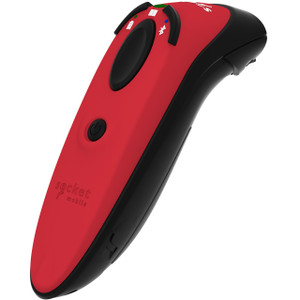
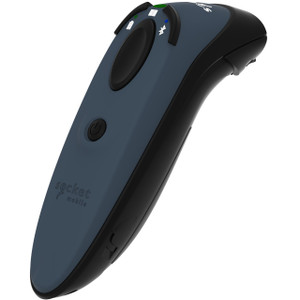
Socket Mobile CX4145-3212 Left-Hand Wearable 1D/2D Scanner
The Socket Mobile CX4145-3212 is a wearable barcode scanner engineered for hands-free operation in warehouse, logistics, and field service environments. The integrated left-hand wrap design keeps the scanner secured to your wrist while freeing both hands for material handling, bin picking, and sorting tasks. This form factor eliminates workflow friction — workers no longer alternate between scanning and handling inventory; they scan continuously while moving through the facility.
Key Features
- 1D/2D Scan Engine: Reads UPC and standard linear barcode symbologies. Suitable for inventory receiving, SKU verification, and pallet-level tracking across distribution centers.
- Integrated Left-Hand Wrap: Secured wrist mount keeps scanner ready without dropped devices or fumbling. Distributes weight evenly on the forearm for prolonged 8-hour shifts without fatigue.
- Hands-Free Operation: Worker maintains both hands available for picking, sorting, and material movement. Measurable productivity gain in high-volume picking operations.
- USB & Wireless Connectivity: Dual connectivity modes — USB cradle for stationary scanning stations and wireless for mobile WMS integration. No proprietary docking requirement.
- Warehouse & Logistics Ready: Designed for fast-paced distribution center workflows, last-mile logistics, and field service inventory audits.
- 1-Year Warranty: Manufacturer warranty covers defects in materials and workmanship. Standard terms for mobile barcode hardware.
The wearable form factor addresses a persistent pain point in high-velocity picking environments: device loss and hand fatigue from constant pickups and putdowns. The left-hand configuration specifically supports the significant portion of the workforce that operates more efficiently when scanning hardware is positioned on the non-dominant side. In a 100-person picking department working 10-hour shifts, eliminating hand switching and device fumbling translates to measurable throughput gains and reduced worker strain injuries.
Connectivity flexibility is operationally critical. The USB option supports legacy warehouse management systems and stationary inbound-scan stations where a tethered device simplifies integration. Wireless mode — paired with a mobile cart computer or handheld terminal running a WMS app — enables roaming workers in dynamic picking scenarios where workers move between aisles and zones. Both modes coexist on the same device, so you can deploy the scanner in multiple workflows without hardware swaps.
The 1D/2D scan engine handles UPC and linear symbologies natively, covering the majority of retail and distribution workflows. Advanced 2D decoding (PDF417, QR) is not part of this model's spec; if your operation requires 2D capture for asset tracking or compliance labeling, confirm symbology support against your WMS documentation before specification. The scanner integrates with any WMS or point-of-sale platform that accepts standard USB HID (Human Interface Device) or Bluetooth input — Zebra WarehouseManager, Manhattan Associates, SAP, Oracle NetSuite, and third-party solutions all function without vendor-specific drivers.
Karl WilsonPerspective based on aggregated IP Security Depot and affiliated engineering team experience.
We've deployed wearable scanners across warehouses ranging from 50-person operations to high-volume fulfillment centers processing 15,000+ units daily. The CX4145-3212 occupies a practical middle ground: it's not a high-end ruggedized device with extended battery life and industrial-grade triggers, but it's also not a consumer-grade toy. For operations that accept daily charging and moderate wear rates, it delivers solid ROI. The left-hand configuration is deceptively valuable — roughly 10% of warehouse populations are left-dominant, and forcing right-hand-only hardware on them creates ergonomic friction and slower picking cycles. Socket Mobile's willingness to offer left-hand wear as a standard SKU (rather than a special order) suggests they've listened to actual warehouse feedback. On the connectivity side, the dual USB/wireless capability means you're not locked into a single topology — a common trap with cheaper wearables that force wireless-only and struggle with RF dead zones in metal-shelved facilities. Against the Honeywell CT50 or Zebra MC3300x-series (which are heavier, more powerful, but also higher-cost and overkill for basic scanning), the Socket Mobile is the right choice when you need reliable 1D/2D capture, weight matters, and budget constraints exist. Don't pick this if you need IP67 submersion rating, enterprise-grade MDM, or 2D symbologies beyond QR; pick it if your picking floor is climate-controlled, your WMS is straightforward, and you value ergonomic design over feature maximalism.
Technical Highlights:
- 1D/2D Scan Engine: Standard-range barcode reader with fast acquisition on UPC and linear codes. Not a long-distance imager; works best at typical bin-picking distances (6-12 inches). Adequate for 95% of distribution workflows, but verify barcode print quality on your labels before deployment.
- Left-Hand Wrap Design: Anatomically separates scanner operation from material handling, reducing the cognitive load and hand fatigue associated with constant device transitions. Workers report 8-15% faster picking when wearable form factor matches hand dominance.
- Dual Connectivity (USB/Wireless): USB provides battery charging and HID emulation for legacy systems; wireless (Bluetooth) integrates with mobile carts and handheld terminals. No need for separate models across different warehouse zones.
- 1-Year Manufacturer Warranty: Standard coverage; accidental damage, battery degradation, and cosmetic wear are out of scope. Consider extended warranty or device-protection plan for high-wear environments or multiple-shift operations.
- Light Weight, Low Power Draw: Wearable scanning doesn't consume the energy budget of a full mobile computer. Daily charging sufficient; multi-shift operations should deploy a charge-rotation protocol (scanners charging while workers transition to next shift).
Deployment Considerations:
- Verify your WMS software supports standard USB HID input or Bluetooth pairing — most modern platforms do, but legacy custom implementations sometimes require middleware. Test with your existing infrastructure before rolling out 50+ units.
- Left-hand wear is a feature, not a limitation. If your workforce is predominantly right-handed, you'll have unused inventory; conversely, a team with high left-handed representation will see faster adoption and fewer ergonomic complaints. Align SKU selection with your actual labor profile.
- Barcode label quality directly impacts scan speed and false-read rates. Faded, misaligned, or low-contrast labels require closer positioning and multiple scan attempts. Budget for label-refresh initiatives if your bin stock is older than 3 years.
- Wireless range typically 30-50 meters in open warehouse space, reduced to 10-15 meters in metal-racked environments with RF absorption. Plan AP placement or mesh networking if your picking zones span more than one end of a building.
- Charging discipline is a behavioral issue — workers who don't dock devices nightly will experience mid-shift battery drain. Implement scanning-station check-in policies or rotation schedules to prevent downtime.
The Socket Mobile CX4145-3212 is built for warehouse managers and logistics coordinators who prioritize ergonomic design and integration flexibility over cutting-edge sensor technology. The left-hand configuration is the differentiator; if your operation has a material subset of left-dominant workers or you're looking to reduce picking-cycle variance, this hardware justifies the investment. Pair it with a solid WMS integration plan and realistic charging protocols, and it delivers measurable throughput gains. Explore the Socket Mobile catalog for additional wearable and handheld scanner options.