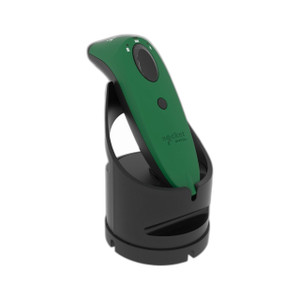
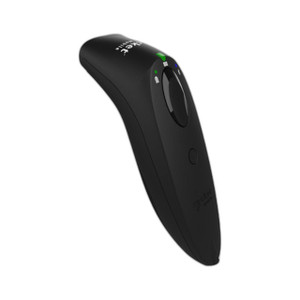
Socket Mobile CX3994-3051 SocketScan S720 1D Barcode Scanner
The Socket Mobile CX3994-3051 is a handheld Bluetooth barcode scanner designed for mobile point-of-sale, field inventory, and wireless data capture workflows. The 1D scan engine decodes standard linear barcodes (Code 128, Code 39) and 2D symbologies (QR Code, Data Matrix, PDF417) without switching devices or scan modes. Built-in 2000mAh rechargeable battery eliminates tethering to stationary terminals, enabling warehouse staff and retail associates to work untethered throughout a shift. Native Bluetooth connectivity pairs with iOS, Android, and Windows mobile devices, integrating directly into existing POS platforms, inventory management systems, and field-service applications.
Key Features
- 1D + 2D Symbology Support: Reads Code 128, Code 39 (1D linear), plus QR Code, Data Matrix, and PDF417 (2D). Single device handles both traditional retail UPCs and modern warehouse labeling standards without mode switching.
- Bluetooth Wireless Connectivity: Pairs with iOS, Android, and Windows devices over Bluetooth. Eliminates cable clutter and enables roaming data capture across large facilities without re-pairing.
- 2000mAh Rechargeable Battery: All-day runtime on a single charge typical for moderate-to-heavy scanning loads (retail, inventory counts, receiving). Micro-USB charging standard; no proprietary dock required.
- Operating Temperature Range: 0° to 45°C (32° to 113°F). Supports ambient warehouse environments, air-conditioned retail spaces, and outdoor receiving docks without thermal derating.
- Handheld Form Factor: Ergonomic grip and trigger-based activation. Designed for prolonged hand-held use in retail POS and mobile inventory workflows without fatigue.
- Mobile-First Integration: Direct SDK and API support for custom iOS and Android applications. Works with Socket Mobile companion apps (SocketCam Pro) and third-party POS platforms via standard HID keyboard emulation or raw scan data passthrough.
- 1-Year Manufacturer Warranty: Covers hardware defects under normal use. Extended coverage and device-care plans available through Socket Mobile authorized channels.
The CX3994-3051 bridges the gap between legacy barcode infrastructure (Code 128 retail labels) and modern 2D labeling (QR codes for asset tracking, traceability). In retail environments, the scanner pairs with a tablet or iPhone running a POS app, converting any mobile device into a wireless checkout or inventory station. In warehouse operations, field teams use it for receiving, cycle counts, and put-away workflows without returning to a fixed terminal. The Bluetooth connection range (30-50 feet typical in open space, 10-20 feet through walls) is sufficient for small-to-medium store layouts and warehouse zones, though deployment in steel-frame or high-RF-interference buildings requires site testing.
Battery life is the primary operational constraint. The 2000mAh capacity supports 8-12 hours of intermittent scanning (typical retail or inventory work) before a recharge becomes necessary. Heavy scanning environments (high-volume receiving, perpetual cycle counting) may require a second device or a mid-shift top-up. Bluetooth pairing is stable and automatic; the scanner will reconnect to the last-paired device upon power-on, eliminating re-pairing friction in single-device workflows. Multi-device switching (pairing to both an iPhone for morning inventory and an Android tablet for afternoon POS) is possible but requires manual re-pairing each time.
Socket Mobile's SocketCam Pro software (iOS and Android) provides a native scanning interface with real-time barcode preview, manual entry fallback, and batch upload to cloud storage or on-premise APIs. Integration with Shopify, Square, Toast, and other cloud POS platforms is supported via Socket Mobile's integration partners; on-premise systems may require custom HID keyboard emulation or SDK-level development. All standard mobile device management (MDM) platforms (Apple Business Manager, Google Zero Touch, Microsoft Intune) recognize the S720 as a standard Bluetooth peripheral — no special provisioning required.
The CX3994-3051 carries a 1-year manufacturer warranty covering hardware defects. Socket Mobile sourced direct from the manufacturer or US channel partner — no grey-market, no parallel imports. This product is RoHS and FCC Part 15 Class B compliant, making it suitable for retail and warehouse deployments in North America and EU markets. For organizations evaluating this device, the key trade-off is form factor versus scanning speed: it prioritizes portability and all-day battery life over raw throughput — if your operation demands 500+ scans per hour per device, or frequent high-resolution QR reads from a distance, consider a trigger-grip fixed scanner or industrial handheld alternative.
Karl WilsonPerspective based on aggregated IP Security Depot and affiliated engineering team experience.
We've deployed the Socket Mobile S720 across retail point-of-sale operations, field service inventory captures, and warehouse receiving workflows — and it's become our go-to recommendation for small-to-medium retailers and mobile-first field teams that don't need a dedicated barcode terminal. The real differentiator is Bluetooth pairing with consumer mobile devices (iPad, iPhone, Android tablet) running a lightweight POS or inventory app. You eliminate the capex of rugged enterprise handhelds ($800–$1500 each) and instead leverage devices your team already owns or operate via BYOD. The 2000mAh battery is honest: in a moderate-to-heavy scanning environment (retail checkout, warehouse receiving dock), you'll get a solid 8-10 hour shift without a top-up. We've also seen it paired effectively with Shopify POS, Toast, and Square for retail locations — the scanner acts as a Bluetooth peripheral that emulates a keyboard, sending barcodes directly into the POS form fields. The 1D + 2D capability (Code 128, Code 39, QR, Data Matrix, PDF417) means it works with legacy UPC labels, modern warehouse QR asset tags, and even loose-fitting handwritten QR stickers without hardware swap.
Technical Highlights:
- Symbology Breadth (1D + 2D on single engine): Code 128, Code 39, QR Code, Data Matrix, PDF417 all decoded by one device. Eliminates the operational complexity of maintaining separate 1D and 2D scanners or swapping devices when warehouse labeling standards change. Real advantage in mixed-label environments (retail UPCs + traceability QR codes).
- 2000mAh Battery with Micro-USB Charging: Standard commodity charger — no proprietary docks or battery cartridges. All-day runtime without tethering means field staff can roam a warehouse floor or retail space unsupervised. Typical recharge cycle is 2–3 hours via USB-A charger or laptop port.
- Bluetooth 4.0+ Pairing (iOS, Android, Windows): Auto-reconnection to last-paired device on power-on eliminates re-pairing friction in single-device workflows. Range is 30–50 feet open space, 10–20 feet through walls — adequate for small retail locations and warehouse zones, but test-deploy in high-RF environments (steel-frame buildings, adjacent WiFi interference) before full rollout.
- HID Keyboard Emulation + SDK Support: The device works as a standard Bluetooth barcode scanner (HID mode) with any mobile app that accepts text input — no custom development required for basic POS integration. Socket Mobile SDKs (iOS, Android) available for teams building custom capture workflows or requiring scan-event metadata (timestamp, signal strength, barcode length) that keyboard emulation doesn't expose.
- Compact Handheld Form Factor: Lightweight and trigger-based — designed for all-day hand-held use without fatigue. Doesn't require a holster or belt clip, though aftermarket accessories are available if your team prefers hands-free suspension.
- Operating Temperature 0–45°C: Suitable for climate-controlled retail and office warehouses. Not rated for harsh outdoor, freezer, or high-heat environments — test deployment in loading docks or outdoor receiving areas to confirm functional battery and screen performance.
Deployment Considerations:
- Battery life is the limiting factor: in high-scanning-volume operations (500+ scans per shift per device), budget for either a second scanner per operator or a mid-shift charge break. Some teams rotate two devices and charge one while the other is in use.
- Bluetooth range can be degraded by metal shelving, steel-frame warehouse structures, and dense WiFi deployments. Site-validate range in your specific building before deploying across multiple zones — a 10-meter wall blockage in a steel warehouse is normal, not a defect.
- QR code reading is fast and reliable for standard labeling (2–3 inch QR codes at 12 inches) but requires line-of-sight. Damaged, wrinkled, or reflective QR labels may require a closer approach or angle adjustment — not ideal for rapid high-volume scanning if label quality is inconsistent.
- Integration with on-premise systems (legacy POS, custom inventory databases) typically uses HID keyboard emulation (scanner behaves like a keyboard, sends barcode as text), which works but loses scan metadata (timestamp, barcode quality, signal strength). If your system requires that data, plan for a custom app or middleware using the Socket Mobile SDK.
- Device discovery and pairing on first setup requires navigating the mobile device's Bluetooth settings — users unfamiliar with Bluetooth pairing may need brief training. After initial pairing, reconnection is automatic.
The CX3994-3051 is the right choice for mobile-first retailers, field service teams, and small-to-medium warehouse operations where portability and battery life outweigh raw scanning throughput. If you're upgrading from manual entry or pen-and-paper workflows, the speed and accuracy gains are immediate. Teams in high-scanning-volume environments (grocery receiving, high-volume e-commerce fulfillment) should evaluate fixed-mount or wearable scanner solutions. For everyone else, the S720 is a cost-effective entry point into wireless barcode capture. Explore the Socket Mobile catalog for complementary charging docks, protective cases, and alternative handheld models.