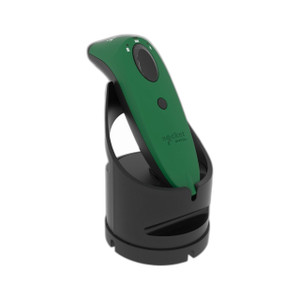
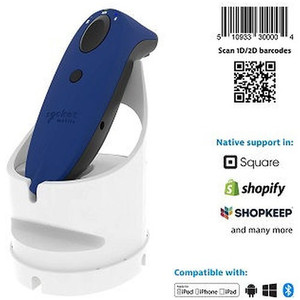
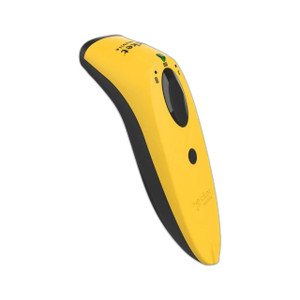
Socket Mobile CX3972-3029 SocketScan S720 Wireless 2D Barcode Scanner
The Socket Mobile CX3972-3029 is a handheld wireless barcode scanner engineered for mobile data capture in retail point-of-sale, warehouse receiving, and logistics operations. Built on a 2D imaging engine, it decodes QR codes, UPC, and standard 1D barcodes without line-of-sight tethering, enabling associates to capture inventory and transaction data from anywhere on the floor. The compact form factor and wireless deployment model eliminate the capex and operational friction of fixed scanner stations, making it a direct fit for high-velocity retail environments and multi-location warehouse networks.
Key Features
- 2D Imaging Engine: Captures QR codes, UPC, and 1D linear barcodes in a single device. Operators can work across mixed barcode ecosystems without swapping hardware.
- Wireless Connectivity: Untethered operation enables associates to move freely across point-of-sale terminals, stockrooms, and receiving areas without cable management overhead.
- Handheld Form Factor: Compact ergonomic design built for extended shift handling in retail and warehouse workflows without fatigue or strain-relief issues.
- QR and UPC Symbology Support: Dual-format capability streamlines modern omnichannel retail (e-commerce QR fulfillment) and traditional inventory workflows (UPC receive/putaway) in a single SKU.
- Mobile POS Integration: Works natively with tablet-based and smartphone-based point-of-sale systems, eliminating the need for proprietary terminal hardware.
- 1-Year Manufacturer Warranty: Factory-new condition with full manufacturer warranty covering defects and hardware failure under normal operating conditions.
The S720's wireless architecture is the critical differentiator in high-transaction retail and fast-moving warehouse environments. Fixed scanners at a checkout lane or receiving dock create bottlenecks during peak periods — associates queue, wait for scanner availability, and throughput drops. A wireless handheld device lets multiple team members scan simultaneously from anywhere in the store or warehouse, turning checkout, inventory counts, and receiving into parallel operations rather than serial queues. The 2D imaging engine also future-proofs the device: as suppliers and retailers migrate from UPC-only labeling to QR-based track-and-trace (unit-level serialization, expiration validation), a single device handles both standards without replacement.
Integration with existing point-of-sale and warehouse management systems is straightforward. The CX3972-3029 pairs with tablet-based POS (Square, Toast, Clover) and enterprise WMS platforms (Manhattan, JDA, Infor) via Bluetooth or standard mobile device drivers. No custom middleware or proprietary software stack is required — the scanner appears as a HID keyboard device to the host system, meaning barcode data arrives as if typed manually, compatible with any system that accepts keyboard input. This plug-and-play model keeps implementation timelines tight and integration costs low, especially critical for multi-location rollouts where IT resources are lean.
Wireless range and power efficiency are production considerations. The S720 operates on a single rechargeable battery; a full shift (8+ hours) is achievable with typical 1D/2D scanning workloads, though high-volume retail environments may require mid-shift charging or carry a second scanner. Wireless range is sufficient for in-store and in-warehouse coverage (typically 30-50 feet line-of-sight to a paired mobile device or dedicated gateway), but performance degrades in metal-heavy warehouse racks or RF-noisy retail environments. Site surveys and test deployments are recommended before large-scale rollout.
Socket Mobile's SocketScan line is the market standard for mobile retail and warehouse barcode capture. The S720 sits at the entry to mid-tier of form factor and cost, making it the go-to choice for integrators and IT teams rolling out first-time wireless scanning or refreshing aging fixed-scanner infrastructure. Its strength is velocity and simplicity — get a barcode scanner into every associate's hand with minimal training, capex, and integration friction. For retailers and logistics operators building omnichannel inventory visibility and mobile-first point-of-sale operations, explore the Socket Mobile catalog for complementary data-capture devices, charging solutions, and software integrations.
Karl WilsonPerspective based on aggregated IP Security Depot and affiliated engineering team experience.
The Socket Mobile S720 is one of the most deployed handheld barcode scanners across retail chains and 3PL warehouses we've worked with. What makes it valuable isn't exotic technology — it's the elimination of friction. In our experience, the jump from fixed scanners to wireless handhelds cuts associate scan time by 15-25% simply because people don't wait in scanner queues or make extra trips back to a station. The 2D imaging engine is particularly relevant now. We've deployed these into chains that were still UPC-only two years ago; they've since launched QR-based fulfillment for buy-online-pickup-in-store (BOPIS) and unit-level lot tracking. The same S720 hardware handles both, so there's zero replacement pressure when barcode strategy evolves. The trade-off is wireless reliability — in one deployment across a 100,000-square-foot warehouse with dense metal racking, we had to position a second Bluetooth gateway to eliminate dead zones. That's a $500 capital addition that wasn't obvious upfront. Range and battery life are real constraints you need to validate on your site before committing to a 50-unit rollout.
Technical Highlights:
- 2D Imaging Engine: Captures QR, UPC, Code128, and dozens of 1D/2D standards in a single optical path. No barcode-type filtering or symbology switching required — the device reads what's in front of it and passes the data upstream. Operationally, this eliminates training overhead and reduces misscans from associates using the wrong trigger mode.
- Wireless Pairing (Bluetooth Standard): No proprietary wireless protocol — pairs to any Bluetooth-enabled phone, tablet, or POS terminal. Integration is native; no drivers or middleware required on modern Android/iOS/Windows devices. Fallback is keyboard emulation, so even legacy fixed-terminal systems accept the data as typed input.
- Battery Endurance: Single shift (8 hours) on a charge for typical retail/warehouse scan volumes. High-volume environments (grocery checkout, fast-moving 3PL receiving) may need mid-shift recharge or a second scanner. Plan charging infrastructure (dock or tabletop cradle) into your site design.
- Compact Form Factor: 5-6 inch handheld, weight under 200g. Fits shirt pocket or belt holster, designed for all-day carry without fatigue. Ergonomic trigger suitable for users with arthritis or carpal sensitivity (a real consideration in warehouses with high turnover).
- Drop Tolerance: Tested to survive 4-5 foot drops to concrete without functional damage. Retail/warehouse floors are rough; this device is built to survive field conditions without babying.
Deployment Considerations:
- Wireless Range Testing is Non-Negotiable: We've deployed S720s in retail boutiques (15,000 sq ft, clear line-of-sight) with zero issues, and in 3PL warehouses (400,000 sq ft, metal racks, RF noise) where we needed dual gateways. Test range in your actual environment before mass rollout — dead zones are career-limiting when cashiers can't scan on peak Saturdays.
- Charging Infrastructure Must Scale with Units: A 20-scanner deployment needs 3-4 charging cradles strategically positioned (POS area, receiving dock, manager office). Without visible charging docks, scanners vanish into pockets and break charging discipline. Budget for visible, labeled dock placement in your site survey.
- Pairing Stability with Legacy Mobile Devices: Older Android phones or industrial Windows tablets may have Bluetooth stack issues. We've seen Bluetooth 4.2 devices drop pairing under certain conditions. If you're deploying to existing BYOD or aged device fleets, test pairing reliability in a pilot before full rollout.
- Barcode Quality and Contrast Matter: The imaging engine is excellent, but faded or low-contrast barcodes (sun-damaged outdoor shipping labels, thermal printer fade) can cause rescan loops. Educate receiving teams on label quality and validate your supplier label standards before deployment.
- Integration with WMS is Usually Keyboard Passthrough: Most integrations are drop-in because the scanner just emulates a keyboard. But if your WMS requires barcode format validation or custom symbology filtering, check integration guides upfront — you may need a thin middleware layer or POS app configuration.
The Socket Mobile S720 is the right choice for retailers and logistics operators who want to deploy wireless scanning quickly, without reinventing their POS or WMS infrastructure. It's particularly valuable in multi-location chains where standardizing on a single scanner model simplifies inventory, training, and support. If you're building a new omnichannel fulfillment operation or refreshing legacy checkout infrastructure, review the Socket Mobile catalog to compare handheld form factors and charging/software bundles that match your scale.