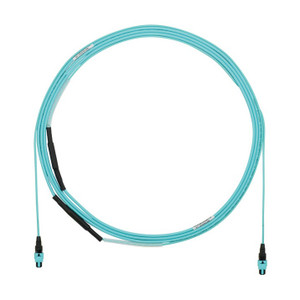
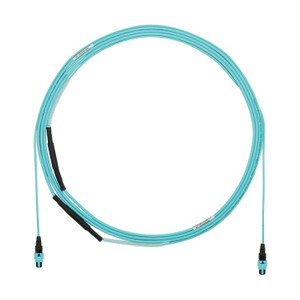
Panduit FY9TP77Y006M030 Singlemode 12-Fiber Pre-Terminated Trunk Cable 30M
Overview
The Panduit FY9TP77Y006M030 is a QuickNet™ HD Flex singlemode 12-fiber pre-terminated trunk cable spanning 30 meters (98.4 ft) — built for IT and facilities teams that need to deploy structured fiber infrastructure in data centers, telecommunications rooms, entrance facilities, and equipment distribution areas without field-terminating individual strands under deadline pressure. Pre-terminated trunks like this one collapse a multi-day fiber splicing and testing job into a guided, plug-and-play pull that a two-person crew can land in a fraction of the time. Browse the full Panduit fiber cabling line to pair this trunk with compatible cassettes, panels, and enclosures.
Key Features
- Singlemode fiber (12-fiber count): Singlemode glass carries signals over long inter-building and campus distances without modal dispersion — the right choice when you're connecting MDFs to IDFs across floors or buildings where multimode's distance ceiling would require an optical repeater. Twelve fibers per trunk keeps density manageable while leaving room for future growth alongside a fiber optic cable expansion strategy.
- 30-meter run length (98.4 ft): Sized for mid-span data center rows — long enough to bridge two full cabinet rows with slack for proper bend management, short enough to avoid excessive coiling that adds attenuation risk. If your run measures over 30 meters, verify length before ordering; factory-terminated trunks cannot be field-extended.
- QuickNet™ HD Flex sub-brand: The HD Flex platform is engineered for high-density patching environments where cabinet real estate is at a premium. The flexible construction is designed to route through congested cable trays and 90-degree bends without exceeding minimum bend radius — a practical concern in fully populated hot-aisle/cold-aisle rows where rigid cables cause cable management headaches.
- Pre-terminated factory construction: Factory terminations are tested under controlled conditions before shipment, which means you get consistent insertion loss values and eliminates the variability of field-polished connectors. For a 12-fiber trunk, that's 24 end-faces verified before the cable ships — reducing the per-port troubleshooting that burns time during commissioning windows.
- Rapid deployment design: Purpose-built for data centers, telecom rooms, entrance facilities, and equipment distribution areas where pre-terminated infrastructure cuts installation labor significantly compared to blow-and-splice approaches. If your project budget includes labor hours, the time saved here often justifies the price premium over bulk fiber.
- Structured deployment applications: Appropriate for backbone interconnects, zone-to-zone distribution links, and horizontal runs in facilities that standardize on a plug-and-play fiber architecture. Pair with compatible patch panels and enclosures to maintain a clean, documentable fiber plant. For planning your fiber backbone, see our cable selection guide.
Integration & Compatibility
The FY9TP77Y006M030 is designed to integrate with Panduit's QuickNet™ HD Flex ecosystem of structured cabling components — cassettes, enclosures, and panels that accept standard pre-terminated trunk connectors. Confirm connector type and polarity method (A, B, or C) against your installed base before ordering; trunk polarity is fixed at the factory and cannot be reversed in the field. Singlemode compatibility requires singlemode-rated transceivers at both endpoints — verify your active equipment specifications before deploying in a multimode plant.
Frequently Asked Questions
Q: What is the exact length of the FY9TP77Y006M030?
A: The FY9TP77Y006M030 is 30 meters (98.4 feet) in overall length.
Q: Is this cable singlemode or multimode?
A: This is a singlemode (SM) fiber trunk cable, suitable for long-distance links that exceed typical multimode distance limits.
Q: How many fibers does the FY9TP77Y006M030 contain?
A: It contains 12 fibers (12FB), providing 12 individual optical paths per trunk.
Q: What applications is this trunk cable designed for?
A: It is designed for data centers, telecommunications rooms, entrance facilities, and equipment distribution areas requiring pre-terminated fiber infrastructure for rapid deployment.
Q: Can this cable be field-terminated or extended?
A: No. As a factory pre-terminated trunk, the end-faces are tested and sealed at the factory. Field extension or re-termination is not supported and would void the factory test results.
Q: What sub-brand or platform does the FY9TP77Y006M030 belong to?
A: It belongs to Panduit's QuickNet™ HD Flex platform, engineered for high-density, flexible routing in congested data center cable environments.
The FY9TP77Y006M030 is the trunk I'd specify for a 30-meter backbone run in a mid-size data center where the team can't afford a two-day fiber splice window during a cutover. The 12-fiber singlemode construction gives you a clean, test-verified path from the MDF to an IDF row without touching a polishing puck on-site.
Technical Highlights:
- 30M / 98.4 ft fixed length: Covers the full depth of a standard 10-row hot-aisle/cold-aisle layout with enough slack for proper tray routing — measure your run before ordering, because factory-terminated trunks ship as-built.
- 12-fiber singlemode core: Singlemode glass eliminates the distance ceiling that stops OM3/OM4 multimode at 300–400m — relevant if this trunk is part of a longer campus backbone that gets patched through intermediate panels.
- QuickNet HD Flex platform: The flexible jacket construction routes through tight 90-degree bends in congested trays without exceeding bend radius spec — a real advantage in fully populated cabinets where rigid trunks require forced bends.
Deployment Considerations:
- Verify polarity (Type A, B, or C) against your existing cassette and enclosure install before the cable ships — polarity is factory-set and cannot be corrected in the field without retermination.
- Singlemode requires singlemode transceivers at both ends; deploying this trunk into a multimode plant with OM3/OM4 patch cords will produce high insertion loss and likely a failed link.
Best fit for structured data center backbone deployments — specifically inter-row or MDF-to-IDF links in facilities standardizing on a Panduit QuickNet HD Flex cassette-and-trunk architecture where speed of installation during maintenance windows matters more than saving a few dollars on bulk fiber.