SDC RB12V7 12VDC Rechargeable Battery Backup
Overview
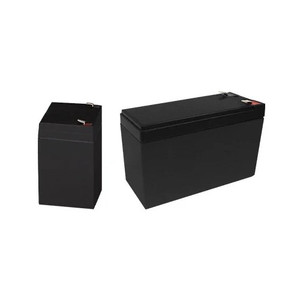
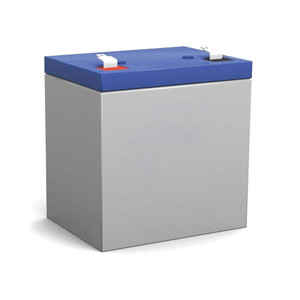
The RB12V7 is a 12VDC, 8-amp rechargeable battery module purpose-built to maintain access control operation during utility power loss. It bridges the gap between system shutdown and power restoration, keeping door readers, keypads, and strike mechanisms active when mains power fails. This unit integrates with OSDP-enabled access control systems and supports both proximity and keypad reader types operating on 13.56 MHz NFC credentials. The compact form factor makes it suitable for both retrofit installations on existing systems and new deployments where backup power is a regulatory or operational requirement.
Key Features
- 12VDC, 8-amp output: Sufficient capacity to hold multiple door strike mechanisms and reader assemblies in their powered state during an outage. Real-world runtime depends on total connected load—a typical single-door setup (strike + reader + keypad) might sustain 4–8 hours on battery alone.
- OSDP protocol compatibility: Works with access control panels using Open Supervised Device Protocol, the modern standard for credential readers and door controllers. Eliminates proprietary firmware concerns and simplifies integration with access control system architecture planning.
- 13.56 MHz NFC reader support: Compatible with proximity and keypad readers using NFC technology, allowing multi-factor authentication schemes without additional protocol converters or bridge modules.
- Rechargeable battery chemistry: The RB12V7 uses a rechargeable cell, not a disposable battery. On-site charging via AC mains during normal operation means no scheduled battery replacements—only periodic maintenance cycles. Reduces long-term operational cost compared to annual or bi-annual throwaway battery swaps.
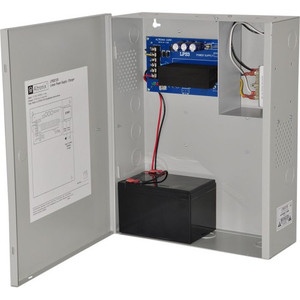
- Compact mounting: A small footprint allows installation in tight cabinet spaces, DIN rail mounting, or wall-mounted enclosures without major system redesign. Ideal when retrofitting backup power to existing access control closets with limited space.
- Wired connectivity: Hardwired 12VDC output eliminates wireless pairing complexity and potential signal loss. Delivers stable, predictable power to readers and strikes with no RF dropout risk.
Integration & Compatibility
The RB12V7 is designed for systems using OSDP communication and NFC credentials. Before specifying this unit, confirm that your access control panel and door readers both support 12VDC and OSDP. If your system uses legacy Wiegand, clock-and-data, or proprietary protocols, consult the access control manufacturer's integration guide or contact technical support for protocol compatibility verification. The battery module itself handles charging and output regulation internally—no external power management controller is typically required if your access control cabinet already has a 12VDC supply.
When to Choose a Different Model
If your system requires higher amperage (e.g., multiple strikes, long-range readers, or environmental door sensors on the same circuit), or if you need integrated UPS functionality with mains voltage output, consider higher-capacity rechargeable modules or true uninterruptible power supplies from the SDC product family. Verify load requirements before committing to the RB12V7's 8-amp rating.
Deployment Considerations
Install the RB12V7 in a climate-controlled cabinet or enclosure; temperature swings and humidity degrade battery lifespan. Schedule an annual health check—measure charging current and runtime under load to detect aging. If runtime drops below 2 hours on a fully charged unit, replacement may be approaching. Document the battery's installation date for maintenance scheduling.
Frequently Asked Questions
Q: How long will the RB12V7 keep my door strike powered during an outage?
A: Runtime depends on the total current draw of all connected readers, keypads, and strikes. A typical single-door installation (strike + proximity reader + keypad) drawing roughly 2–3 amps will operate for 3–4 hours on an 8-amp battery. Use the connected device datasheets to calculate your total amperage, then divide the battery capacity (8 amp-hours) by that figure for an estimate. Actual runtime will be less due to battery discharge curves and connector losses.
Q: Is the RB12V7 compatible with Wiegand or clock-and-data readers?
A: The RB12V7 provides 12VDC power output. It is not protocol-specific—Wiegand, clock-and-data, and OSDP readers can all draw power from it. However, the datasheet explicitly notes OSDP and NFC 13.56 MHz reader support. If you use a Wiegand reader, verify that your access control panel supports both Wiegand communication and 12VDC supply; the battery supplies only power, not protocol translation.
Q: Can I install the RB12V7 outdoors?
A: No. The RB12V7 is designed for indoor cabinet installation. Temperature extremes and moisture will degrade battery performance and lifespan. Mount it in a climate-controlled electrical enclosure or control room.
Q: Does the RB12V7 include a charger or charging circuit?
A: The RB12V7 is a battery module designed to integrate with access control cabinets that already have a 12VDC supply. It does not include a standalone charger. Your access control panel's 12VDC power supply will continuously float-charge the battery during normal operation.
Q: How often should I test or replace the RB12V7?
A: Schedule an annual runtime test under load to verify capacity. Most rechargeable battery modules operate effectively for 3–5 years before capacity degrades noticeably. Document installation date and perform replacement when runtime drops below 50% of original specification.
Ted PerryPerspective based on aggregated IP Security Depot and affiliated engineering team experience.
The RB12V7 solves a specific, often-overlooked problem: what happens to your door strikes and readers when utility power fails at 3 a.m. on a Sunday? The 8-amp output and rechargeable architecture mean you're not replacing disposables every 12 months—the cabinet's existing 12VDC supply keeps it float-charged. On paper, that sounds simple. In practice, it's a compliance win. Most fire codes and insurance carriers expect access control to stay alive for at least 24 hours during a power loss. The RB12V7 won't get you there alone on a large multi-door system, but for single-door or two-door deployments with modest reader loads, it's a low-cost, low-complexity solution.
Technical Highlights:
- 12VDC, 8-amp capacity: Delivers stable, regulated power to OSDP readers, keypads, and door strikes. A single-door setup (2–3 amp draw) sustains 3–4 hours runtime on battery alone—enough to bridge a typical power utility restore window during business hours.
- Rechargeable battery chemistry: Eliminates annual disposable battery swaps. Float-charged continuously by your access control cabinet's 12VDC supply, so maintenance is periodic testing, not constant replacement.
- OSDP and NFC 13.56 MHz support: Works seamlessly with modern credential readers. No protocol translation needed—power output is universal, but OSDP integration means your access control logs and audit trails remain uninterrupted during the outage.
Deployment Considerations:
- Load calculation is critical: The RB12V7 outputs 8 amps total. If your three door strikes, two proximity readers, and one keypad draw 5 amps combined, you have only 3 amps headroom for future expansion or simultaneous lock-unlock cycles. Overloading will trigger the battery's internal cutoff, leaving your doors unpowered.
- Temperature sensitivity: Rechargeable batteries lose capacity in cold. If your access control cabinet sits in an unheated warehouse or outdoor vestibule, runtime will degrade in winter. Verify cabinet temperature range against the battery's operating spec before commissioning.
- No integrated UPS or mains output: This is a battery backup for 12VDC systems only. If your door controller or access panel requires 24VDC or 110VAC, you'll need a true UPS or a different battery module from the SDC lineup.
Spec this unit for single or dual-door access points where you need 4–6 hours of backup runtime, the door controller already supports 12VDC, and cabinet space is tight. For multi-door warehouses or high-traffic entrances, calculate load first—oversizing the RB12V7 is cheaper than a mid-outage power failure that locks your entire receiving dock.