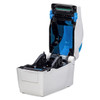
Sato WD302-405NN-EX1-2 203dpi Desktop Thermal Printer
The Sato WD302-405NN-EX1-2 is a professional desktop thermal printer engineered for high-volume enterprise labeling across logistics, manufacturing, healthcare, and retail warehouses. This model delivers 203 dpi resolution at 6 inches per second (ips)—a proven balance between output quality and production throughput. The 203 dpi specification is the industry workhorse for barcode and text clarity; it produces machine-readable barcodes (Code 39, Code 128, QR codes) and legible text across typical label sizes without sacrificing speed—critical when downtime from print failures or illegible labels directly impacts shipping schedules and inventory accuracy.
Key Features
- Dual Print Modes (Direct Thermal & Thermal Transfer): Direct thermal suits cost-sensitive, short-dwell applications—ideal for shipping labels and temporary warehouse tags where label lifespan is measured in days or weeks. Thermal transfer adds flexibility for extended label longevity (months or years) and enables color ribbon support when regulatory or branding requirements demand it. This dual capability means a single printer model scales from basic compliance labeling to premium product identification without requiring separate hardware.
- Maximum Print Width 4.09 inches; Media Range 1" to 4.65": This footprint addresses the most common enterprise label widths without requiring dual machines or oversized desktop footprint. The compact physical dimensions (8.69" × 10.96" × 7.38") fit workspace-constrained environments like order-picking stations, healthcare specimen processing areas, or pharmacy counters without claiming valuable real estate.
- 6 ips Print Speed: At 6 inches per second, the WD302-405NN-EX1-2 outputs approximately 360 4×6 shipping labels per hour in direct thermal mode—sufficient for mid-to-high-volume operations. In thermal transfer mode, speed remains consistent, allowing operators to switch between label types without retraining or mechanical reconfiguration.
- Field-Replaceable Printhead and Platen Roller: Thermal printheads are consumables with typical lifespan of 1–3 million labels depending on print mode and label material. Tool-free replacement design eliminates technician callouts and downtime. This translates to real operational savings in distributed deployments—warehouse staff can swap parts in under five minutes without external service intervention.
- Multiple Connectivity Options: USB 2.0, RS-232C, Ethernet, Wi-Fi, and Bluetooth: Ethernet and Wi-Fi enable networked deployment across warehouse floors without running dedicated parallel ports to each station. Wi-Fi specifically supports mobile or modular picking carts where cable routing is impractical. RS-232C provides backward compatibility with legacy warehouse management systems running older integration protocols. Bluetooth allows pairing with mobile devices for on-demand label printing—relevant for healthcare specimen labeling or field inventory audits.
- 16 MB Flash, 32 MB SDRAM, 16 MB User-Accessible Storage: Onboard font and forms storage reduces dependency on continuous host system connectivity. In environments with distributed printers and intermittent network availability, this means a printer can function independently—store logos, barcodes, form templates, and label layouts locally and print even if the central labeling server is temporarily unavailable or network bandwidth is constrained.
- Ribbon Capacity up to 984 feet (300 m): Extended ribbon length reduces changeover frequency in high-volume thermal transfer production. A single 300 m ribbon can output thousands of labels before replacement, minimizing consumables management overhead and labor cost in large operations or distributed warehouse networks.
- Operating Temperature Range 41°F to 104°F (5°C to 40°C): This span covers most climate-controlled warehouse and manufacturing floors. However, unheated loading docks or outdoor shipping areas operating below 41°F may present reliability risks—plan for heated enclosures or seasonal equipment relocation if thermal cycling is a deployment concern.
- LCD Display and User Interface: Integrated display enables status checks, job queuing, consumables monitoring, and error diagnostics without requiring software access or network connectivity—useful for rapid troubleshooting on the production floor and reduces mean-time-to-recovery when media jams or printhead alerts occur.
Integration & Compatibility
The WD302-405NN-EX1-2 integrates into existing warehouse management systems (WMS) and label printing workflows via standard Ethernet or USB connections. RS-232C support ensures compatibility with legacy equipment still in operation at many distribution centers. The printer supports industry-standard barcode symbologies and can be provisioned with custom fonts and logo artwork via ZPL (Zebra Programming Language) or standard print job formatting—allowing migration from competing thermal printer platforms without custom software redevelopment. Bluetooth connectivity enables direct pairing with Android or iOS mobile label-printing applications, useful in healthcare, field service, or retail environments where print requests originate from mobile devices rather than fixed workstations.
Frequently Asked Questions
Q: What's the difference between direct thermal and thermal transfer printing on the WD302-405NN-EX1-2?
A: Direct thermal uses heat-sensitive label material and requires no ribbon—ideal for short-dwell labels like shipping tags that fade within weeks. Thermal transfer uses a ribbon to apply ink, producing durable labels that resist fading and moisture, making it suitable for compliance labels, asset tags, or product barcodes requiring months or years of legibility. The WD302-405NN-EX1-2 supports both modes without hardware changes.
Q: What's the maximum ribbon length the WD302-405NN-EX1-2 can use?
A: The printer supports ribbon rolls up to 984 feet (300 meters). Extended ribbon capacity reduces changeover frequency and lowers consumables management costs in high-volume operations.
Q: Can the WD302-405NN-EX1-2 print wireless labels from mobile devices?
A: Yes. The printer includes Bluetooth and Wi-Fi connectivity, allowing pairing with Android or iOS devices for on-demand label printing. This is particularly useful in healthcare specimen processing, field inventory audits, or retail environments where print requests originate from mobile terminals.
Q: Is the printhead on the WD302-405NN-EX1-2 field-replaceable?
A: Yes. The printhead and platen roller are tool-free, field-replaceable components. No technician callout is required—warehouse staff can swap consumables in under five minutes, minimizing downtime and service costs.
Q: What operating temperature range does the WD302-405NN-EX1-2 support?
A: The printer operates reliably between 41°F and 104°F (5°C to 40°C). Unheated loading docks or outdoor areas below 41°F may present thermal stress—plan for heated enclosures if those environments are part of your deployment.
Q: What connectivity options are available on the WD302-405NN-EX1-2?
A: The printer includes USB 2.0, Ethernet, Wi-Fi, Bluetooth, and RS-232C. Multiple connectivity options enable deployment across modern and legacy warehouse management systems without infrastructure changes.
Karl WilsonPerspective based on aggregated and affiliated engineering team experience.
The Sato WD302-405NN-EX1-2 is a solid fit for mid-to-high-volume labeling in facilities where printhead consumables and ribbon changeover are routine operational realities. At 6 ips with 203 dpi resolution, this model targets the sweet spot between barcode legibility and throughput—you're not sacrificing scan reliability for speed, which matters when label failures trigger exception handling in your WMS. The dual thermal mode support (direct and transfer) is the real flexibility play here: it lets you standardize on one printer model while scaling label durability based on actual dwell time and regulatory requirements.
Technical Highlights:
- 203 dpi at 6 ips: Sufficient for all standard barcode formats (1D and 2D) and clear text rendering. This resolution-speed pairing is proven across thousands of warehouses; don't expect premium image quality, but expect consistent, machine-readable output.
- Field-replaceable printhead: Thermal printheads degrade predictably—typically 1–3 million labels before replacement. Tool-free design means your warehouse staff handles consumable swaps without waiting for service callouts. Real cost saver in distributed deployments.
- 16 MB onboard storage: Allows local storage of fonts, logos, and form templates. In environments with intermittent network connectivity or high-latency WMS integrations, this means the printer can function independently—print even if the central labeling server is down temporarily.
- Multiple connectivity (USB, Ethernet, Wi-Fi, Bluetooth, RS-232C): This breadth accommodates both modern and legacy WMS platforms. Wi-Fi is particularly useful for mobile label-printing carts; RS-232C ensures you're not forced to retire older warehouse equipment immediately.
Deployment Considerations:
- Temperature limits (41°F to 104°F): Standard climate-controlled warehouses are fine. But if your operation includes unheated shipping docks, outdoor staging areas, or seasonal cold-storage environments below 41°F, you'll need heated printer enclosures or seasonal relocation. Thermal printers are sensitive to rapid temperature swings.
- Printhead lifespan and consumables cost: Plan for printhead replacement every 1–3 million labels depending on mode and label material. Thermal transfer mode typically consumes printhead life faster than direct thermal. Factor ongoing consumables into your cost model, especially if you're comparing against inkjet or laser alternatives.
- 4.09-inch maximum print width: This is a constraint if your labels routinely exceed that width. Confirm your label format fits before committing—undersizing to fit will cost you later in barcode legibility or label information density.
Deploy the WD302-405NN-EX1-2 where label durability requirements vary (direct thermal for transient shipping tags, thermal transfer for durable compliance labels) and where your warehouse staff can self-manage consumables without external technician support. It's a workhorse, not a premium device—which is exactly what most high-volume logistics and manufacturing operations need.