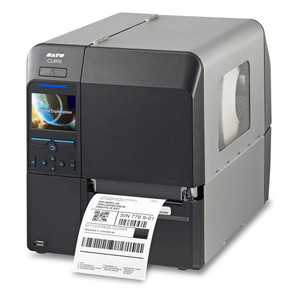
Sato WWCLP2101-NAN CL4NX Plus 305dpi Industrial Thermal Transfer Printer
The WWCLP2101-NAN is a workhorse industrial label printer engineered for high-volume shipping, logistics, and warehouse environments where print quality and speed must both perform reliably. This model combines 305 dpi resolution with a 14 inches-per-second (ips) print speed—meaning you get crisp barcode clarity (essential for 1D and 2D codes that won't scan if edges blur) without sacrificing production throughput on typical label runs. Maximum print width reaches 4.09 inches, accommodating standard shipping labels, compliance tags, and retail product labels without media waste.
Key Features & Deployment Benefits
- 305 dpi Resolution at 14 ips: This combination delivers sharp barcode rendering and text definition critical for supply chain readability. At 305 dpi, fine details—including small QR codes and variable text—print cleanly in a single pass, reducing label reprints and downstream scanning failures. 14 ips keeps throughput competitive for high-volume operations without requiring slower, more expensive equipment.
- Dual Thermal Transfer & Direct Thermal Modes: Thermal transfer printing (with ribbon) produces durable labels that withstand moisture, temperature swings, and chemical exposure—vital for cold-chain logistics and outdoor warehousing. Direct thermal mode eliminates ribbon costs for temporary or internal-use labels, letting you optimize media spend by application. You are not locked into one mode.
- 4.09-inch Maximum Print Width: Handles media from 0.87 to 5.04 inches wide on 1 or 3-inch cores. Supports roll stock up to 10 inches outer diameter and ribbons up to 1,968 feet—reducing changeover frequency and downtime on high-volume production floors.
- 2 GB Flash & 256 MB SDRAM with 100 MB User Storage: Onboard memory lets you store multiple label formats and fonts locally, so the printer operates independently from your network if bandwidth drops or your print server goes down. Critical for facilities where network reliability varies or labels need to print immediately without queue delay.
- 3.5-inch Full-Color LCD Touchscreen Display: Intuitive interface for configuration, media setup, and real-time job monitoring. Reduces operator training time and cuts setup errors, especially on shift rotations where consistency matters. Technicians can navigate the printer's state without technical documentation on hand.
- Tool-Free Printhead & Platen Roller Replacement: Maintenance is a common source of downtime and operator frustration. This design eliminates the need for special wrenches or technician callouts—staff can swap consumables in minutes, keeping the printer running during peak production windows. On a high-volume floor, every minute of unplanned downtime compounds.
- Multiple Connectivity (USB 2.0, Ethernet, Wi-Fi, RS-232C, Parallel, Bluetooth 3.0, NFC): Wi-Fi and Ethernet enable network-based print job routing and remote monitoring—you can track queue depth, error states, and supply levels from your production dashboard. Bluetooth and NFC support mobile label triggers for hand-held device integration (e.g., warehouse scanners). Legacy RS-232C and Parallel ports ensure compatibility with older warehouse management systems that have not migrated to modern network stacks, reducing integration friction.
- Rigid Cast Aluminum Frame & Corrosion-Resistant Materials: Industrial environments expose equipment to vibration, temperature swings, dust, and occasional chemical splash. Cast aluminum provides structural durability and thermal stability—preventing printhead misalignment and maintaining consistent label quality over years of operation, not months. This design choice directly impacts barcode scan-rate reliability.
- Operating Temperature Range 5°C to 40°C (41°F to 104°F): Covers most warehouse conditions without requiring heated enclosures or active cooling. Verify your facility's actual temperature profile—if you operate refrigerated zones (freezer environments often dip below 5°C), confirm thermal transfer ribbon performance at the lower end or consider ribbon formulations rated for extended cold exposure.
Integration & Connectivity
The WWCLP2101-NAN integrates into both legacy and modern warehouse management systems. Ethernet and USB connections plug into standard print servers; Wi-Fi allows mobile print triggers from hand-held inventory devices without infrastructure changes. RS-232C and Parallel ports support older WMS software and warehouse automation controllers. Bluetooth 3.0 and NFC enable direct pairing with scanning terminals and mobile picking devices, reducing the need for intermediate print queue hardware. Network print queue monitoring via Ethernet lets you track printer health, supply consumption, and job throughput remotely—useful for multi-facility logistics operations.
Frequently Asked Questions
Q: What is the difference between thermal transfer and direct thermal printing on the WWCLP2101-NAN?
A: Thermal transfer uses a ribbon to transfer wax or resin onto the label media, creating durable labels that resist moisture, chemicals, and temperature extremes—ideal for cold-chain and outdoor applications. Direct thermal prints directly onto heat-sensitive label stock without a ribbon, cutting material costs but producing labels that fade over time or in bright light. The WWCLP2101-NAN supports both modes, so you choose based on label durability requirements and budget constraints per application.
Q: Can the WWCLP2101-NAN print barcodes and variable text in a single pass?
A: Yes. At 305 dpi resolution, the printer renders fine detail (small QR codes, thin bars, fine fonts) in one pass without degradation. This reduces reprints and scanning failures on the dock or in field operations.
Q: Does the WWCLP2101-NAN require a separate print server, or can it operate standalone?
A: Both. With 2 GB flash and 256 MB SDRAM, the printer stores label formats locally and can operate independently of your network. However, it integrates with your WMS or print queue software via Ethernet, Wi-Fi, USB, or legacy RS-232C/Parallel connections for managed print job routing.
Q: What is the typical cost per label for direct thermal versus thermal transfer?
A: Direct thermal eliminates ribbon cost (typically $40–100 per roll) but requires heat-sensitive label stock. Thermal transfer uses standard label media plus a ribbon. The WWCLP2101-NAN lets you switch modes—use direct thermal for internal or short-life labels, and thermal transfer for shipping or cold-chain labels. This flexibility optimizes your media spend across product lines.
Q: Is the WWCLP2101-NAN suitable for cold-storage or freezer operations?
A: The printer operates at 5°C to 40°C (41°F to 104°F). Freezer environments typically drop below 0°C, so the printer itself must remain in a climate-controlled zone (e.g., a mounting enclosure in a heated receiving area). However, thermal transfer ribbons designed for cold exposure (ask your media supplier) maintain print quality in subfreezing conditions after the label leaves the printer.
Q: Can I use the WWCLP2101-NAN with my existing warehouse management system (WMS)?
A: Yes. The printer supports Ethernet, USB, RS-232C, Parallel, Wi-Fi, Bluetooth, and NFC connectivity. If your WMS uses standard IPP (Internet Printing Protocol) or LPR (Line Printer Remote), the WWCLP2101-NAN integrates directly. Legacy systems using RS-232C or Parallel connections are also supported. Your IT team can confirm driver availability for your WMS software.
Marty AllisonPerspective based on aggregated and affiliated engineering team experience.
The Sato WWCLP2101-NAN is a solid fit for any logistics or warehouse operation that prints labels at volume—1D/2D barcodes, shipping tags, compliance labels. The 305 dpi + 14 ips combo means you get scan-ready barcode edges without the 6-hour reprints that slower printers incur. The dual thermal transfer and direct thermal modes let you tune media cost per label by application, which compounds into real savings across high-volume SKU runs.
Technical Highlights:
- 305 dpi at 14 ips: Clean barcode and QR rendering at production speed. No blurred edges that kill downstream scan rates. Reprints cost far more than the time saved by moving through the queue.
- 4.09-inch maximum print width: Covers 99% of standard shipping, retail, and compliance label sizes. Rare waste, fast media load cycles, fewer SKU constraints than narrower printers.
- 2 GB flash + local format storage: Your label templates live on the printer. Network outages do not stop label production—WMS jobs sit in queue, but operator can print emergency labels offline if needed. Real uptime insurance.
- Tool-free printhead/platen swap: Consumable replacement takes minutes, not hours. Maintenance does not require technician calls. On a 24/7 dock, this alone justifies the hardware investment.
- Multiple connectivity (Ethernet, Wi-Fi, USB, RS-232C, Parallel, Bluetooth, NFC): Slides into legacy warehouse systems (RS-232C, Parallel) and modern cloud WMS (Ethernet, Wi-Fi, Bluetooth). No forced rip-and-replace of your existing infrastructure.
Deployment Considerations:
- 305 dpi is industrial-grade but not photo-quality. If you need barcode symbology smaller than ~0.5 inch or require graphical logo detail, verify sample output before committing to a fleet purchase.
- Operating range 5°C to 40°C (41°F to 104°F) means the printer itself cannot sit in a freezer. For cold-chain labeling, mount the WWCLP2101-NAN in a heated receiving or staging area and run label batches before goods move into refrigeration. Thermal transfer ribbon formulations designed for cold environments maintain print durability after label application.
- Thermal transfer mode requires ribbon inventory and changeover labor. Budget 30–45 seconds per ribbon spool on a busy dock. Direct thermal eliminates this but locks you into heat-sensitive label stock (shorter shelf life, fades in sunlight).
- Maximum print width of 4.09 inches does not cover oversized shipping labels or wide compliance placards. If a single label must exceed 5 inches across, you need a different model or a multi-label strategy.
Deploy the WWCLP2101-NAN on high-volume dock or distribution-center operations where barcode scan reliability, tool-free maintenance, and dual thermal modes directly reduce reprint waste and consumable spend. For cold-chain and outdoor logistics, pair it with thermal transfer ribbon rated for your climate zone. It is not a photo printer—it is a barcode factory with proven uptime on 24/7 production floors.