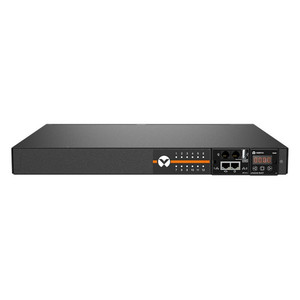
Vertiv VP7N41A0 Switched Outlet-Level Monitoring PDU, 35A 208V Delta, 10.0kW Horizontal
Overview
The Vertiv VP7N41A0 is a horizontal, rack-mounted switched PDU engineered for data centers and high-density server environments where you need both outlet-level power control and real-time current, voltage, and power monitoring — without leaving the monitoring console. Rated at 35A input on a 208V delta three-phase circuit with a 10.0kW capacity, this unit is sized for high-density compute rows or mid-density blade chassis deployments where per-outlet switching is operationally necessary. The 0U horizontal form factor keeps it out of the way in standard rack deployments, and the front-panel LCD gives you an at-a-glance power reading without needing to SSH in. If you're running a modern operations stack — SNMP v3, RADIUS authentication, TACACS+, Syslog, Modbus TCP — the VP7N41A0 speaks your language natively.
Key Features
- Switched Outlet-Level Control: Each outlet can be independently toggled, sequenced, or rebooted remotely. For physical servers that don't support IPMI or remote reboot, this is the only way to recover a locked host without dispatching hands-on-glass. Eliminates one of the most common after-hours truck rolls.
- 35A / 208V Delta, 10.0kW Capacity: The 35A three-phase delta input handles high-density compute loads without nuisance tripping — but note this presupposes a compatible 3-phase 208V delta circuit at the rack. Verify your facility's panel feed before committing to this unit; it is not compatible with single-phase circuits or wye topologies at this amperage.
- 12 AC Outlets — C13 and C19 Mix: The outlet mix covers both standard 1U/2U server PSUs (C13) and high-draw GPU servers, storage arrays, or UPS bypass feeds (C19). Plan your outlet allocation before racking — C19 slots are typically fewer, so prioritize them for your highest-draw devices.
- Per-Outlet Current, Power, and Voltage Monitoring: Real-time telemetry at the outlet level — not just at the PDU input — means you can see a GPU node pulling 2.8kW before it trips a breaker, or catch a failing PSU slowly climbing draw. This granularity feeds directly into capacity planning workflows and DCIM platforms that consume SNMP traps.
- SNMP v1/v2c/v3 + Modbus TCP: SNMP v3 with authentication and privacy encryption is the enterprise-grade choice for monitoring integration; v1/v2c is there for legacy NMS compatibility. Modbus TCP opens the door to BMS and SCADA integration in co-location or industrial data center environments where building management systems pull power data directly.
- RADIUS and TACACS+ Authentication: Centralized access control means PDU credentials are governed by your existing identity provider — no local password sprawl across 40 PDUs in a row. TACACS+ also provides command-level authorization logging, which matters for SOC2 and ISO 27001 audit trails.
- IPv4/IPv6 Dual-Stack with HTTPS, SSH, LDAP, SMTP, NTP, Syslog: The full protocol suite means this unit slots into a hardened network environment without compromise — HTTPS enforces encrypted management sessions, SSH replaces Telnet for CLI access, LDAP connects to Active Directory for group-based access, and SMTP/Syslog feed alerts into your ticketing or SIEM platform automatically.
- Front-Panel LCD Display: Local readout of load data without needing network access — useful during power-on commissioning or when network management is temporarily unavailable. Paired with LED indicators for quick visual status checks across a row of PDUs.
- 3-Meter Input Cord: The 3m cord length provides enough reach for most horizontal overhead busway or floor trench configurations without cable management gymnastics. Verify your rack-to-panel distance before ordering — extensions degrade voltage at the PDU input.
- Single Ethernet (RJ-45) + USB + Serial Port: One RJ-45 management port keeps the footprint minimal; the USB and serial ports support local firmware updates and console access during initial commissioning or network outages.
Integration and Compatibility
The VP7N41A0 integrates directly with DCIM platforms, SNMP-based NMS tools (SolarWinds, PRTG, Nagios), and BMS systems via Modbus TCP. RSTP support means it can participate in a resilient management network topology without creating loops. LDAP integration with Active Directory enables role-based access at scale — critical when multiple operations teams share PDU management access across a large deployment. For Vertiv's own management ecosystem, the unit is designed to integrate with Vertiv Environet and Trellis DCIM platforms, though verify compatibility for your specific firmware version through the Vertiv Vertiv product line. If you're specifying PDUs alongside rack power distribution for a broader infrastructure buildout, compare this unit against single-phase alternatives — the three-phase delta input is an advantage in high-density rows but requires matching facility infrastructure. For deployments pairing PDUs with UPS systems, outlet-level switching on the PDU enables precise load shedding during UPS runtime events. See the PDU selection guide for a breakdown of monitored vs. switched vs. metered PDU tradeoffs, and consider managed network switches if you need PoE-capable management network infrastructure alongside this deployment.
Frequently Asked Questions
Q: What input circuit does the VP7N41A0 require at the panel?
A: The VP7N41A0 requires a three-phase 208V delta circuit rated for 35A. It operates on 200–240V AC at 50/60 Hz. This is not compatible with single-phase circuits or three-phase wye configurations at this amperage — confirm your facility panel feed and breaker rating before ordering.
Q: Can I control individual outlets remotely on the VP7N41A0?
A: Yes. The VP7N41A0 is a switched PDU with outlet-level control, meaning each of the 12 outlets (C13 and C19) can be individually toggled, power-cycled, or sequenced remotely via the network management interface. This is the core operational advantage over a monitored-only PDU.
Q: Does the VP7N41A0 support SNMP v3?
A: Yes. It supports SNMP v1, v2c, and v3. SNMP v3 includes authentication and privacy encryption, making it appropriate for enterprise and regulated environments requiring encrypted management traffic.
Q: What authentication protocols are supported for PDU management access?
A: The VP7N41A0 supports RADIUS and TACACS+ for centralized authentication and access control, plus LDAP for directory-based user management. This allows integration with Active Directory or other enterprise identity providers for role-based PDU access.
Q: How many C19 outlets does the VP7N41A0 provide versus C13?
A: The VP7N41A0 provides a total of 12 AC outlets in a mix of C13 and C19 connectors. The exact per-type count breakdown should be confirmed against the Vertiv product datasheet or Vertiv's configurator, as the specific split is not enumerated in the available specifications. Plan C19 allocations for your highest-draw devices first.
Q: Does the VP7N41A0 support Modbus TCP for BMS integration?
A: Yes. Modbus TCP is listed among the supported network protocols, enabling integration with building management systems (BMS) and SCADA platforms that pull power telemetry directly from PDUs — common in co-location and industrial data center environments.
The VP7N41A0 sits in a specific and deliberate sweet spot: a 35A three-phase 208V delta switched PDU with full outlet-level monitoring — a combination that makes sense in high-density compute rows where both granular power visibility and remote outlet control are non-negotiable operational requirements. The 10.0kW capacity paired with individual C13 and C19 outlet switching puts this unit in contention for GPU server rows, blade chassis deployments, or co-location cages where remote hands costs make outlet-level reboot capability a genuine CapEx justification.
Technical Highlights:
- 35A Three-Phase Delta Input: At 10.0kW rated capacity, this PDU handles high-density compute loads that would trip a single-phase 20A unit, while the 208V delta topology is standard in raised-floor data centers with balanced three-phase power distribution infrastructure.
- SNMP v3 + RADIUS/TACACS+: Enterprise security posture out of the box — encrypted SNMP v3 for NMS integration, RADIUS or TACACS+ for centralized credential governance. On a 40-PDU data hall deployment, local password management on each PDU is operationally untenable; TACACS+ with command logging is the audit-friendly answer.
- Modbus TCP Protocol Support: Rare at this price tier — Modbus TCP opens this PDU to BMS and SCADA integration without a third-party protocol translator, which is the difference between a standalone power strip and a true building-infrastructure endpoint in co-location or industrial data center buildouts.
Deployment Considerations:
- The 208V delta input is facility-specific — this is not a universal PDU. Verify your panel feed is three-phase delta (not wye) and that the branch circuit is rated for 35A before rack integration. A mismatch here is not recoverable in the field.
- The single RJ-45 management port means no redundant management network path — if your management VLAN goes down, local access falls back to the serial console port. Plan your management network redundancy at the switch layer, not the PDU layer, for this unit.
The VP7N41A0 is the right call for a co-location operator or enterprise data center team building out a new compute row on three-phase 208V delta infrastructure who needs outlet-level switching for headless servers alongside SNMP v3 and TACACS+ compliance from day one — not as an afterthought retrofit.