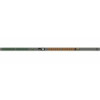
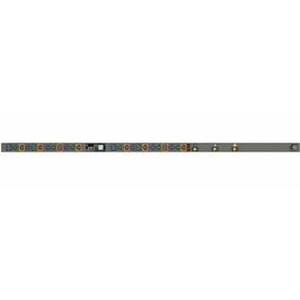
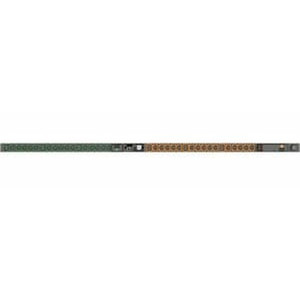
Vertiv VP7N30A7 Switched Outlet-Level Monitoring PDU — 30A 208V Vertical
Overview
The Vertiv VP7N30A7 is a 0U vertical rack PDU designed for high-density data center and server room deployments where per-outlet switched control and granular power monitoring are non-negotiable. Drawing up to 30A at 200–240V via a NEMA L6-30P plug, it delivers 4.9 kW of usable capacity across 24 IEC C13 locking outlets — giving you the headroom to densely populate a standard 42U rack without hunting for a separate power strip. The vertical form factor keeps the unit mounted in the rear rail channel, so it doesn't consume a single rack unit that a horizontal PDU would claim. If you're managing rack power distribution in a colocation cage, edge compute room, or enterprise server environment, this is the class of device to evaluate.
Key Features
- Outlet-Level Switching (24 C13 Outlets): Each of the 24 IEC C13 locking outlets can be switched on/off independently via the web interface or SNMP — meaning you can remotely cycle a hung server without touching the rack. Locking C13 connectors prevent accidental disconnects in high-vibration or high-traffic environments, a real advantage in busy colocation rows.
- 30A / 208V / 4.9 kW Input (NEMA L6-30P): Single-phase 200–240V input at 30A handles the power budget of a fully loaded 1U/2U server row. The L6-30P plug is standard on colocation and raised-floor circuits, so no adapter hunting. At 4.9 kW usable, you get sufficient headroom for mixed compute and storage loads without derate anxiety.
- Four-Parameter Outlet Monitoring (Current, Voltage, Power, Temperature): The VP7N30A7 reports current draw, voltage, real power, and temperature per outlet or at the unit level — whichever your DCIM or NMS consumes. This means capacity planning conversations are data-driven: you'll know which outlets are at 80% threshold before a circuit trips, not after.
- Dual RJ-45 Ethernet + Daisy Chain: Two onboard Ethernet ports let you connect the PDU into your network management VLAN and daisy-chain additional units without burning extra switch ports. In a high-density deployment with 10–20 PDUs per row, that port consolidation matters at the access layer.
- Enterprise Protocol Stack: The VP7N30A7 supports SNMP v1/v2c/v3, HTTPS, SSH, RADIUS, LDAP, TACACS+, Modbus TCP, Syslog, NTP, IPv4/IPv6, RSTP, and SMTP alerting. That's the full enterprise AAA and monitoring stack — integrate directly into your existing NMS, SIEM, or DCIM without standing up a proprietary management server.
- SNMPv3 with RADIUS/LDAP/TACACS+: Authentication routes through your existing directory infrastructure. Individual outlet actions are logged and attributable — critical for change-management audit trails in PCI-DSS or SOC 2 environments where every power cycle needs to be accountable.
- USB Port + LED Display: The onboard USB port supports local firmware updates or configuration backup without network access — useful during initial commissioning or post-incident recovery when the management network may be down. The LED display gives instant at-a-glance unit-level readings without logging into the interface.
- Vertical 0U Mounting: The vertical form factor installs in the rear of a standard open-frame or enclosed rack without consuming rack units. In a 42U rack fully populated with 1U servers, this is the only PDU mounting style that doesn't force a trade-off between device density and power delivery.
- 3-Meter Cord: The 3m (approximately 9.8 ft) power cord provides enough reach to connect to floor-mounted PDUs or overhead busway connections in most raised-floor environments without an extension — one less cable-management variable during installation.
- IPv6 + RSTP Support: Native IPv6 means the VP7N30A7 is compatible with next-generation network segments without NAT workarounds. RSTP support allows it to participate in managed switch topologies with redundant paths, relevant in Tier III/IV data center designs where the management network itself has redundancy requirements.
Integration & Compatibility
The VP7N30A7 integrates with any SNMP-capable NMS, DCIM platform, or monitoring stack — including SolarWinds, PRTG, Nagios, Datadog infrastructure agents, and vendor-specific DCIM tools. Modbus TCP extends compatibility to building management systems (BMS) and industrial monitoring platforms common in colocation and critical facility environments. The dual-Ethernet daisy chain reduces cabling complexity when managing switched rack PDUs at scale across multiple cabinets. RADIUS, LDAP, and TACACS+ integration means access control lives in your existing identity provider — no local account sprawl to manage across dozens of PDUs. For environments standardizing on Vertiv power infrastructure, the VP7N30A7 participates in the same management ecosystem as Vertiv UPS and transfer switch products. Syslog and SMTP alerting allow threshold breach notifications to route into your existing ticketing or on-call systems without additional middleware.
Frequently Asked Questions
Q: What input plug does the VP7N30A7 use, and what circuit type does it require?
A: The VP7N30A7 uses a NEMA L6-30P plug, which requires a single-phase 30A, 200–240V dedicated circuit. This is a standard configuration in colocation facilities and raised-floor data centers. Confirm your floor PDU or busway tap supports L6-30P before ordering.
Q: Can I switch individual outlets remotely, or only the entire PDU?
A: Individual outlet switching is supported — each of the 24 C13 outlets can be independently toggled via the web interface, SNMP commands, or automated scripts. This allows remote power cycling of a single server without affecting adjacent equipment on the same PDU.
Q: What monitoring parameters does the VP7N30A7 report?
A: The VP7N30A7 monitors current draw, voltage, real power (watts), and temperature. These readings are available at both the unit level and per-outlet level, accessible via SNMP, HTTPS web interface, or Modbus TCP for BMS integration.
Q: Does the VP7N30A7 support SNMP v3?
A: Yes. The VP7N30A7 supports SNMP v1, v2c, and v3. SNMPv3 provides authenticated and encrypted communications, which is the recommended configuration for enterprise and regulated environments.
Q: How does the daisy chain feature work with the dual Ethernet ports?
A: The two onboard RJ-45 Ethernet ports allow you to connect the VP7N30A7 into your management network through one port and daisy-chain the connection to another PDU through the second port. This reduces the number of switch ports consumed when managing multiple PDUs in a row — a practical advantage in high-density cabinet deployments.
Q: Is the VP7N30A7 compatible with IPv6 networks?
A: Yes. The VP7N30A7 natively supports IPv6 alongside IPv4, so it can be managed on next-generation network segments without NAT or protocol translation workarounds.
The VP7N30A7 lands in a specific sweet spot that matters a lot in high-density rack builds: you get switched outlet-level control on all 24 C13 locking outlets at a 30A/208V single-phase input, vertical 0U mounting, and the full enterprise AAA stack (RADIUS, LDAP, TACACS+, SNMPv3) in one unit. I've specified this class of Vertiv PDU in colocation environments where remote hands cost $150 a visit — being able to cycle a single hung outlet via SNMP without dispatching a technician pays for the PDU premium inside a year.
Technical Highlights:
- 24 Switched C13 Locking Outlets: Per-outlet control at 30A/4.9 kW input means you can segment a mixed server/storage rack and reboot only what you need. Locking connectors eliminate accidental pull-outs in active racks — a real failure mode in busy colo rows.
- Four-Parameter Monitoring (Current, Voltage, Power, Temperature): Reporting all four parameters per outlet — not just amperage at the breaker — gives your DCIM platform the data it needs to enforce 80% loading thresholds before you trip a circuit breaker during peak load.
- Dual RJ-45 + Daisy Chain: Two Ethernet ports with daisy-chain capability means a row of 10 PDUs can share a single switch port. In a 200-PDU deployment that's the difference between a 200-port management VLAN and a 20-port one.
Deployment Considerations:
- The NEMA L6-30P plug is correct for most North American colo raised-floor circuits, but verify your floor PDU or overhead busway tap supports L6-30 before rack installation — L6-20 circuits are common in older facilities and will not accept this plug without a rewire.
- With 24 outlets all typed as C13 (no C19), this PDU is the wrong choice for high-draw devices like large UPS bypass modules, older high-density GPU servers, or any load requiring C19 connectors — size up to a C19-capable unit for those applications.
For a modern colocation cage, enterprise server room, or edge compute rollout where every rack needs auditable, remotely switchable power with full SNMP v3 and directory-integrated access control, the VP7N30A7 is the unit to spec — particularly where the 30A/208V single-phase circuit is already in place and outlet density is the primary constraint.