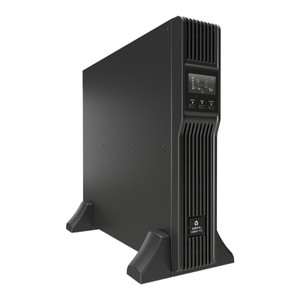
Vertiv VP4N50A6 Monitored 3-Phase PDU, 50A 208V, 30-Outlet Vertical Rack
Overview
The Vertiv VP4N50A6 is a unit-level monitored, three-phase power distribution unit rated at 50A and 208V delta (14.4kW), purpose-built for high-density vertical rack deployments where real-time power visibility matters and floor space is at a premium. With 30 combination outlets — a mix of C13 and C19 receptacles — and a 0U vertical form factor, the VP4N50A6 installs along the side rail of a standard open-frame or enclosed cabinet, freeing every rack unit for compute or switching gear. The IEC 60309 input connector and 3-meter cable give integrators clean termination options at the PDU side without improvised adapters. This unit is a practical answer to the question every data center power designer eventually faces: how do you get eyes on branch-circuit power without adding a separate metering layer?
Key Features
- 50A / 208V Three-Phase Input: At 14.4kW capacity, the VP4N50A6 can serve a fully loaded high-density cabinet — think dual-socket servers, GPU nodes, or stacked network gear — without headroom anxiety. Three-phase loading also balances panel circuits more evenly than single-phase alternatives at this current rating.
- 30 Combination C13/C19 Outlets: Most high-density deployments mix 1U and 2U servers with C13 power cords alongside denser compute nodes running C19. Having both outlet types on one PDU eliminates the need for plug adapters, which are a reliability liability and a cable management headache in high-airflow environments.
- Unit-Level Current, Voltage, and Power Monitoring: The onboard LED display and network interface expose real-time current (amps), voltage, and power (watts/kVA) for the entire PDU. This gives facilities teams and NOC engineers a live view of cabinet load — the key input for capacity planning and overload prevention — without a separate branch-circuit monitor.
- IEC 60309 Input Plug with 3-Meter Cable: IEC 60309 is the industry-standard locking connector for three-phase power distribution in data center environments. The 3-meter factory-attached cable reaches floor-level or overhead whip connections cleanly without extension cord workarounds that void electrical codes.
- Broad Protocol Support — SNMP v1/v2c/v3, HTTPS, RADIUS, LDAP, TACACS+, Modbus TCP: The VP4N50A6 integrates directly into enterprise infrastructure management stacks. SNMP v3 with AES/SHA authentication satisfies security audits. RADIUS and TACACS+ mean you can enforce the same identity and access policies on PDU management that you apply to switches and servers. Modbus TCP opens integration with building management systems (BMS) and DCIM platforms.
- IPv4 and IPv6 Dual-Stack Networking: The single RJ-45 management port supports both IPv4 and IPv6, so the VP4N50A6 drops into modern dual-stack data center networks without a firmware upgrade or a separate management VLAN workaround for legacy addressing.
- SSH, HTTPS, and Syslog Security Posture: Management access is encrypted at the transport layer via SSH (CLI) and HTTPS (web UI). Syslog integration routes event data — outlet faults, overload warnings, authentication events — to your SIEM or log aggregator, which is a basic requirement for SOC2 and ISO 27001 environments.
- 0U Vertical Mounting: Zero rack-unit consumption is the correct answer for cabinets where every 1U slot has revenue attached to it. The VP4N50A6 mounts vertically on the rear rail or side channel, keeping the front and rear of the cabinet fully accessible for servers and patch management.
- NTP Time Synchronization: Timestamped event logs are only useful if the clock is accurate. Built-in NTP support keeps the VP4N50A6 synchronized to your infrastructure time source, which matters when you're correlating PDU events against server logs or UPS alarms during a post-incident review.
- USB and Serial Console Ports: The USB port supports local firmware updates or configuration imports without network access. The RS-232 serial port provides out-of-band management access — useful during network outages or initial commissioning before the management IP is configured.
Integration and Compatibility
The VP4N50A6 network port accepts DHCP addressing out of the box, accelerating initial deployment in environments with managed DHCP scopes. Static IPv4 and IPv6 addressing is configurable for environments that require fixed management IPs. The SNMP v1/v2c/v3 support is broadly compatible with DCIM platforms including Vertiv's own Trellis, as well as third-party tools like Nlyte, Sunbird dcTrack, and generic NMS platforms that consume MIB-defined OIDs. Modbus TCP extends compatibility to power monitoring overlays and building automation controllers that don't speak SNMP. The RSTP (Rapid Spanning Tree Protocol) listing in the supported protocol stack is relevant if your management network topology requires loop prevention at the edge. For organizations standardizing on a power distribution strategy across multiple cabinet rows, the VP4N50A6 fits within the broader Vertiv rack PDU family alongside lower-amperage and single-phase variants — allowing a consistent management interface and SNMP MIB across mixed deployments. If you're sizing power infrastructure for a new build, pair it with a compatible UPS sized for the 14.4kW load to maintain runtime during utility events. Organizations evaluating data center network infrastructure alongside power should note the protocol breadth here — LDAP, RADIUS, and TACACS+ integration reduces the PDU management login to the same identity store used for switches and firewalls, which simplifies access reviews.
Frequently Asked Questions
Q: What input plug type does the VP4N50A6 use, and how long is the power cord?
A: The VP4N50A6 uses an IEC 60309 input connector — the locking three-phase plug standard for data center PDU terminations — with a 3-meter (approximately 10-foot) factory-attached cable.
Q: What types of outlets does the VP4N50A6 provide, and how many?
A: It provides 30 combination outlets supporting both C13 (standard 1U/2U server power cords) and C19 (high-current compute and networking gear) receptacles, giving flexibility across mixed equipment populations in the same cabinet.
Q: What monitoring capabilities does the VP4N50A6 provide?
A: The VP4N50A6 monitors current (amps), voltage, and power (watts) at the unit level. Data is accessible via the onboard LED display and through the network interface using SNMP v1/v2c/v3, HTTPS, or Modbus TCP.
Q: Does the VP4N50A6 support integration with enterprise authentication systems like RADIUS or LDAP?
A: Yes. The VP4N50A6 supports RADIUS, LDAP, and TACACS+ for management authentication, allowing you to enforce the same identity and access policies used for network and server infrastructure.
Q: Can the VP4N50A6 be mounted without consuming rack unit space?
A: Yes. It is a 0U vertical-mount PDU designed to install along the side rail or rear channel of a standard cabinet, consuming no rack unit space in the main equipment bays.
Q: What network protocols does the VP4N50A6 support for DCIM and BMS integration?
A: Supported protocols include SNMP (v1/v2c/v3), HTTPS, HTTP, SSH, SMTP, Syslog, NTP, DHCP, IPv4, IPv6, LDAP, RADIUS, TACACS+, RSTP, and Modbus TCP — covering both IT management platforms and operational technology (OT) building management systems.
The VP4N50A6 is the PDU I'd reach for in any high-density three-phase cabinet deployment where the operations team needs power visibility without a separate metering overlay — the onboard unit-level monitoring of current, voltage, and power, combined with SNMP v3 and Modbus TCP, means this unit talks to virtually any DCIM or BMS platform already in the environment without custom integration work.
Technical Highlights:
- 50A / 14.4kW Three-Phase Capacity: At 200–240V input and 50A max draw, this PDU handles fully loaded GPU or high-density compute cabinets without derate concerns — the 14.4kW ceiling covers most dual-socket server rows operating at realistic utilization.
- SNMP v3 + TACACS+ + RADIUS Authentication: These three together mean PDU management accounts can be centrally governed, audited, and rotated through your existing identity infrastructure — a real differentiator for environments operating under SOC2 or ISO 27001 controls where shared passwords on infrastructure devices are a finding.
- 30 C13/C19 Combination Outlets: Mixed-outlet populations eliminate the C13-to-C19 adapter chains that show up in poorly planned deployments; adapters add resistance, reduce airflow predictability, and are a maintenance liability when someone yanks the wrong cord under load.
Deployment Considerations:
- Confirm your panel circuit is rated and wired for the IEC 60309 three-phase plug before ordering — field-fabricated whip adapters to NEMA configurations introduce code compliance risk on a 50A circuit.
- Unit-level monitoring means you see total PDU load, not per-outlet load — if your deployment requires outlet-level metering for individual server chargeback or fine-grained capacity planning, evaluate Vertiv's switched/outlet-metered PDU variants in the same family instead.
The VP4N50A6 is the right call for colocation operators and enterprise data center teams deploying high-density three-phase cabinets where the primary requirement is reliable load visibility and protocol-rich integration with an existing DCIM or NOC monitoring stack — not per-outlet switching control.