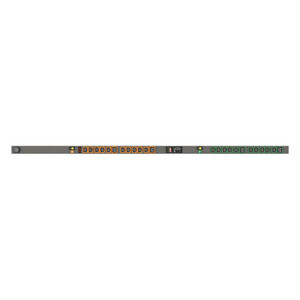
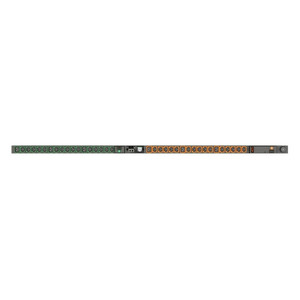
Vertiv VP6N30A8 Monitored Outlet-Level Vertical PDU — 30A, 208V, 8.6kW, 24-Outlet
Overview
The Vertiv VP6N30A8 is a three-phase, outlet-level monitored rack PDU engineered for high-density data center and equipment room deployments where granular power visibility at the individual outlet level is non-negotiable. Rated at 30A / 208V delta input with 8.6kW total capacity, this 0U vertical unit mounts inside the rack column — preserving usable rack unit space for revenue-generating equipment. If you're running mixed compute loads across a mid-density cabinet and need per-outlet current data without deploying additional metering hardware, the VP6N30A8 fits that requirement directly.
Vertiv's Vertiv Geist rPDU line is widely deployed in colocation, enterprise data centers, and edge environments. The VP6N30A8 sits within the vertical rack PDU segment, distinguished by its outlet-level (not just inlet-level) monitoring capability — meaning you can pinpoint exactly which device in the rack is drawing anomalous power, not just that the overall branch is over threshold.
Key Features
- Outlet-Level Monitoring (Current, Power, Voltage, Temperature): Most PDUs report aggregate inlet current. This unit measures at every outlet — so if a particular server starts drawing 20% more current than its baseline, you catch it in your SNMP or DCIM dashboard before it trips a breaker. Pair with alerting thresholds for proactive capacity management across the monitored PDU fleet.
- 30A / 208V Delta Input via NEMA L15-30P: The L15-30P twist-lock plug connects to three-phase 208V delta panels — common in colo cage environments and purpose-built data halls. At 8.6kW usable capacity, a fully populated 42U cabinet with mixed 1U/2U servers drawing 300-500W each stays well within budget.
- 24 C13 Locking Outlets (18 with Locking Feature): IEC C13 locking connectors physically retain the cord in the outlet — a meaningful operational detail in high-vibration or high-density environments where accidental disconnection during maintenance is a real risk. Each outlet feeds a single device, giving you 24 discrete addressable power delivery points on one 0U unit.
- 0U Vertical Form Factor — Zero Rack Unit Consumption: Installing horizontally costs you 1U per PDU. Vertical zero-U mounting routes inside the rack's vertical cable channel, leaving every rack unit free for compute. In a fully monetized colo cabinet, recovering even 2U per rack across 50 cabinets is meaningful floor economics.
- Dual RJ-45 Ethernet Ports with Daisy-Chain Support: Two network ports let you daisy-chain multiple PDUs on a single network drop — reducing switch port consumption and simplifying cable runs in high-density rows. Both ports support the full protocol stack including SNMPv3, HTTPS, SSH, and Modbus TCP.
- Protocol Stack — SNMP v1/v2c/v3, Modbus TCP, RADIUS, TACACS+, LDAP: SNMPv3 with encryption and authentication means this PDU integrates directly into enterprise NMS platforms (SolarWinds, PRTG, Nagios, etc.) without leaving credentials in plaintext. RADIUS and TACACS+ support enterprise AAA infrastructure — no local account sprawl across 50 PDUs in a row. LDAP keeps access tied to your directory. Modbus TCP opens integration with building management systems (BMS) that don't speak SNMP.
- LED Display with LED Indicators: Local status visibility without needing to pull up a management interface — useful during on-site troubleshooting when the network is the thing that's broken. The LED panel shows load and status at a glance.
- 3m Power Cord: The 3-meter input cable provides enough reach to connect to the power strip or panel distribution point without extension cords, which are a common data center compliance violation. Measure your panel-to-PDU run before ordering if your cabinet is unusually positioned.
- IPv4/IPv6 Dual-Stack, NTP, Syslog, SMTP: Full modern network protocol support means alert emails, syslog forwarding to your SIEM, and time-synchronized event logs — all without additional configuration gymnastics. IPv6 support future-proofs integration with networks transitioning off IPv4-only infrastructure.
- USB Port: The single USB port supports firmware updates and local configuration — useful for bulk deployment scenarios where pushing firmware via network may not yet be available.
Integration and Compatibility
The VP6N30A8 integrates with any DCIM or NMS platform that supports SNMP v1/v2c/v3, Modbus TCP, or RESTful HTTP/HTTPS APIs. Native compatibility extends to Vertiv's own Trellis and Liebert platforms for unified power chain visibility. The dual-RJ45 daisy-chain architecture reduces switch port requirements in multi-PDU rows — a practical consideration when deploying across a managed switch infrastructure where port density is constrained. RADIUS and TACACS+ integration means access credentials live in your existing AAA infrastructure rather than on each PDU individually, which is the correct approach for any deployment beyond a handful of units.
For environments requiring environmental monitoring at the rack level, the onboard temperature monitoring supplements external rack sensors — though for precise hot/cold aisle temperature mapping you'll want dedicated probes in addition to the built-in sensor. The SMTP alerting capability allows direct email notifications on threshold breaches without requiring a separate SNMP trap receiver, which simplifies smaller deployments.
Review your PDU selection guide for matching PDU capacity to cabinet power draw — especially in three-phase delta environments where phase balance matters for panel loading calculations.
Frequently Asked Questions
Q: What input plug type does the VP6N30A8 use, and what panel configuration does it require?
A: The VP6N30A8 uses a NEMA L15-30P twist-lock plug, designed for three-phase 208V delta power distribution. This is standard in purpose-built data center environments and colocation facilities with three-phase panel infrastructure. Confirm your panel has an available L15-30P 30A three-phase circuit before ordering.
Q: How many outlets does the VP6N30A8 have, and what connector type?
A: It provides 24 IEC C13 outlets, with 18 of them featuring locking connectors that physically retain the power cord. All outlets are individually monitored for current, power, voltage, and temperature.
Q: Can I daisy-chain multiple VP6N30A8 units on a single network connection?
A: Yes. The VP6N30A8 includes two RJ-45 Ethernet ports specifically to support daisy-chaining across multiple PDUs in a cabinet row. This reduces network switch port consumption and simplifies IP management when deploying multiple units.
Q: What management protocols does the VP6N30A8 support?
A: The VP6N30A8 supports SNMP v1, v2c, and v3 (with authentication and encryption), HTTPS, HTTP, SSH, LDAP, RADIUS, TACACS+, Modbus TCP, SMTP, Syslog, NTP, DHCP, IPv4, IPv6, and RSTP. This covers integration with virtually all enterprise NMS, DCIM, and BMS platforms.
Q: What does outlet-level monitoring mean versus standard metered PDU monitoring?
A: Standard metered PDUs report aggregate current at the inlet — you know the total load but not which device is drawing what. The VP6N30A8's outlet-level monitoring reports current, power, voltage, and temperature per outlet, so you can identify exactly which device in the rack is consuming anomalous power or approaching its rating.
Q: Does the VP6N30A8 take up rack unit space?
A: No. It is a 0U vertical PDU that mounts inside the rack's vertical cable management channel, consuming zero rack units. All 42U (or your cabinet's full height) remain available for equipment.
The VP6N30A8 is the right call when you need outlet-level current and power visibility on a 30A three-phase 208V delta circuit without sacrificing rack unit space. What separates this from a basic metered PDU is the per-outlet monitoring granularity — every one of those 24 C13 ports is reporting independently, which is what you actually need when you're trying to balance load across a mixed-workload cabinet rather than just watching an aggregate inlet meter tick up.
Technical Highlights:
- 8.6kW at 30A / 208V Three-Phase: Enough headroom for a fully loaded mid-density cabinet — at 300W average per 1U server you're covering 28 servers with room to spare, and the three-phase input distributes load across all three legs of your panel rather than hammering a single 20A single-phase circuit.
- SNMPv3 + RADIUS/TACACS+ + LDAP: Enterprise-grade auth and encrypted SNMP — your security team won't flag this for plaintext credential exposure. Tie it to your existing AAA infrastructure and manage access centrally across dozens of PDUs.
- Dual RJ-45 Daisy-Chain: Cuts network switch port consumption in multi-PDU rows. A 10-cabinet row with 2 PDUs per cabinet goes from 20 switch ports to 10 with this topology — meaningful when you're already tight on access layer port density.
Deployment Considerations:
- The NEMA L15-30P input is three-phase delta specific — verify your colo or data hall panel has this circuit type and that the whip length (3m on this unit) reaches your panel or busway tap point before racking the unit.
- The 24 outlets are all C13 — if you have any C19 high-draw devices (high-end GPUs, large storage arrays) in the same cabinet, they won't connect here. Plan your outlet mix accordingly or use a supplemental C19-equipped unit for those loads.
This PDU is well-positioned for colocation cage deployments and enterprise data halls running three-phase 208V delta distribution where per-device power accountability is a billing, compliance, or capacity planning requirement — not just a nice-to-have.